
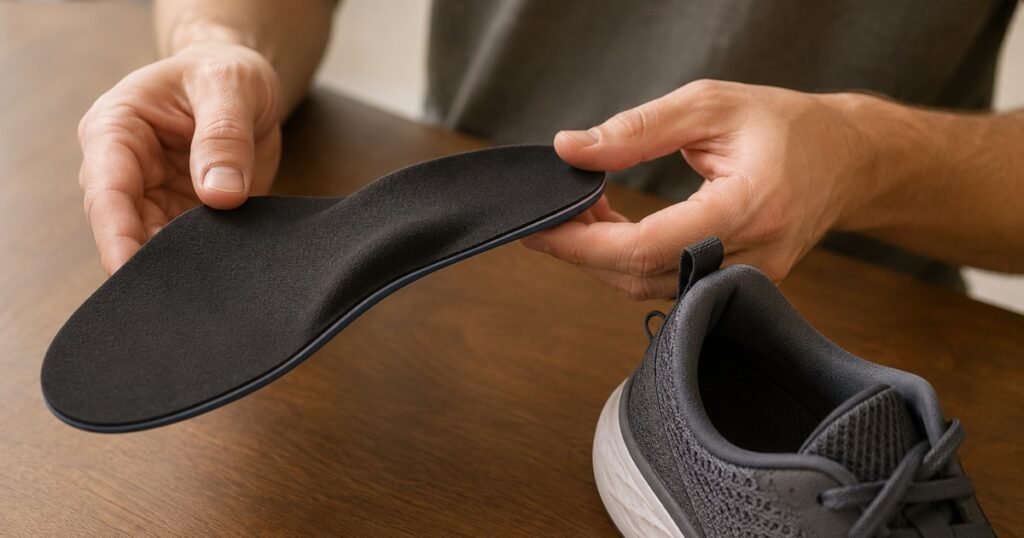
Choosing the right insole for flat feet isn’t about finding the softest cushion or the highest arch support. What works depends on your foot type, the shoes you wear, and how you spend your day.
A supportive insole that feels great in a running shoe may be uncomfortable in a pair of work boots. Likewise, an aggressive arch support isn’t always the best choice for every flat foot. Understanding those differences can save you from wasting money on products that never really solve the problem.
This guide walks you through how to identify your foot type, compare support and cushioning, choose the right insole volume, and understand which features actually make a difference before you buy.
Quick Take
If you’re short on time, here’s what matters most before buying insoles for flat feet:
| If… | Start Here |
|---|---|
| Your arch appears when you stand on your toes | A semi-rigid supportive insole is often a good starting point. |
| Your feet stay completely flat | A lower-profile or more adaptive design may feel more comfortable. |
| You stand all day at work | Prioritize durable support with long-lasting cushioning. |
| You’re buying for running | Make sure the insole works with your running shoe instead of over-correcting your stride. |
| Your shoes already fit snugly | Check insole volume before buying to avoid fit problems. |
Rigid vs. Flexible Flat Feet: Test Your Foot Before Buying Anything
Before you look at a single product, it helps to know what kind of flat foot you’re actually dealing with. Not all flat feet behave the same way, and the type you have changes what kind of support is worth your money.
The Simple Toe-Raise Test: Does Your Arch Reappear?
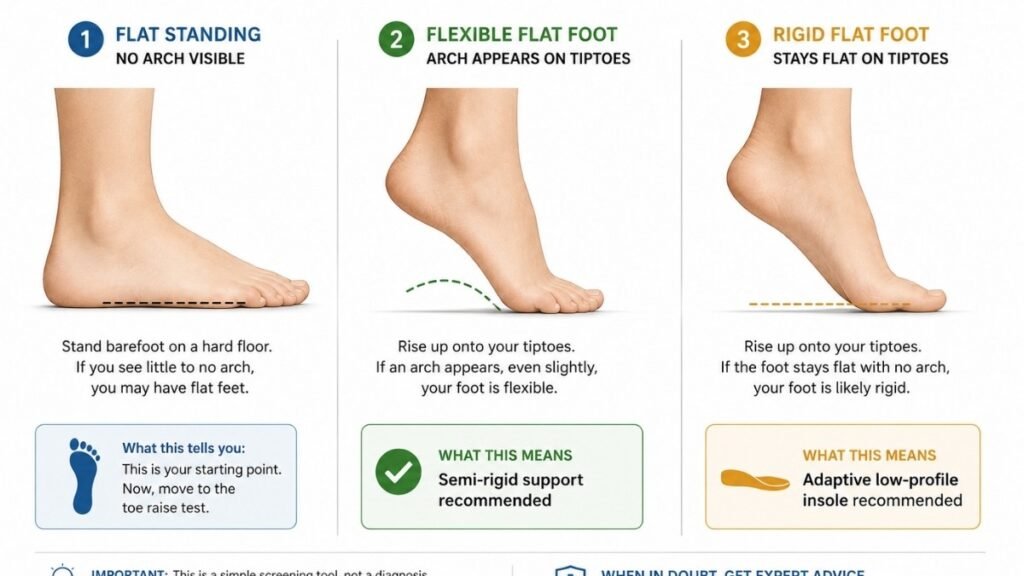
Stand barefoot on a hard floor and look at your arch. Then rise up onto your tiptoes, or simply lift your big toe while keeping your heel down, and watch what happens.
If a visible arch appears when you do this — even a modest one — your foot has some flexibility in it. If the sole stays flat and shows almost no change, your foot is behaving more rigidly.
This isn’t a diagnosis. It’s a quick screening step that tells you which direction to start looking, the same way checking tire tread tells you whether you need new tires without telling you exactly what caused the wear.
Flexible Flat Feet: When Semi-Rigid Support May Make More Sense
A flexible flat foot tends to collapse more under load — when you’re standing, walking, or bearing weight — even though it shows some arch shape when unloaded. This is the most common pattern, and it’s often associated with the foot rolling inward, sometimes called overpronation.
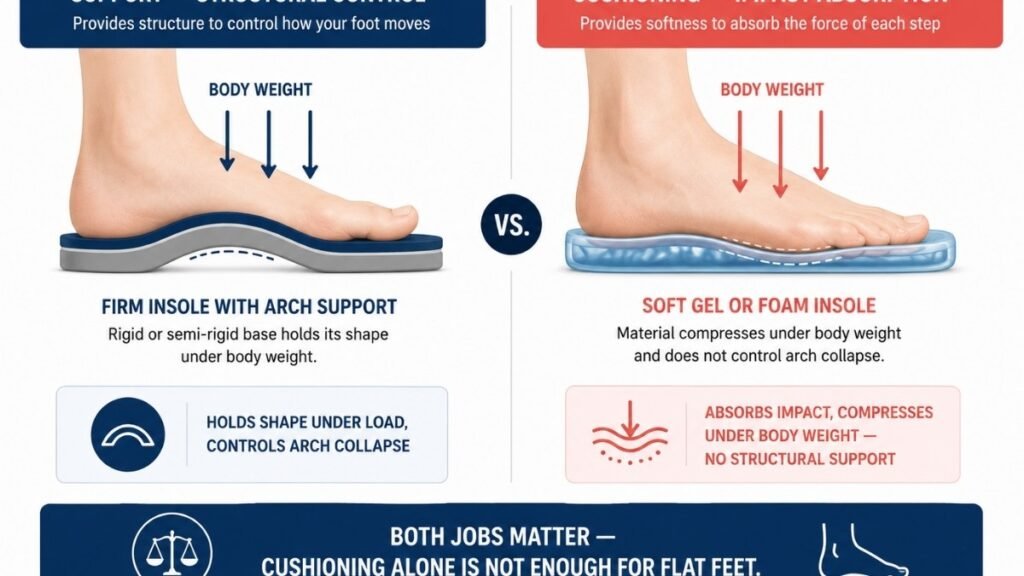
For this pattern, a semi-rigid insole often makes more sense than a soft one. Semi-rigid support holds its shape under your body weight instead of flattening out the moment you step on it, but it isn’t so hard that it feels like a wedge shoved under your foot. Heavy cushioning, on the other hand, tends to compress right along with your arch, which means it’s not doing much to actually control the collapse.
Decision rule: if your foot shows flexibility on the toe-raise test and you notice your foot rolling inward, look for structured support with a bit of give — not maximum plushness.
Rigid or Extremely Flat Feet: Why a Hard Arch Can Feel Like a Rock
Some people have feet that stay essentially flat whether loaded or not. If that’s you, a very high or aggressively contoured arch can feel less like support and more like a pressure point — a hard ridge pushing up into soft tissue that isn’t used to bearing that shape.
This is one of the most common complaints with off-the-shelf “maximum support” insoles: the arch is built for an idealized foot shape, not the one you actually have. For a genuinely rigid or very flat foot, a softer or more adaptive insole — one that molds somewhat to the foot rather than forcing it into a specific contour — is often better tolerated. That said, this isn’t universal, and rigid flat feet can have different underlying causes. A professional assessment is worth considering before assuming any one insole design will work.
When a Self-Test Is Not Enough
The toe-raise test is a starting point, not a full evaluation. Skip the trial-and-error approach and see a podiatrist or foot specialist if you’re dealing with:
- Pain that persists regardless of which insoles you try
- Significant discomfort with multiple different types of support
- Noticeable asymmetry between your two feet
- Symptoms that are getting worse over time rather than improving
If any of those describe your situation, an insole from a shoe store or online retailer isn’t going to solve a problem that needs a clinical look.
The “Cushion” Trap: Why Gel and Memory Foam Make Flat Feet Worse
The softest option on the shelf usually wins the first impression. It’s also usually the wrong choice for genuine arch support — and understanding why comes down to a distinction that gets glossed over constantly in insole marketing.
Support vs. Cushioning: What Is the Difference?
Support refers to structure — the part of the insole that helps control how your foot moves and holds a shape under load. Cushioning refers to impact absorption — the part that softens the feeling of each step.
These are two different jobs, and one doesn’t substitute for the other. A thick pillow of gel can feel wonderful against your skin while doing almost nothing to stop your arch from collapsing. A firm, structured shell can control your foot’s motion effectively while offering very little in the way of plush comfort. The best insoles for flat feet usually combine both, in the right proportions for your foot type.
The “Soft Sand vs. Firm Ground” Explanation
Think about walking barefoot on dry, loose sand versus walking on firm, packed dirt. Sand feels soft and forgiving with each step, but your ankles, calves, and stabilizing muscles work harder because the surface keeps shifting under you. Firm ground doesn’t feel as plush, but it gives your foot a consistent, predictable base to push off from.
Insoles work on a similar principle, though it’s worth keeping this as a general illustration rather than a strict rule for every foot. A very soft, sinking-in insole can ask more of your foot’s stabilizing muscles over the course of a day. A firmer, more structured base tends to give a more consistent platform to work from.
Why “Feels Amazing for Five Minutes” Can Be Misleading
The comfort test most people run in a store — stand on the insole for thirty seconds, wiggle your toes, decide it feels great — is almost useless for predicting how an insole performs over an eight- or twelve-hour day.
Initial softness registers immediately. Fatigue builds slowly. Many owners notice that an insole that felt luxurious in the first few minutes starts to feel unsupportive by mid-shift, because the foam has compressed under repeated weight and no longer has much cushioning depth left, and because it was never providing much structural support to begin with. The real test isn’t how an insole feels standing still in a store — it’s how your feet and lower legs feel after several hours on your feet.
When Cushioning Still Matters for Flat Feet
None of this means flat feet need rock-hard insoles. Comfort still matters, and an insole that’s all structure and no cushioning can be just as unpleasant as one that’s all cushioning and no structure.
The goal is balance: enough structural support to control excessive arch collapse, enough pressure distribution to keep hot spots from developing under the ball of the foot or heel, and enough overall comfort that you’re not gritting your teeth by 2 p.m.
| Material Type | Primary Job | Best For | Watch Out For |
|---|---|---|---|
| Gel / Memory Foam | Cushioning, pressure relief | Short wear, mild discomfort | Little structural support; compresses over time |
| EVA Foam | Balance of support + cushioning | Everyday wear, moderate activity | Density varies a lot between brands |
| PU Foam | Durable comfort, shock absorption | Long shifts, daily wear | Some compression over months of heavy use |
| Semi-Rigid Structure (nylon/plastic/carbon) | Structural support, motion control | Flexible flat feet, overpronation | Can feel harsh if poorly shaped to your foot |
Volume Matters: How to Match Your Insole to Your Shoes
Choosing the right support level is only half the equation. If the insole doesn’t physically fit inside your shoe, none of that support matters — you’ll just end up with a shoe that no longer fits.
What Does “Insole Volume” Actually Mean?
Insole volume refers to how much space the insole takes up inside your shoe — not just its thickness at the heel, but its overall bulk, arch height, and length. A low-volume insole is thin and slim, designed to add support without eating into your shoe’s interior space. A high-volume insole is thicker, often with a deeper heel cup and a more pronounced arch, and it takes up noticeably more room.
The mistake people make constantly is picking an insole based on support features alone and ignoring how much real estate it needs inside the shoe.
High-Volume Insoles: Which Shoes Have Enough Room?
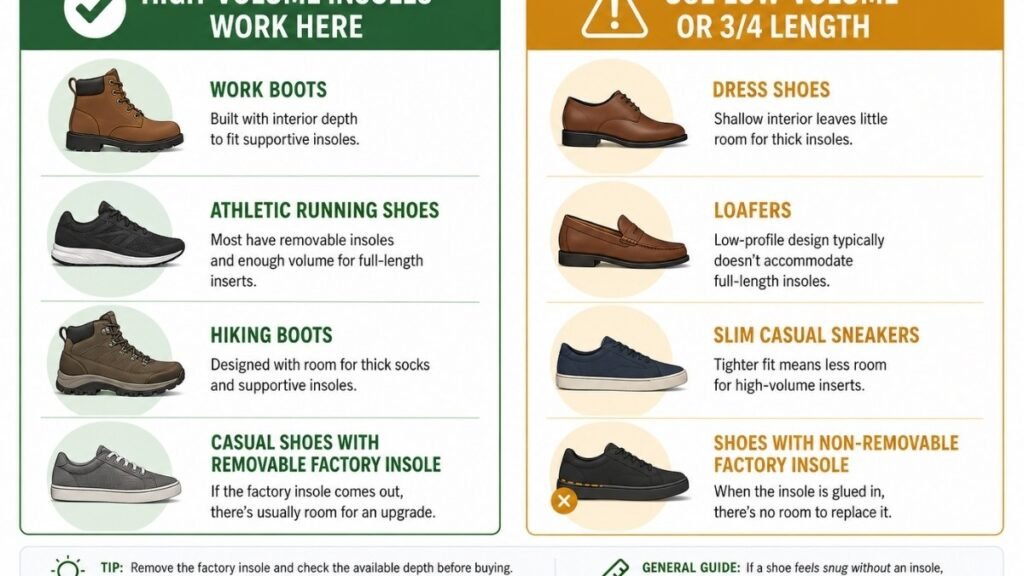
High-volume insoles tend to work well in shoes that were built with extra interior space in mind:
- Shoes with a removable factory insole (which frees up space when swapped out)
- Roomier running shoes, particularly those with a more generous toe box
- Work shoes and boots, which are often built with depth for exactly this purpose
- Hiking footwear, designed to accommodate thicker socks and insoles
Checklist — signs your shoe can handle a higher-volume insole:
- The factory insole lifts out easily
- There’s noticeable space above your foot when laced up normally
- The shoe wasn’t already snug at the heel or toe before adding anything
Low-Volume and 3/4-Length Insoles: When Every Millimeter Matters
Slimmer shoes need a different approach entirely. Loafers, dress shoes, and slim casual sneakers often have very little interior room to spare, and a bulky insole will crowd out your toes or push your heel up and out of the shoe.
3/4-length insoles — which stop before the forefoot rather than running the full length of the shoe — can be a smart option here, since they preserve toe-box space while still supporting the arch and heel, where flat-foot support matters most.
If a product isn’t specifically designed to be trimmed, don’t cut it. Trimming an insole that wasn’t engineered for it can shift the support zones out of place and undo the benefit entirely.
The Factory Insole Mistake: Should You Remove It First?
One of the most common and avoidable mistakes is placing a new supportive insole directly on top of the shoe’s original insert instead of replacing it.
Doing this stacks two layers where the shoe was only designed for one, and it tends to cause a predictable chain of problems: the toe box gets tighter, your heel sits higher in the shoe than it was designed to, the extra height increases the odds of heel slipping, and heel slipping is one of the fastest routes to blisters.
Decision tree:
- Removable factory insole → take it out, put the new insole in its place
- Non-removable factory insole → look at low-volume or 3/4-length insoles instead of stacking
The 60-Second Shoe Fit Check Before You Buy
Before you order any insole, run through this:
- Can the original insole be removed?
- Is there visible room above your foot when the shoe is laced normally?
- Is the heel already snug, or is there some wiggle room?
- Is the toe box already tight, or is there space to spare?
- Was the shoe designed with a removable insole meant for replacement, or is it glued/molded in?
Answering these honestly takes about a minute and saves you from ordering the wrong volume entirely.
Choosing the right volume gets you a properly fitting shoe. Choosing the right support for your actual use case is what makes that shoe work for you all day.
Real-World Scenarios: Insoles for the 12-Hour Shift vs. High-Impact Running
The best insole for a nurse working a double shift is not the same as the best insole for a runner logging weekend miles, even if both people have flat feet. Use case changes the priority list.
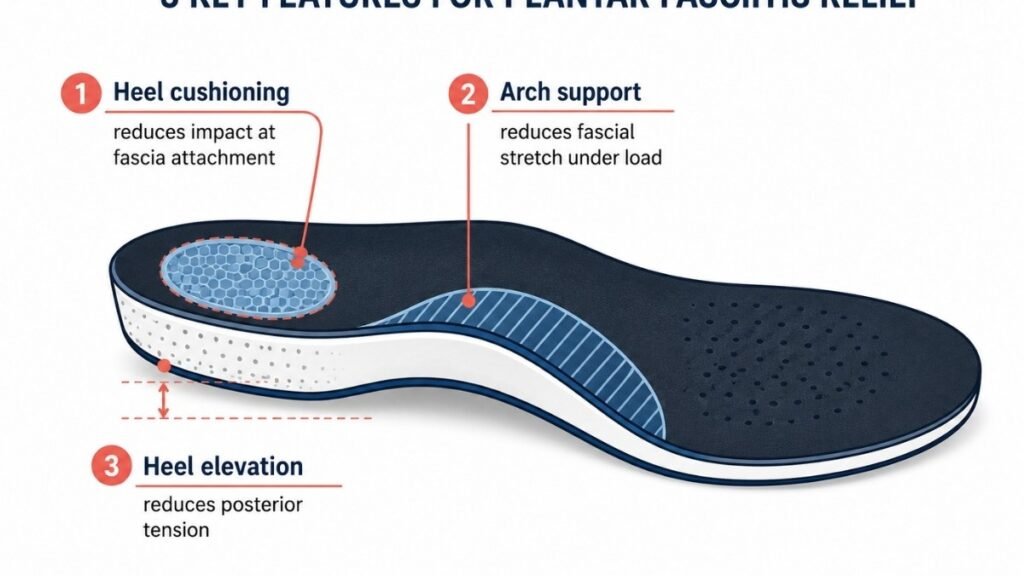
Best Insole Priorities for Nurses, Retail Workers, and 12-Hour Shifts
For long hours on hard floors, the priority order usually looks like this:
- Stable arch support that holds up over many hours, not just the first few
- Long-duration comfort rather than initial softness
- Pressure distribution across the whole foot, especially the ball and heel
- Durable materials that won’t flatten out after a few weeks of daily wear
- Compatibility with typical work-shoe volume
Some insoles pair a firmer nylon or composite support shell with a PU cushioning layer on top — structural support underneath, comfort where your foot actually contacts the insole. Think of this as a material category worth looking for rather than a strict requirement; several construction approaches can achieve a similar result.
| Use Case | Priority | Reasonable Volume |
|---|---|---|
| 12-hour shifts, standing work | Stability + long-wear comfort | Medium to high (work shoes/boots) |
| Retail, walking-heavy jobs | Pressure distribution + durability | Medium |
| Warehouse/industrial | Structural support + shock absorption | Medium to high |
Best Insole Priorities for Running and High-Impact Exercise
Running adds impact forces that everyday walking doesn’t, so the calculus changes. Before choosing an insole, look at what your running shoe is already doing. Many running shoes already have built-in stability or motion-control features, and a very rigid insole layered on top can be redundant or even counterproductive.
Consider cushioning appropriate to your mileage and surface, the stability features already built into the shoe, how rigid or flexible the insole itself is, and — critically — whether the insole keeps your heel locked in place during impact. A supportive insole that lets your heel slide around inside the shoe will cause more problems than it solves.
Don’t assume the stiffest insole on the market is automatically the best running upgrade. Sometimes it just fights against a shoe that was already doing its job.
Stability Shoes + Supportive Insoles: Avoid Double-Correcting the Same Motion
This is a mistake worth calling out specifically: pairing a stability running shoe, which is already built to control overpronation, with an aggressively corrective insole on top of it.
The result is often too much correction stacked in one place, which can push the foot into an unnatural position rather than a supported one.
Decision tree:
- Neutral shoe → a more structured insole is often reasonable to evaluate
- Stability shoe → prioritize a moderate, compatible insole rather than another aggressive support layer
Best Insole Priorities for Daily Walking and Commuting
For everyday walking and commuting, comfort over distance matters more than maximum structure. Look for a low-to-medium profile that fits easily into the shoes you already wear, support that doesn’t require you to size up or switch shoes entirely, and a balance that doesn’t add unnecessary bulk to shoes meant for casual, all-day use.
Indoor Support: Why Your Feet May Hurt Again After Taking Off Your Shoes
It’s a common and confusing experience: your feet feel fine in supportive work shoes all day, and then they start aching the moment you walk barefoot on hardwood or tile at home.
This usually comes down to surface, not a failure of your insoles. Hard indoor floors offer none of the support your shoes were providing, and after a full day of walking, that sudden shift can be noticeable. For people who consistently feel this, supportive indoor footwear or slippers with some arch structure can help. This isn’t something every flat-footed person needs — it’s worth considering specifically if you notice this pattern regularly.
How Do You Choose the Right Insole Material for Flat Feet?
Once you know your foot type and the volume you need, material is where support actually gets delivered.
Semi-Rigid Plastic, Nylon, or Carbon-Based Support Structures
These materials form the structural shell in many quality flat-foot insoles. They hold their shape under body weight far better than foam alone, which is exactly what a flexible flat foot needs to resist excessive collapse.
The tradeoff is that a poorly shaped rigid structure — one that doesn’t match your specific arch height or heel width — can create pressure points instead of relief. Fit matters as much as material here.
EVA and Other Foam-Based Materials
EVA foam shows up everywhere because it’s versatile, but “EVA” alone doesn’t tell you much. Density and molding matter far more than the label. A dense, well-molded EVA insole can offer real support with decent cushioning; a soft, low-density EVA insole behaves more like standard cushioning foam with little structural benefit.
PU Foam: Comfort and Long-Term Compression Considerations
Polyurethane foam is common in insoles built for long-duration comfort, since it tends to hold up better than basic foam under repeated compression. It’s worth distinguishing between PU used as a supportive base layer versus PU used purely as a compressible top layer — the two do different jobs, and a good insole often uses each where it’s actually useful.
Cork and Adaptive Materials
Cork and similar adaptive materials have a different appeal: rather than forcing a fixed arch shape onto your foot from day one, they gradually conform to your foot’s shape with wear. For people who find rigid arch profiles too aggressive or poorly matched, this kind of gradual molding can be more comfortable over time.
There’s a real difference between an insole that’s fully supportive the moment you put it on and one that becomes more personalized to your foot the more you wear it. Neither approach is universally better — it depends on how well you tolerate a fixed structure versus how much you value gradual adaptation.
Replaceable Top Layers vs. One-Piece Insoles
Some insole systems separate the structural base from the cushioning top layer, allowing you to replace the worn part without buying an entirely new insole. Others are built as a single fused piece.
This matters more than it might seem. A structural base can often outlast the cushioning layer sitting on top of it by a wide margin. If your insole is one piece, once the top layer flattens, you’re replacing the whole thing — support shell included, even if it’s still structurally fine.
How Much Should You Spend on Insoles for Flat Feet?
Price gets treated as a proxy for quality more than it should be, and insoles are a category where that assumption breaks down quickly.
Why a Higher Price Does Not Automatically Mean Better Support
There’s a well-known frustration around in-person orthotic fittings that can run into hundreds or even over a thousand dollars, especially when the marketing pitch implies that nothing off-the-shelf will work as well.
It’s worth separating three tiers clearly: standard OTC insoles, which are widely available and cover a large range of foot types reasonably well; semi-custom or adjustable systems, which allow some tuning without a full custom mold; and professionally prescribed or fully custom orthotics, built from a mold or scan of your specific foot.
For most people with mild to moderate flexible flat feet, a well-matched OTC or semi-custom insole is a reasonable starting point. Custom orthotics tend to make the most sense for more complex or persistent cases where an evaluation has identified something OTC options aren’t addressing. We won’t speculate on any specific retailer’s internal pricing or business practices — the point is simply that price alone isn’t a reliable quality signal.
The Real Value Question: What Part of the Insole Actually Wears Out?
An insole is really three components in one: the structural support shell, the cushioning or foam layer, and the top cover fabric. These don’t wear at the same rate. Cushioning typically compresses and loses its bounce well before a well-built structural shell breaks down.
This is why a replaceable top layer can matter more for long-term value than the sticker price. If you can swap the part that actually wears out instead of replacing the whole insole, the cost math changes considerably over a year or two.
The 6-Month vs. 1–2-Year Reality Check
There’s no single honest answer to “how long will these last,” because it depends on:
- How often and how many hours per day you wear them
- Your daily walking or standing volume
- Body weight and overall loading on the insole
- The quality of the materials and construction
- Whether the support structure and cushioning are separate, replaceable components
A heavier person walking 12,000 steps a day on a job site will wear through an insole faster than someone doing light daily walking in comfortable shoes. Treat any specific lifespan claim as a rough range, not a guarantee.
| Design Type | Typical Value Pattern |
|---|---|
| One-piece insole | Entire insole replaced once cushioning wears, even if support shell is fine |
| Replaceable-top-layer system | Top layer replaced periodically; support shell reused for longer |
Getting the fit and support level right is only useful if you can actually tolerate wearing the insole. That’s where a lot of people go wrong next.
How Long Should New Flat-Foot Insoles Take to Feel Comfortable?
A brand-new insole changes how your foot sits, how weight moves across it, and how much your calves and arch are working. That adjustment period is normal — but it shouldn’t be mistaken for something you just have to push through no matter what.
Why a New Insole Can Make Your Feet and Calves Feel Different
Introducing new arch support changes the mechanics your foot and lower leg have been used to, sometimes for years. It’s common to notice new sensations in the arch, the calf, or even behind the knee during the first days of wear, simply because muscles are working differently than they were with your old, unsupportive setup.
The key distinction is between adaptation discomfort — a mild, generalized “this is different” feeling — and sharp or worsening pain, which is not something to just wait out.
The Gradual Break-In Timeline
A slow introduction gives your foot time to adjust without overwhelming it.
- Day 1: Wear the insoles for a short period — an hour or two of normal activity, not a full day.
- Following days: Gradually extend wear time if things feel manageable, adding time in increments rather than jumping straight to all-day wear.
- First 1–2 weeks: Use this window to evaluate overall comfort and tolerance, not to force full-day wear on day two or three.
When to Stop Pushing Through the Pain
Stop and reassess if you notice:
- Sharp or stabbing pain, rather than general soreness
- Significant rubbing or blistering
- Discomfort that’s persistent or actively getting worse, not settling
- Pain that doesn’t improve even when you reduce wear time or check the fit
Decision tree: mild, general adaptation discomfort that eases with rest → continue the gradual break-in. Sharp or persistent pain → stop and reassess the fit, the support level, or consult a professional.
Why Wearing New Insoles for a Full 12-Hour Shift on Day One Is a Bad Test
It’s tempting to just put new insoles in and wear them for whatever you had planned that day — a full shift, a long flight, an all-day hike. This is one of the most common ways people end up hating a perfectly decent insole.
A new insole on hour one of a 12-hour shift doesn’t give your foot any chance to adjust gradually. By hour eight, discomfort that might have been mild and manageable in a shorter trial can feel unbearable, and it’s easy to blame the insole itself rather than the way it was introduced. A shorter, gradual first test gives a much more honest read on whether the insole is actually a good match.
What Should You Do If Your Flat-Foot Insoles Hurt?
Pain isn’t proof that an insole is “working.” It’s more often a sign that something about the fit, the support level, or the shoe pairing is off.
Arch Pain: Is the Support Too High, Too Hard, or Poorly Positioned?
Check the arch height against your foot — is it noticeably taller than what your foot naturally allows for? Check whether the arch peak lines up with where your actual arch sits, since a support ridge positioned slightly off can dig into the wrong spot. Check overall rigidity relative to your tolerance, and check whether the shoe itself is contributing pressure through a tight fit.
Heel Slipping and Blisters: The Insole May Be Taking Up Too Much Space
This points back to volume. Check whether you removed the original factory insole before adding the new one, whether the new insole is simply too thick for the shoe, and whether the deeper heel cup is shifting your foot’s position enough to change how it sits against the shoe’s back.
Troubleshooting checklist:
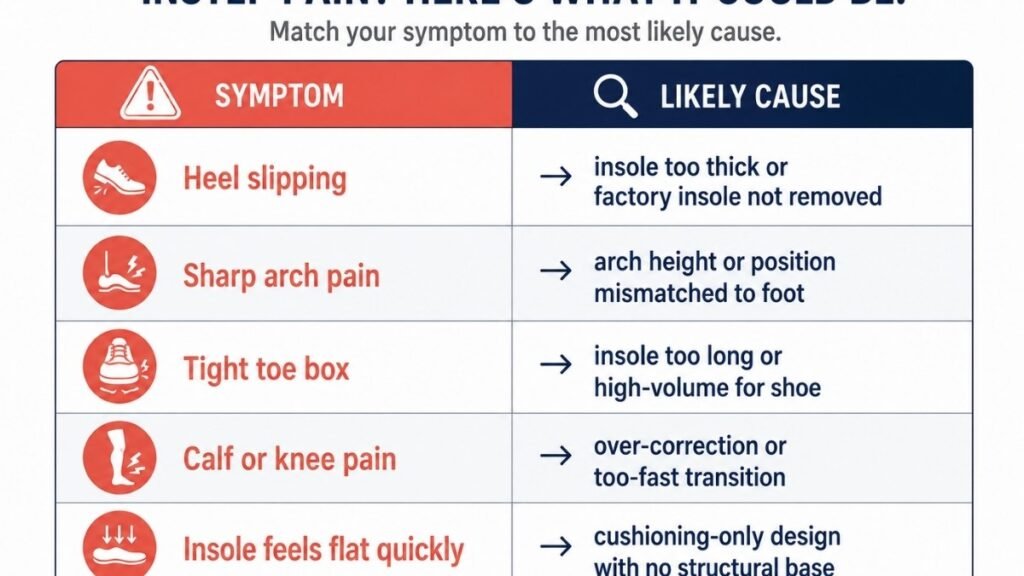
| Symptom | Likely Cause |
|---|---|
| Heel slipping | Insole too thick, or factory insole not removed |
| Blisters at heel | Heel lifted higher than the shoe was designed for |
| Tight toe box | Insole too long or too high-volume for the shoe |
| Top-of-foot pressure | Insole volume too high, crowding the shoe’s interior |
| Persistent arch ache | Arch height or position mismatched to foot |
Toe Pressure: When the Insole Is Too High-Volume
Watch for toes touching the front of the shoe, pressure across the top of the toes, or a noticeable reduction in your ability to wiggle your toes naturally. Any of these suggest the insole is simply too much shoe for the space available — a lower-volume or shorter (3/4-length) option is worth considering.
Foot, Calf, or Knee Pain After Switching Insoles
If pain shows up further up the chain — in the calf or knee — consider whether the support level is more aggressive than your foot needs, whether you transitioned too quickly instead of gradually, whether the insole and shoe are actually compatible with each other, or whether there’s an existing injury or condition that a new insole is aggravating rather than helping. A firm feeling insole isn’t automatically fixing anything just because it feels structured — if pain is traveling upward, that’s worth taking seriously rather than pushing through.
Can Insoles Permanently Fix Flat Feet?
This question comes up constantly, and it deserves a straight answer.
What Insoles Can Do While You Wear Them
While you’re wearing them, insoles can provide support and help influence how your foot is positioned and loaded during that activity. For many people, this translates into real, noticeable relief from discomfort tied to flat-foot mechanics.
What Insoles Cannot Automatically Change
What insoles don’t do is permanently reshape the bones and structures of an adult foot. Support while worn is not the same as a structural cure, and no insole — regardless of price or design — should be marketed or understood as one. Be skeptical of any claim that promises otherwise.
Where Foot-Strengthening Exercises Fit Into the Bigger Picture
Foot and lower-leg strengthening is often discussed as a complementary approach alongside supportive footwear, rather than a replacement for it. The two work on different things: insoles manage support and load distribution while you’re wearing them, and strengthening work addresses the muscles that support your arch over time. We won’t lay out a specific exercise protocol here, since that’s best guided by a physical therapist or podiatrist familiar with your particular foot.
The Real-World Flat-Foot Insole Experience: What Happens After You Buy?
Experience Point 1 — The First Five Minutes Feel Great, Then the Long Shift Starts
This is the most common pattern reported around cushioned insoles. Standing on them in a store, or even walking around the house for a bit, feels noticeably plush. Hours into a real shift, that same softness has usually compressed, and there was never much structural support underneath it to begin with. The gap between showroom comfort and hour-eight comfort is exactly what this guide keeps returning to.
Experience Point 2 — The “Why Is My Arch Being Punched?” Moment
Someone buys the firmest, most “medical-grade” looking insole they can find, assuming maximum rigidity equals maximum help. A day or two in, there’s a sharp, localized pressure point right at the arch — not general soreness, but something that feels distinctly wrong. This is usually a sign of a mismatch between arch height or shape and the actual foot, not a sign that the foot “just needs to adjust.” Worth reassessing rather than forcing.
Experience Point 3 — The New Insole Fits the Foot but Ruins the Shoe
The insole itself feels reasonably comfortable underfoot, but the shoe no longer fits the way it used to. The heel starts slipping with every step. The toe box feels crowded. The top of the foot rubs against the upper in a way it never did before. This is a volume problem, not a support problem — and it traces straight back to not checking whether the factory insole was removed, or whether the shoe had enough room to begin with.
Experience Point 4 — The $1,000+ Orthotic Question
At some point, many people considering custom orthotics run into a fitting that costs well over a thousand dollars, often with a pitch suggesting nothing off-the-shelf will compare. It’s a reasonable moment to pause and evaluate the actual construction being offered — the materials, the support design, the fit process — rather than assuming the price tag alone justifies the purchase. For many flat-foot cases, a well-matched OTC or semi-custom option covers the need. For more complex cases, a professional evaluation may genuinely be worth it. The price by itself doesn’t answer that question either way.
Experience Point 5 — The Insole Is Still Structurally Fine, but the Top Layer Is Dead
Months into use, the cushioning on top has flattened out and lost its bounce, but pressing on the support shell underneath shows it’s holding up fine. This is exactly the scenario where a replaceable top layer pays for itself — instead of tossing out a support structure with plenty of life left, you’re only replacing the part that actually wore down.
Frequently Asked Questions About Insoles for Flat Feet
Why do my new flat-foot insoles hurt my arches so much?
Some adjustment discomfort in the first few days is normal, but sharp or worsening pain is not something to just push through. Common causes include an arch that’s too high or too rigid for your foot, or an arch shape that isn’t positioned correctly relative to your actual foot structure. If the pain is sharp or getting worse rather than settling, reassess the fit instead of forcing the break-in period.
Can I put flat-foot insoles on top of my existing shoe insoles?
Generally, no — full-length insoles are designed to replace the factory insert, not stack on top of it. Stacking them reduces available space in the shoe, which commonly leads to a tight toe box and heel slipping. Thin, low-profile, or 3/4-length products specifically designed to be added without removal are the main exception.
How long do orthotic insoles last before they lose support?
It varies, because the structural support and the cushioning layer often wear at different rates. Lifespan depends heavily on how much you walk or stand, your body weight, and the materials used. Designs with a replaceable top layer tend to offer better long-term value, since you’re not discarding a still-functional support shell just because the cushioning flattened.
Are cheap gel insoles good for flat feet?
Softness alone doesn’t provide arch support — gel is primarily a cushioning material, not a structural one. That doesn’t mean every gel insole makes flat feet worse, but relying on cushioning alone to control arch collapse usually falls short. For flat feet, structural support paired with reasonable cushioning tends to work better than cushioning alone.
Will wearing flat-foot insoles permanently cure my flat feet?
No — insoles provide support and help manage comfort while you’re wearing them, but they don’t permanently reshape the structure of an adult foot. Strengthening exercises and, where appropriate, professional evaluation are separate considerations worth discussing with a specialist if you’re looking for more than day-to-day support.
Should I choose hard or soft insoles for flat feet?
There’s no single right answer — it depends on whether your flat feet are flexible or rigid, your personal tolerance, your shoe type, and your activity level. For many people, semi-rigid support strikes a useful middle ground between too little structure and an arch that feels punishing. Testing your foot type first makes this decision much clearer.
Can I use supportive insoles in stability running shoes?
Yes, but compatibility matters more than in a neutral shoe. Since stability running shoes already include built-in motion-control features, pairing them with an aggressively corrective insole can result in over-correction. A moderate, compatible insole usually works better than stacking two strong support systems on top of each other.
Why do my feet hurt when I walk barefoot at home after wearing insoles all day?
This is usually a surface issue, not a sign your insoles failed. Hard indoor floors provide none of the support your shoes had all day, and the contrast can be noticeable after a long shift. If this happens consistently, supportive indoor footwear or slippers can help — though not everyone with flat feet needs to wear support around the clock.
👣 KickVerdict Foot Notes: The Thinking Behind This Guide
Choosing the right insole for flat feet isn’t about finding the most expensive option or the highest arch support. It’s about understanding what your feet actually need and avoiding the mistakes that leave so many people disappointed.
That’s why this guide focuses on practical decisions you can make before buying, rather than marketing claims or brand hype.
This guide is built around four essentials:
- 👣 Know Your Foot Type — Learn the difference between flexible and rigid flat feet before choosing any support.
- 🦶 Understand Real Support — See why cushioning and arch support are different, and why both matter.
- 👟 Match the Insole to Your Shoes — Avoid common fit problems by choosing the right volume and design.
- ✅ Buy With Confidence — Understand which features are worth paying for and when professional advice makes more sense.
Because the goal isn’t to find the “perfect” insole.
It’s to find the one that actually works for your feet.
Final Thoughts
Finding the right insole for flat feet isn’t about chasing the highest arch, the softest foam, or the biggest price tag. It’s about choosing support that fits your feet, your shoes, and the way you actually move every day.
A little time spent understanding your foot type, shoe fit, and daily routine can save you from buying products that feel great for five minutes but disappoint after a full day on your feet.
Start with the basics. Choose support over marketing, fit over hype, and comfort that lasts beyond the first few steps.
The best insole isn’t the one with the boldest claims—it’s the one you forget you’re wearing because your feet simply feel better.
👟 Continue Building Healthier Feet
Choosing the right insole is only one part of keeping flat feet comfortable. These guides can help you choose better shoes, improve foot support, and avoid common mistakes in everyday walking and exercise.
- plantar fasciitis shoes guide—
(→ plantar fasciitis shoes guide) - overpronation shoes guide—
(→ overpronation shoes guide) - flat feet vs high arches guide—
(→ shoes for flat feet vs high arches) - shoes for standing all day—
(→ shoes for standing all day) - how to measure your foot size— (→
how to measure foot size at home)
❤️ A Final Note
Good foot comfort isn’t built by buying the most expensive insole—it’s built by making better choices, one step at a time.
At KickVerdict, we’re here to help you look beyond marketing claims, avoid costly mistakes, and choose footwear and support that truly fit your feet and your daily life.
Our goal is simple: helping you move more comfortably and choose every step with confidence.