
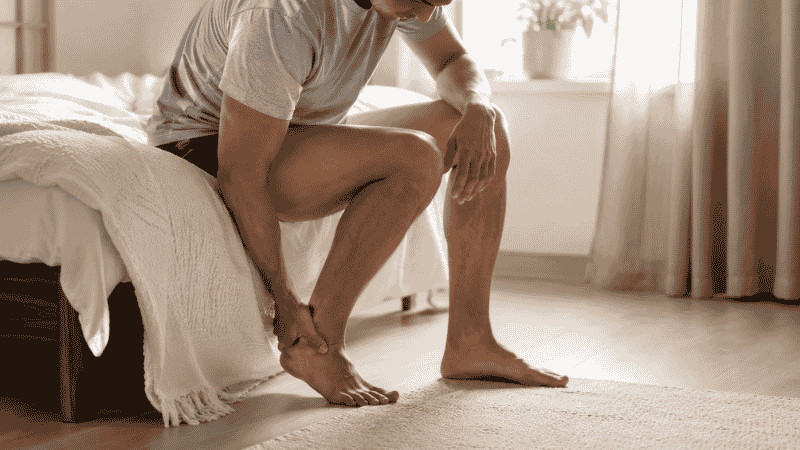
You know the feeling. First thing in the morning, before your foot even touches the floor, there’s already a dread. Because you know those first steps are going to hurt. Not a little sore — actually hurt. Like someone slid a shard of glass into your heel overnight.
You’ve probably already tried the obvious things. Ice. Rest. Stretching. Maybe a pair of shoes someone recommended. Maybe two pairs. And you’re still here, which means none of it solved it completely — or you’re at the beginning of this whole thing and desperately trying to avoid making expensive mistakes.
Here’s the hard truth that most shoe recommendation articles skip: the shoe is only part of the answer. But it’s an important part, and getting it wrong actively slows your recovery. Wearing the wrong plantar fasciitis shoes — even ones that feel comfortable — can keep the plantar fascia in a constant low-grade state of irritation that never fully resolves.
This guide is about understanding what your foot actually needs, so you can evaluate any shoe on its merits — not just because someone put it on a list.
Key Takeaways
- Plantar fasciitis affects an estimated 2 million Americans annually, making it the most common cause of heel pain treated by podiatrists, according to the American Academy of Orthopaedic Surgeons.
- The classic symptom — sharp heel pain on the first steps of the morning — occurs because the plantar fascia tightens during sleep and is suddenly stressed when weight is applied.
- Going barefoot at home is one of the most common mistakes people with plantar fasciitis make. Even brief periods without arch support allow the fascia to re-strain.
- A shoe doesn’t need to be soft to work for plantar fasciitis — it needs to be supportive and structured. Highly cushioned but unsupportive shoes can actually worsen symptoms.
- Most cases of plantar fasciitis resolve within 6–18 months with consistent conservative treatment. The right shoes are part of that consistency.
- Hoka, Brooks, and New Balance dominate real-user recommendations for a reason — their arch support and heel cushioning profiles consistently align with what the condition actually needs.
What Plantar Fasciitis Actually Is (And Why It Explains Everything About the Shoe)
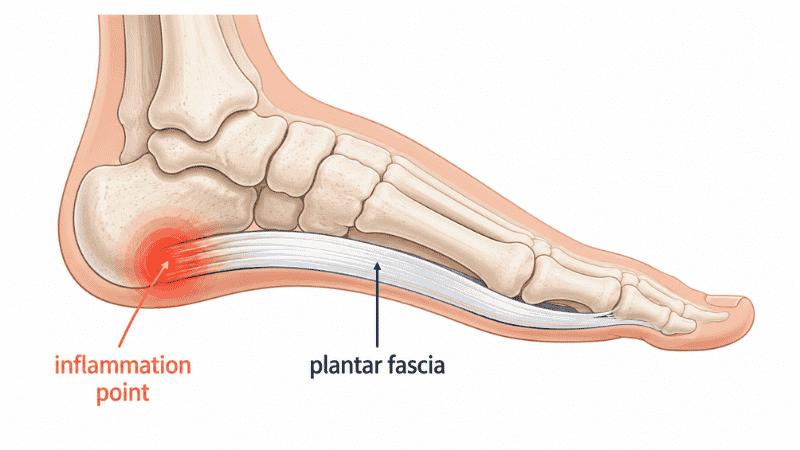
The plantar fascia is a thick band of connective tissue that runs along the bottom of your foot, from the heel bone to the base of the toes. Its job is to support the arch and absorb the shock of each step. When it’s healthy, you don’t notice it. When it’s inflamed — from overuse, structural stress, or prolonged strain — every step reminds you it exists.
The inflammation typically concentrates at the point where the fascia attaches to the heel bone. That attachment point is why the pain is almost always at the heel, and why it’s worst first thing in the morning: during sleep, the fascia contracts and tightens in a shortened position. The moment you put weight on your foot, that tight fascia is suddenly pulled taut — which is exactly what produces that sharp, stabbing first-step pain.
As you move around and the fascia warms up, the pain often diminishes — which is why many people with plantar fasciitis feel almost normal by midday, then get progressively worse again after extended standing or walking. This isn’t the condition improving. It’s the fascia temporarily accommodating the load before fatiguing again.
Understanding this mechanism explains why certain shoe features matter:
Heel cushioning reduces the impact force at the attachment point with every step. Less impact = less re-irritation.
Arch support prevents the fascia from being stretched beyond its capacity under load. A foot without arch support supinates or overpronates, stretching the fascia in different ways depending on foot type.
A slightly raised heel (positive heel-to-toe drop) keeps the fascia in a slightly shortened position while walking — which reduces the strain at the attachment point. This is why high heels temporarily relieve plantar fasciitis pain for some people, and why completely flat shoes often make it worse.
Rigidity vs flexibility at the right points — a shoe that bends too easily in the arch area allows the fascia to stretch more than it should under load. The shoe should be relatively inflexible through the midfoot.
Why Soft Shoes Sometimes Make Plantar Fasciitis Worse
This is the question nobody in the mainstream shoe content answers directly, but it comes up constantly in real user communities. You buy the cushiest, most comfortable shoe you can find — and the pain doesn’t improve, or it gets worse. What’s happening?
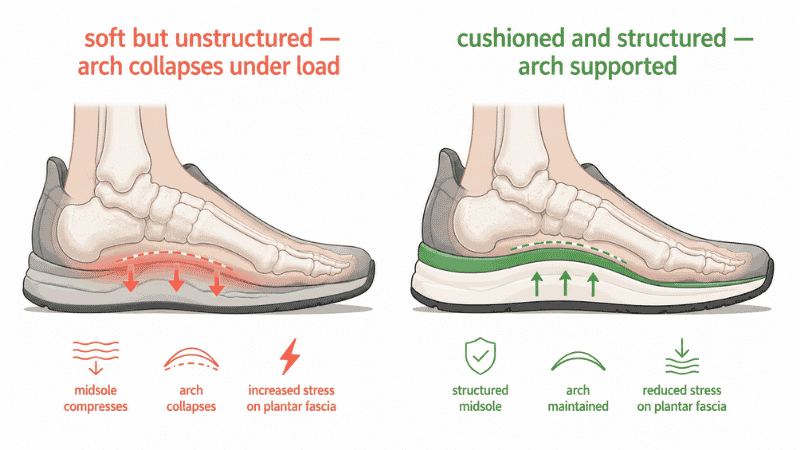
Highly cushioned, soft-soled shoes — particularly those with minimal structure — allow the foot to sink into the material and deform the arch under load. For someone with plantar fasciitis, this means the fascia is being stretched throughout the gait cycle, not just at impact. The cushioning absorbs impact but doesn’t prevent the arch from collapsing, which is the bigger source of ongoing strain for most people with this condition.
This is why the most consistently effective shoes for plantar fasciitis are cushioned and structured — not just one or the other. The Hoka Clifton is a good example: it has substantial cushioning, but the midsole is also firm enough to maintain arch geometry under load. Compare this to a highly cushioned but limp fashion sneaker — similar thickness, completely different behavior.
The midfoot bend test applies here: hold any shoe at the heel and toe and try to fold it in half. A shoe appropriate for plantar fasciitis should resist bending through the arch area. If it folds easily at the midfoot, it’s providing minimal arch support regardless of what the marketing says.
The Five Features That Actually Matter in Plantar Fasciitis Shoes
1. Heel Cushioning — Specifically at the Back
Not all cushioning is equal, and not all shoe cushioning addresses heel pain specifically. For plantar fasciitis, the critical cushioning zone is the posterior heel — where the fascia attaches. Press your thumb into the heel area of any shoe you’re considering. There should be meaningful compression, but the material should rebound quickly rather than staying compressed.
Gel inserts in the heel (common in ASICS shoes) are specifically designed for this. High-stack midsoles like Hoka’s CMEVA address it through overall foam thickness. Brooks’ BioMoGo DNA adapts to your weight and gait. Any of these approaches can work — the common thread is resilient heel cushioning that doesn’t bottom out after a few hours of wear.
2. Arch Support — Matched to Your Foot Type
Arch support for plantar fasciitis is not one-size-fits-all. The wrong arch support can create new problems while doing nothing for the fascia.
For flat feet with PF: You need medial arch support that prevents overpronation — the inward collapse that stretches the fascia on the inner side. Stability shoes with a medial post are appropriate. Brooks Adrenaline GTS, ASICS Gel-Kayano, and New Balance 860 are consistent performers.
For high arches with PF: You need cushioning and arch fill — a shoe that supports the arch without forcing it into a flatter position. The fascia in a high-arched foot is often naturally tighter and needs the arch to be supported in its elevated position, not corrected downward. Hoka Bondi, Brooks Ghost, and On Cloudmonster work well here.
For neutral arches with PF: A neutral cushioned shoe with good heel support is usually sufficient. ASICS Gel-Nimbus, New Balance Fresh Foam 1080, and Hoka Clifton are reliable options.
3. Heel-to-Toe Drop of 8–12mm
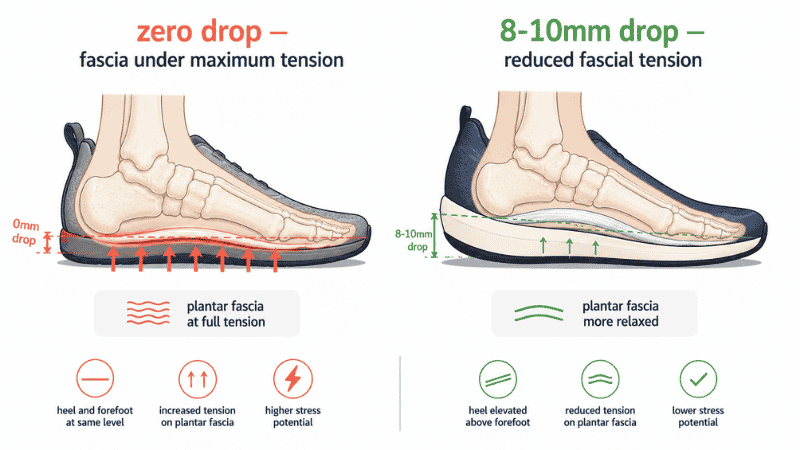
This is the measurement that most people never check and that makes a substantial difference for plantar fasciitis. A heel drop of 8–12mm keeps the fascia in a slightly shortened position during the gait cycle, reducing strain at the attachment point. This is why running shoes — which typically have higher drops than lifestyle shoes — tend to work better for plantar fasciitis than flat sneakers.
Zero-drop and minimalist shoes are often the worst choice for active plantar fasciitis. They require the fascia to work at full extension with each step, providing no mechanical relief. This doesn’t mean you can never transition to minimal shoes — but during active inflammation, it’s the wrong time to try.
4. Firm, Deep Heel Cup
The heel cup is the contoured section of the insole that your heel sits in. A deep, firm heel cup does two things for plantar fasciitis: it stabilizes the heel bone’s position, reducing the micro-movement that irritates the fascia attachment, and it centers the fat pad under the heel directly over the bone, maximizing natural cushioning.
Shallow or soft heel cups — common in fashion shoes and many casual sneakers — allow the heel to move slightly with each step. For healthy feet, this is inconsequential. For an inflamed plantar fascia, it’s a source of ongoing irritation.
5. Midfoot Rigidity
A shoe that bends at the arch during walking allows the plantar fascia to stretch beyond a safe range of motion under load. You want flexibility at the toe (where the foot naturally bends during push-off) and relative rigidity through the midfoot arch area.
Test this before buying: fold the shoe heel-to-toe. It should resist at the midfoot. Then bend the toe area — that should flex relatively easily. A shoe with this profile provides the right combination of push-off mobility and arch protection.
Plantar Fasciitis Shoes for Women
The challenge for women is that many dress shoes, fashion sneakers, and casual styles that look office-appropriate fail every one of the five criteria above. Low heel drop, soft midsole, shallow heel cup, flexible everywhere. For women managing plantar fasciitis in professional or semi-professional environments, the options are limited but they exist.
For Daily Walking and Commuting
Hoka Bondi 8 (Women’s) — consistently the top recommendation in real user communities for a reason. The thick midsole provides heel cushioning without sacrificing structure, the heel cup is deep and supportive, and the heel drop (4mm) is lower than ideal but compensated by the overall geometry. Available in wide widths.
Brooks Adrenaline GTS 25 (Women’s) — the go-to for women with flat feet and PF. The GuideRails system provides medial support without aggressive motion control, the heel cushioning is substantial, and it’s available up to 2E width. Many women report significant improvement within two to three weeks of switching to this shoe.
ASICS Gel-Kayano 32 (Women’s) — higher heel drop than Hoka, which benefits some PF sufferers more. The gel heel unit specifically targets the attachment zone. Fits narrower than Brooks, so women with wider feet should size up or try wide versions.
New Balance Fresh Foam 860v14 (Women’s) — underrated for PF. The combination of stability features and heel cushioning works particularly well for women with flat feet and PF simultaneously. Genuine wide sizing available.
For Professional Settings
This is the hardest category. No traditional dress shoe passes the plantar fasciitis test. Practical options:
Vionic Ainsleigh — a career-appropriate sneaker-style shoe with built-in orthotic arch support. Doesn’t look like a running shoe. Works genuinely well for PF.
Clarks Cloudsteppers with arch support — the combination of a cushioned sole and moderate arch structure makes these a reasonable option for office environments where athletic shoes aren’t appropriate.
For women who must wear heels: a block heel of 1.5–2 inches is actually preferable to flat shoes for plantar fasciitis — the elevation reduces fascial tension. Pointed toes are still problematic. A low block heel with a round or square toe is the least-bad option.
Plantar Fasciitis Shoes for Men
Men’s options are somewhat more forgiving because the standard men’s athletic shoe tends to have better heel support and higher drop than equivalent women’s styles. The main challenge is finding shoes that work for professional environments.
For Daily Walking and All-Day Wear
Hoka Bondi 8 (Men’s) — same recommendation as women’s for the same reasons. The Bondi is the heavy-cushion flagship that consistently performs for PF across both genders. If you’ve never tried Hoka and you have PF, this is the most logical first experiment.
Brooks Beast 20 (Men’s) — designed for maximum support and maximum width. For men with both wide feet and plantar fasciitis — a common combination — this is one of the few shoes that addresses both simultaneously without compromise. Heavy, but it works.
New Balance 990v6 (Men’s) — the best option for men who need something that looks like a normal shoe. The 990 series has genuine stability features and substantial heel cushioning in a silhouette that reads as casual-professional rather than athletic. Available up to 4E width.
ASICS Gel-Kayano 32 (Men’s) — one of the most technically complete shoes for PF. Higher heel drop, gel heel cushioning at the attachment zone, stability features for overpronation. Works best for men with flat to neutral arches.
For Professional Settings
New Balance 990v6 in leather or semi-leather colorways — the most versatile option for men who need to look professional. Genuinely supportive, available wide, doesn’t look like a gym shoe.
Ecco Soft 7 — an actual leather shoe with meaningfully better support than most dress shoes. Not perfect for PF, but far better than standard dress shoes and appropriate for business environments.
What to Wear at Home: The Rule Most People Ignore
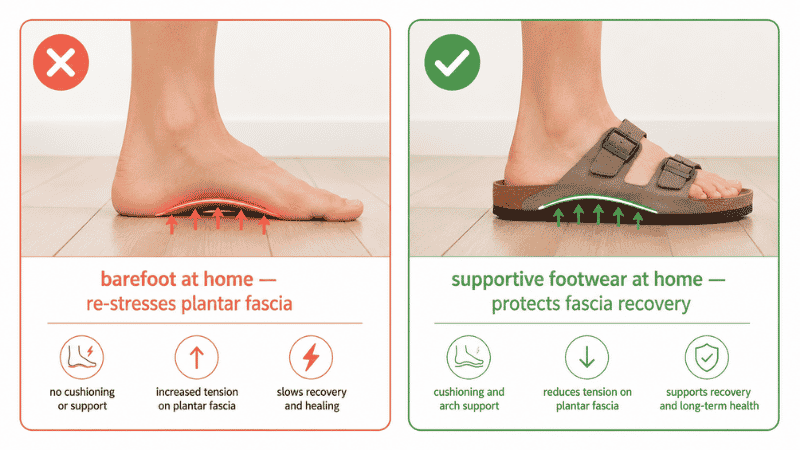
This is the most underrated piece of plantar fasciitis advice, and it comes up repeatedly in real user communities: stop walking barefoot at home.
When you remove your shoes, your foot loses all the support structure that’s been protecting the plantar fascia all day. On hard tile or wood floors — which most modern homes have — every barefoot step re-stresses the attachment point. Many people spend 8 hours in excellent shoes, then spend 4 hours at home barefoot, undoing most of the benefit.
The solution is unglamorous: wear supportive footwear or sandals at home. Specifically, sandals or slippers with contoured arch support — not flat foam slippers. Birkenstock Arizona is the most commonly recommended option in this context, and for good reason: the footbed has arch support, a heel cup, and enough structure to support the fascia during light indoor walking. OOFOS recovery sandals are another strong option, designed specifically for post-activity foot recovery.
This single change — putting on supported footwear before your feet hit the floor every morning — is cited by recovered PF sufferers as one of the most impactful adjustments they made.
Plantar Fasciitis Insoles: When the Shoe Isn’t Enough
Sometimes the right shoe structure isn’t available in the style you need, or you have a shoe that’s otherwise appropriate but lacks specific PF support. This is where aftermarket insoles become genuinely useful.
Superfeet Green — one of the most consistently recommended insoles for PF. The semi-rigid base prevents arch collapse, the deep heel cup stabilizes the heel, and the raised arch profile reduces fascial tension during standing and walking. Works best for flat to neutral arches.
Powerstep Pinnacle — slightly more cushioned than Superfeet Green, with similar structural support. Often preferred by people whose PF is accompanied by generalized foot soreness in addition to heel pain.
Tread Labs Stride — specifically designed for plantar fasciitis, with a deep heel cup and firm arch support that many PF sufferers prefer. More expensive than Superfeet but purpose-designed for the condition.
Important: insoles work best in shoes that have removable stock insoles. If the shoe’s insole is glued in, adding an aftermarket insole on top changes the internal volume and can create new pressure points. Always check that the stock insole is removable before buying an insole.
If You Have 10 Minutes Right Now
You can’t change your shoes in the next 10 minutes, but you can do two things immediately:
Put on the most structured shoes you own. Not the cushiest — the most structured. If you have an old pair of running shoes with firm midsoles, they’re probably better for your plantar fascia than soft slippers or bare feet.
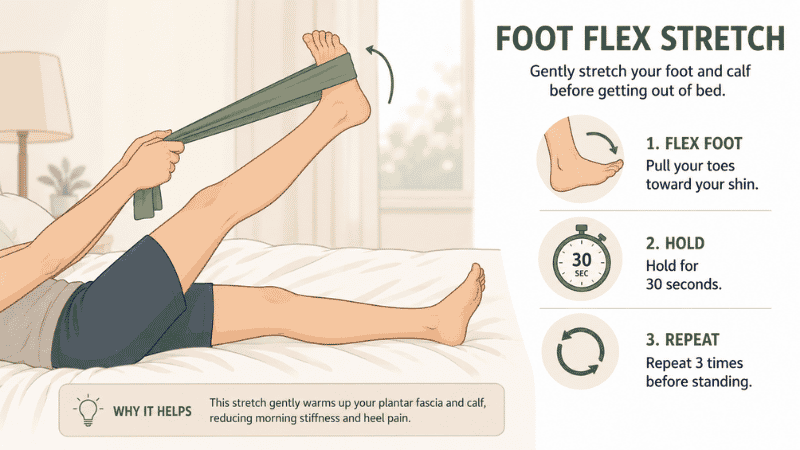
Stretch your calves before your first step tomorrow morning. While still in bed, flex your foot toward your shin and hold for 30 seconds. Repeat three times on each side. This pre-stretches the calf-Achilles-fascia chain before you put weight on it, reducing that first-step pain significantly. Research published in the Journal of Bone and Joint Surgery found that calf stretching was among the most effective conservative treatments for plantar fasciitis.
When Shoes and Stretching Aren’t Enough
Plantar fasciitis responds to conservative treatment in most cases, but recovery takes time — typically months, not weeks. If you’ve been consistent with appropriate footwear and stretching for 8–12 weeks and symptoms haven’t meaningfully improved, it’s time to escalate.
See a podiatrist if:
- Pain is severe enough to significantly limit daily activity
- You’ve had symptoms for more than 3 months without improvement
- Pain is present during rest, not just weight-bearing
- You hear or feel a pop in the heel (possible plantar fascia rupture — rare but serious)
- Symptoms are getting progressively worse despite shoe changes
A podiatrist can prescribe custom orthotics, recommend night splints (which keep the fascia stretched overnight, dramatically reducing morning pain), administer corticosteroid injections for acute cases, or refer to physical therapy for targeted soft tissue work.
Don’t wait too long. Chronic plantar fasciitis that persists beyond 12–18 months becomes significantly harder to treat.
Frequently Asked Questions
Do shoes cause plantar fasciitis? They can contribute significantly. The most common shoe-related causes include: zero-drop or flat shoes that put the fascia under constant maximum tension, worn-out shoes whose midsoles have lost their support, and shoes that are structurally inappropriate for the wearer’s foot type (neutral shoes on severely overpronating flat feet, for example). Sudden increases in activity in unsupportive shoes are a particularly common trigger.
What shoes help plantar fasciitis most? Based on consistent patterns across podiatrist recommendations and real user outcomes: Hoka (particularly the Bondi and Clifton lines for their combination of cushioning and structure), Brooks (Adrenaline GTS for flat feet, Ghost for neutral arches), ASICS (Gel-Kayano for structured support), and New Balance (860 and 1080 series). The common thread is substantial heel cushioning, meaningful arch support, and a heel drop of 8mm or higher.
Are Hoka shoes good for plantar fasciitis? Hoka is among the most consistently recommended brands for plantar fasciitis in both clinical and real-user contexts. The thick, resilient midsole provides excellent heel cushioning, the heel cup is deep, and the rocker geometry reduces peak stress at the heel during push-off. The Bondi (maximum cushion) and Clifton (lighter, slightly more responsive) are the most commonly recommended models. The main caveat: Hoka’s heel drop is typically 4–5mm, lower than the 8–12mm often recommended for PF. Many people find this works fine; others do better with higher-drop options from Brooks or ASICS.
Is walking barefoot bad for plantar fasciitis? Yes, particularly on hard floors. Barefoot walking removes all external arch support and heel cushioning, forcing the plantar fascia to bear full load without mechanical assistance. Even short periods of barefoot walking at home — from the bed to the bathroom, from the couch to the kitchen — accumulate over the course of a day. Supported footwear from the moment your feet hit the floor is consistently cited as an important factor in PF recovery.
How long do shoes for plantar fasciitis take to work? Most people notice some improvement within 2–4 weeks of consistent use of appropriate footwear. Significant pain reduction typically takes 6–12 weeks. Full resolution of symptoms can take 6–18 months. If you’ve switched to appropriate shoes and notice no improvement whatsoever after 4–6 weeks, the shoe choice may not be matching your specific foot type and PF presentation — or other conservative treatments (stretching, insoles, night splints) need to be added.
The Bottom Line
Plantar fasciitis shoes need to do specific things: cushion the heel at the attachment point, support the arch in a position that reduces fascial tension, maintain a heel drop that keeps the fascia slightly shortened, and hold the heel in a stable position that reduces micro-irritation with every step.
Most shoes — even ones labeled “supportive” or “comfortable” — don’t do all four of these things simultaneously. The brands and models that consistently appear in real user success stories (Hoka Bondi, Brooks Adrenaline GTS, ASICS Gel-Kayano, New Balance 860) aren’t there by coincidence. They share those four features in different proportions depending on the model.
Start with the features, not the brand name. Test the heel cushioning, the arch support match for your foot type, the heel drop, and the midfoot rigidity. When a shoe passes all four tests and fits your foot correctly, you’ve found your shoe.
If you’re also standing on your feet all day and plantar fasciitis is making shifts genuinely miserable, our guide on shoes for standing all day covers the specific additional demands of prolonged standing. And if you’re not sure whether your foot type is contributing to the problem, our flat feet vs high arches guide will help you figure out which type of arch support your plantar fascia actually needs.
References
- Riddle, D.L., & Schappert, S.M. “Volume of ambulatory care visits and patterns of care for patients diagnosed with plantar fasciitis.” Physical Therapy, 2004.
- DiGiovanni, B.F., et al. “Tissue-specific plantar fascia-stretching exercise enhances outcomes in patients with chronic heel pain.” Journal of Bone and Joint Surgery, 2003.
- Wearing, S.C., et al. “The pathomechanics of plantar fasciitis.” Sports Medicine, 2006.
- American Academy of Orthopaedic Surgeons (AAOS). Plantar Fasciitis. orthoinfo.aaos.org
- Cheung, J.T., et al. “Effects of plantar fascia stiffness on the biomechanical responses of the ankle-foot complex.” Clinical Biomechanics, 2004.
- Puttaswamaiah, R., & Chandran, P. “Degenerative plantar fasciitis: A review of current concepts.” Foot, 2007.