
Numb toes, blisters, and black toenails are common complaints on the trail. In many cases, the problem isn’t your feet—it’s a hiking shoe with a narrow, tapered toe box that doesn’t leave enough room for your toes to move naturally as your feet swell during a long hike.
Wide toe box hiking shoes give your toes more natural space without giving up the support, traction, and protection needed for hiking. The right pair depends on more than a “wide” label. Toe box shape, heel lockdown, cushioning, heel-to-toe drop, your foot shape, and the terrain you hike all affect long-distance comfort. This guide shows what each feature does, so you can choose wide toe box hiking shoes that fit well and stay comfortable mile after mile.
Overview: What Actually Matters When Choosing Wide Toe Box Hiking Shoes
Choosing a wide toe box hiking shoe isn’t just about buying a bigger size — it’s about matching toe box shape, heel fit, cushioning, and drop to your foot and your trail. A shoe can have plenty of length and still crush your toes if the front of the shoe is shaped wrong.
The main factors that determine a good fit are:
- Toe box shape — foot-shaped vs tapered
- Heel lockdown — how securely the heel stays in place
- Cushioning level — how much impact protection you need
- Drop height — zero-drop vs traditional heel-to-toe drop
- Foot shape — width, arch height, and heel structure
- Hiking terrain — day hikes vs backpacking vs technical trails
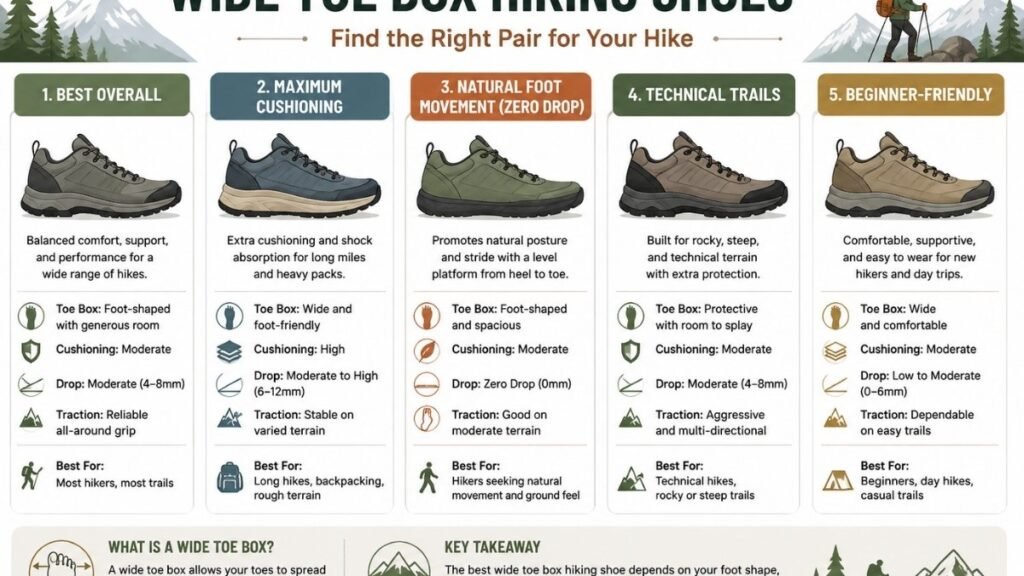
Quick answer by need:
| Priority | Best Fit |
|---|---|
| Best overall balance | Wide toe box, secure heel, reliable traction |
| Best for maximum cushioning | High stack height, strong shock absorption |
| Best for natural foot movement | Zero-drop, flexible platform |
| Best for technical trails | Protective midsole, strong outsole grip |
| Best for beginners | Moderate cushioning, low-drop transition |
There’s no single “best” wide toe box hiking shoe — the right one depends on how your foot is shaped and how you actually hike. The sections below break down each factor so you can shop with a clear checklist instead of guesswork.
Why Toe Box Shape Matters More Than Shoe Width
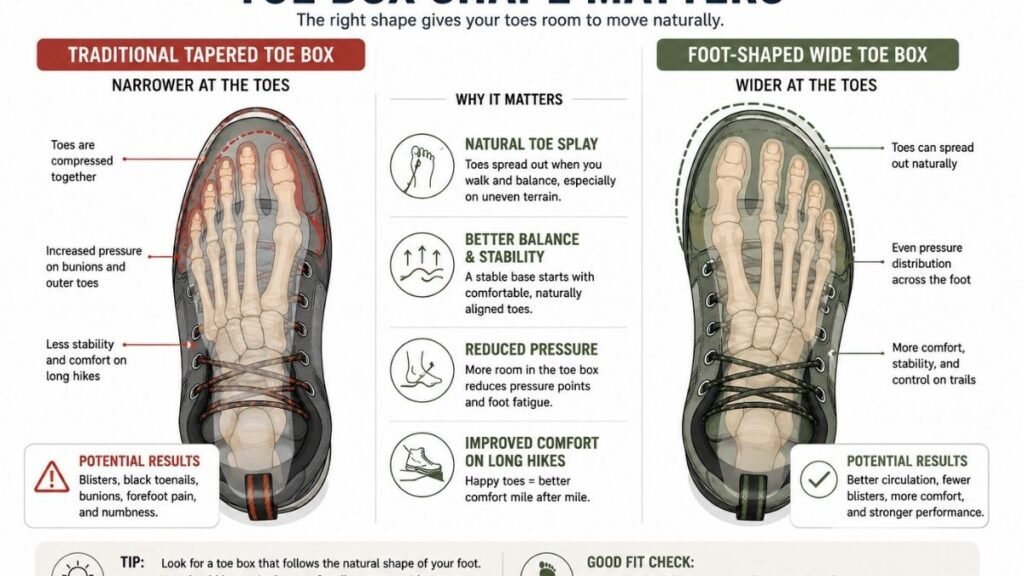
A wide toe box hiking shoe has a front that follows the natural shape of your foot instead of narrowing toward the toes. Your toes have room to spread naturally during long hikes, which helps reduce pressure and improves comfort. A shoe labeled “wide” isn’t always built this way, so understanding the difference makes shopping much easier.
Wide Toe Box vs Wide Width Shoes
A wide width shoe (often labeled 2E or 4E) adds extra room across the entire foot — through the midfoot and heel as well as the toes. A true wide toe box shoe specifically widens the front of the shoe to follow the natural shape of splayed toes, while the heel and midfoot can stay snug and structured.
| Feature | Wide Toe Box | Wide Width (2E/4E) |
|---|---|---|
| Toe space | Foot-shaped, roomier | Wider, but often still tapered |
| Heel fit | Can stay snug and secure | Often wider throughout, less locked-in |
| Midfoot | Standard structure | Wider overall |
| Best for | Toe splay and forefoot comfort | Overall foot volume |
A common fitting mistake is assuming a wide width shoe automatically solves toe compression — it often doesn’t, because the toe box shape itself may still taper toward the front, even if the shoe is wider overall.
Why Traditional Hiking Shoes Feel Narrow
Most traditional hiking shoes use a tapered toe shape that narrows toward the big toe, which restricts natural toe movement. On long hikes, this reduced movement contributes to discomfort that gets worse with mileage rather than better.
It’s a strange but common experience: a shoe can feel loose and roomy when you first try it on, walking around a store for a few minutes, while still squeezing the toes uncomfortably once you’re several hours into a real hike. That’s the toe box shape at work, not the overall size.
Related reading: Hiking Shoe Sizing Guide
Why Your Toes Need More Room on the Trail
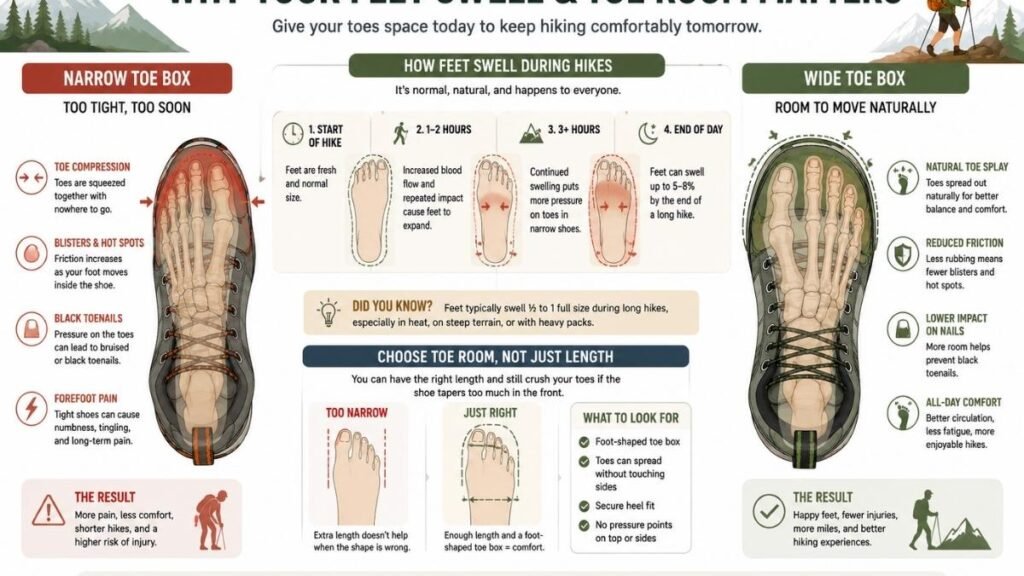
Long hours on uneven trails put constant pressure on the front of your feet. Add natural foot swelling, and a narrow toe box quickly becomes uncomfortable. Wide toe box hiking shoes give your toes the space to move naturally, helping reduce blisters, black toenails, and forefoot pain over long distances.
Why Toes Need More Space During Long Hikes
Feet naturally swell during extended activity, and repeated impact on uneven terrain increases pressure on the forefoot with every step. A toe box that fit fine at the start of a hike can start causing real discomfort by hour three or four, simply because the foot itself has changed shape slightly.
Wide Toe Box Does Not Mean Less Support
A wider front end doesn’t have to come at the cost of stability. Heel lockdown and midfoot structure are what keep the foot secure during movement — a shoe can offer generous toe room and still feel controlled and supportive if these other elements are done well.
Signs your hiking shoes are too narrow:
- Toes touching or pressing against the sides
- Numbness or tingling in the toes
- Hot spots forming during the hike
- Black or bruised toenails afterward
- General forefoot pressure or aching
Many hikers notice that shoes feeling perfectly comfortable for the first fifteen minutes in a store can become genuinely painful several hours into a real trail — a mismatch that only shows up once feet swell and fatigue sets in.
Related reading: How to Prevent Hiking Blisters
Choosing the Right Cushioning, Drop, and Protection
Two hiking shoes can have the same toe room and still feel completely different on the trail. Cushioning, heel-to-toe drop, and protective features all change the way a shoe performs over long distances. Understanding these differences makes it much easier to choose wide toe box hiking shoes that match your hiking style.
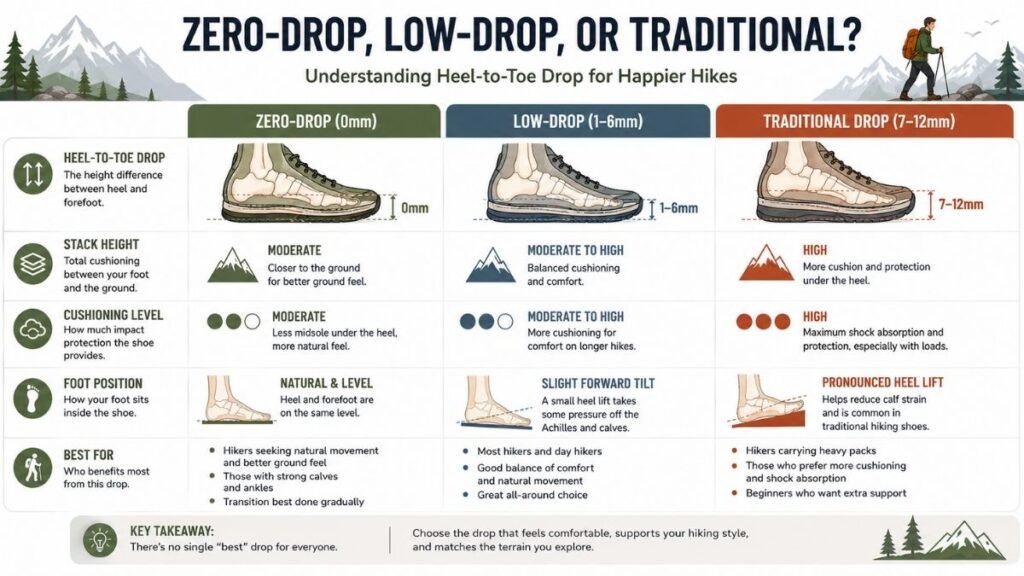
Heel-to-toe drop measures the height difference between the heel and the forefoot. Traditional hiking shoes raise the heel slightly, while zero-drop shoes keep the foot on a level platform. Neither design is better for everyone, but each creates a different feel on the trail.
Zero-Drop Wide Toe Box Hiking Shoes
Zero-drop shoes position the foot the way it would sit naturally on flat ground, which many hikers find reduces certain types of foot fatigue over time. That said, switching to zero-drop from a traditional heel-lifted shoe can create a noticeable adjustment period for the calves and Achilles tendon, since those muscles are used to a different working angle.
Cushioned Wide Toe Box Hiking Shoes
More cushioning and a higher stack height improve shock absorption, which tends to matter more on long-distance hikes and rocky trails where repeated impact adds up. The trade-off is a bit less “ground feel” and typically a slightly heavier shoe.
| Type | Ground Feel | Impact Protection | Best For |
|---|---|---|---|
| Traditional drop | Lower | Moderate | Hikers used to standard footwear |
| Low drop | Moderate | Moderate-high | Transitioning hikers |
| Zero drop | Highest | Varies with cushioning | Natural movement, shorter adjustment trails |
Switching directly from a traditional, cushioned hiking boot to a zero-drop wide toe box shoe is one of the more common causes of calf soreness or Achilles discomfort in the first few weeks. Easing into the transition with shorter hikes first tends to prevent this.
Related reading: Zero Drop Shoes Transition Guide
Your Foot Shape Matters as Much as the Toe Box
Heel fit, arch support, and overall shoe shape all affect the way your feet feel after several miles. Choosing wide toe box hiking shoes that match your foot shape makes a noticeable difference in comfort and stability.
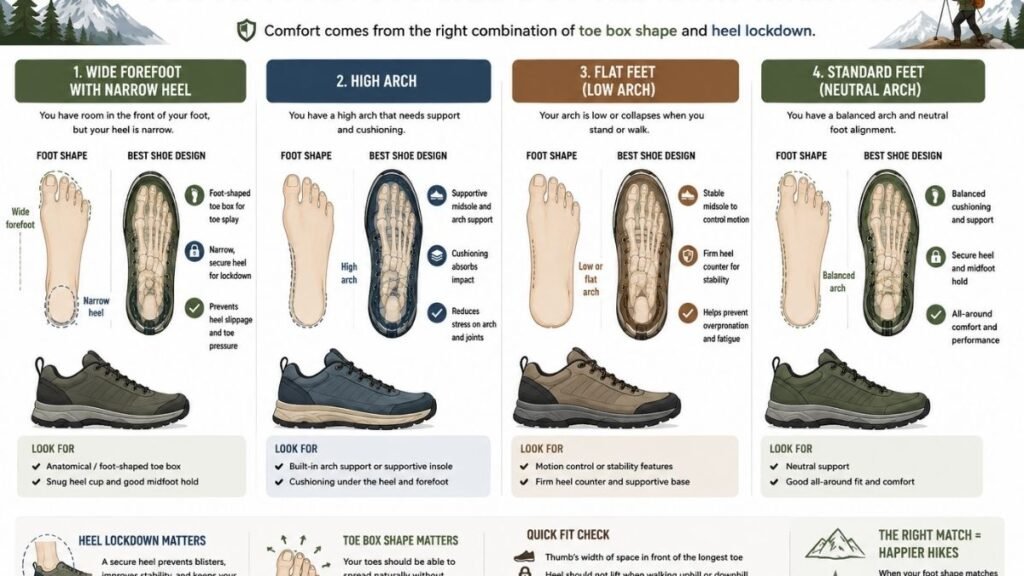
Wide Forefoot With Narrow Heel
This combination is trickier than it sounds. Going with an oversized wide shoe to accommodate the forefoot often sacrifices heel lockdown, leading to slipping and rubbing. Prioritizing secure heel lacing systems matters more here than simply sizing up.
High Arch Feet
Higher arches typically need more cushioning under the midfoot to distribute pressure evenly, since a flatter insole can create pressure points along the arch during long hikes.
Flat Feet or Plantar Fasciitis Concerns
Flatter feet or plantar fasciitis concerns generally benefit from more structured stability features. Support needs vary quite a bit between individuals, so what works well for one flat-footed hiker may not work as well for another.
Men’s vs Women’s Wide Toe Box Fit Differences
Men’s wide toe box shoes tend to have a wider heel structure and different overall volume distribution. Women’s models often combine a wider forefoot with a narrower heel, which can increase the risk of heel slip if the lacing isn’t dialed in properly.
| Foot Shape | Recommended Features |
|---|---|
| Wide forefoot, narrow heel | Adjustable lacing, secure heel lock |
| High arch | Cushioned midsole, even pressure distribution |
| Flat feet / plantar fasciitis | Structural support, stability features |
| Standard width | Balanced toe box and standard heel fit |
A common frustration is finding a shoe with plenty of toe space that still doesn’t work — often because the heel shape doesn’t match the wearer’s foot, causing slipping or blisters at the back of the foot instead of the front.
Related reading: Best Shoes for Plantar Fasciitis
Trail Conditions Matter as Much as Fit
Comfort comes from more than a roomy toe box. Easy trails, rocky climbs, muddy paths, and long backpacking trips place different demands on your shoes. Wide toe box hiking shoes feel their best when their cushioning, traction, and protection match the terrain ahead.
Day Hiking and Easy Trails
For maintained, easy trails, lightweight and flexible wide toe box shoes with good breathability are usually the most comfortable option, since protection demands are lower.
Backpacking and Heavy Loads
Carrying a loaded pack calls for more cushioning, stability, and protective structure to handle the added weight over long distances.
Technical Terrain and Rocky Trails
Rocky or technical trails benefit from a protective outsole, a rock plate to shield the sole from sharp surfaces, and stronger traction patterns.
Waterproof vs Non-Waterproof Wide Toe Box Shoes
Waterproof (often Gore-Tex) shoes keep water out in wet, cold conditions, but they trade away some breathability. In hot weather or during frequent stream crossings, non-waterproof, fast-drying shoes are usually more comfortable.
| Hiking Scenario | Recommended Features |
|---|---|
| Day hikes, easy trails | Lightweight, flexible, breathable |
| Backpacking, heavy pack | More cushioning, added stability |
| Technical, rocky terrain | Rock plate, protective outsole, strong grip |
| Wet, cold conditions | Waterproof membrane |
| Hot or humid climates | Non-waterproof, breathable mesh |
A waterproof shoe isn’t automatically the smarter buy — in warm, humid environments or trails with frequent water crossings, a non-waterproof shoe that dries quickly often keeps feet more comfortable than one that’s technically “protected” but stays damp for hours afterward.
Related reading: Hiking Shoes vs Boots vs Trail Runners
Which Wide Toe Box Hiking Shoes Fit Your Hiking Style?
A shoe that feels perfect for an easy weekend hike may not perform as well on rocky trails or long backpacking trips. Cushioning, protection, and stability all change the hiking experience. Looking at wide toe box hiking shoes by category helps narrow down the best choice for your next adventure.
| Category | Best For | Foot Shape | Terrain | Cushion Level | Drop Style | Main Limitation |
|---|---|---|---|---|---|---|
| Best overall | Balanced everyday hiking | Standard to wide | Day hikes, moderate trails | Moderate | Low to moderate | Not specialized for extremes |
| Best cushioned | Long-distance comfort | Standard to wide | Long trails, backpacking | High | Moderate | Heavier, less ground feel |
| Best zero-drop | Natural foot movement | Wide, flexible feet | Moderate trails | Varies | Zero | Adjustment period needed |
| Best technical | Rocky, uneven terrain | Standard to wide | Technical trails | Moderate-high | Moderate | Less flexible for easy trails |
| Best for wide forefoot + narrow heel | Combination foot shapes | Wide forefoot, narrow heel | Varies | Moderate | Varies | Requires careful lacing |
| Best budget-friendly | Occasional hikers | Standard to wide | Easy to moderate trails | Basic to moderate | Moderate | Fewer premium materials |
The “widest” shoe on the shelf isn’t automatically the best choice — if traction or heel stability is weak, extra toe room won’t make up for a shoe that feels unstable or unsafe on real terrain. Balancing all the factors above matters more than maximizing any single one.
Make Sure the Fit Holds Up on the Trail
The real test is how your foot sits inside the shoe during movement, especially on descents. Toe room, heel lockdown, socks, and foot swelling all need to be checked before the shoe reaches the trail.
How Much Toe Room Do You Need?
Aim for roughly a thumb’s width of clearance in front of your longest toe, along with enough side space for your toes to spread naturally without touching the edges of the shoe.
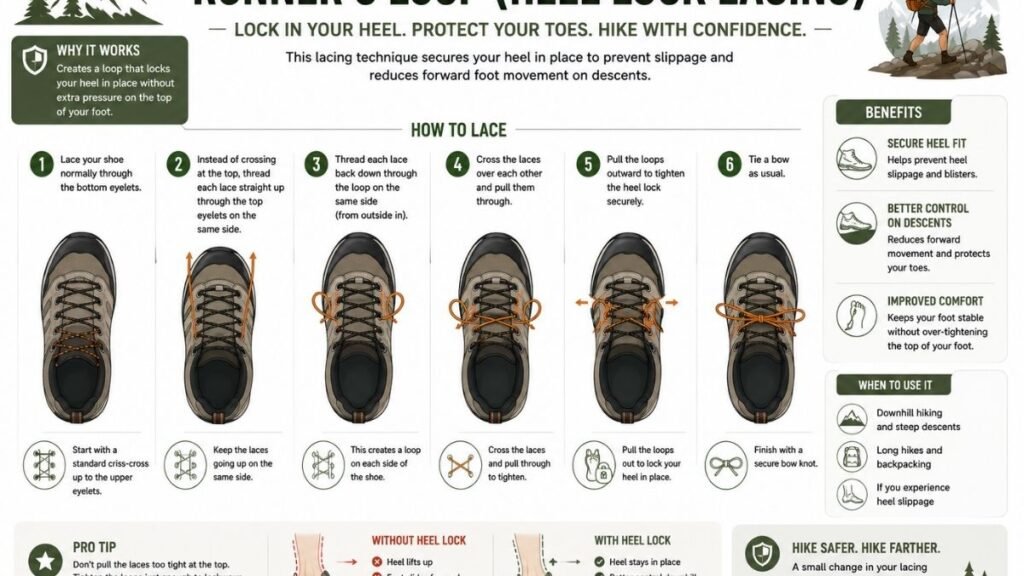
How to Prevent Heel Slip in Wide Toe Box Shoes
Proper sizing matters, but so does the shoe’s heel cup shape and lacing system. A “runner’s loop” or heel-lock lacing technique — looping the laces through the top eyelets before tying — can noticeably reduce heel slip without needing a smaller shoe overall.
Wide toe box hiking shoe fit checklist:
- Measure your feet in the evening, when they’re naturally a bit more swollen.
- Wear the hiking socks you’ll actually use on the trail.
- Confirm toe clearance in front of your longest toe.
- Check that toes have room to splay side to side without pressing on the shoe walls.
- Test heel lockdown — the heel shouldn’t lift or slide when you walk.
- Try heel-lock lacing if you notice any slipping.
- Walk on a downhill incline if possible to test toe clearance during descent.
- Leave a small amount of room to account for foot swelling on longer hikes.
The downhill test is one of the most useful checks you can do in-store: walk down an incline and pay attention to whether your toes hit the front of the shoe, and whether your heel stays locked in place. If your toes jam forward or your heel lifts, that same movement will likely cause pain or blisters on a real descent.
Related reading: Hiking Shoe Fit Guide
FAQ
What is the difference between a wide toe box shoe and a wide width (2E/4E) shoe? A wide toe box shoe widens specifically at the front to let toes splay naturally, while a wide width shoe adds extra room throughout the entire foot, including the midfoot and heel. You can have a wide width shoe that still tapers at the toes, so it’s worth checking toe box shape specifically rather than relying on width labels alone — a [shoe width chart guide] can help clarify how these sizing systems actually differ.
What are the best hiking shoes with a wide toe box and good cushioning? Look for models that combine a foot-shaped toe box with a higher stack height and strong midsole cushioning, since these two features together handle both toe comfort and long-distance impact protection. Checking cushioning specs alongside toe box shape, rather than either alone, gives a clearer picture of long-hike comfort.
Is Topo Athletic a better alternative to Altra for wide toe box hiking shoes? Both brands are known for foot-shaped toe boxes, though their cushioning, drop height, and overall fit can differ noticeably between specific models. Rather than choosing a brand outright, comparing specific shoe specs — drop height, stack height, and heel fit — against your own foot shape will give a more reliable answer.
Do I need zero-drop shoes if I want a shoe with a wide toe box? No — a wide toe box and drop height are separate features, and plenty of wide toe box hiking shoes come in traditional or low-drop versions. Zero-drop is worth considering if you want the most natural foot position, but it isn’t a requirement for getting a roomier toe box.
How do I stop my feet from sliding forward and hitting my toes during steep descents in wide toe box shoes? This usually comes down to heel lockdown rather than toe box width — using a heel-lock (runner’s loop) lacing technique and confirming a secure heel fit typically solves the problem. If sliding continues even with proper lacing, the shoe’s overall length or heel shape may not match your foot.
Are wide toe box hiking shoes suitable for flat feet or plantar fasciitis? They can be, as long as the shoe also provides adequate arch support or structural stability, since a wide toe box alone doesn’t address arch or heel needs. Pairing a wide toe box shoe with supportive insoles is a common solution for hikers managing plantar fasciitis discomfort.
How long does it take to adapt when switching to zero-drop wide toe box hiking shoes? Adjustment periods vary, but many people notice some calf or Achilles tightness in the first few weeks as those muscles adapt to a different foot position. Easing in with shorter, more frequent hikes before attempting a long trail tends to make the transition smoother.
Are true barefoot shoes recommended for long-distance backpacking and rugged terrain? Minimalist barefoot-style shoes generally offer less cushioning and protection, which can be a real limitation on long, heavy-load backpacking trips or sharp, rocky terrain. For those conditions, a wide toe box shoe with moderate cushioning and some protective structure is usually a more practical choice.
Final Thoughts
A great hike shouldn’t end with sore toes, blisters, or a black toenail that reminds you of the trip for weeks afterward. The right wide toe box hiking shoes give your feet the space to move naturally while keeping the support and protection you need on the trail.
Taking a little extra time to find the right pair pays off every time you head outdoors. Comfortable feet let you focus on the views, the fresh air, and the miles ahead—not the pain inside your shoes.
📝 Editor’s Note
Finding comfortable hiking shoes sounds simple until you realize that a “wide” label doesn’t always mean more room for your toes. Toe box shape, heel fit, cushioning, and trail conditions all work together, which explains why one pair feels great and another causes blisters after only a few miles.
This guide focuses on the details that make the biggest difference on the trail:
- 👣 Natural Toe Room — Understanding why toe box shape matters more than shoe width.
- 🥾 Comfort That Lasts — Choosing the right cushioning, heel fit, and support for long hikes.
- 🏔️ Trail-Ready Fit — Matching your shoes to your foot shape and the terrain you explore.
The goal isn’t to convince you that every hiker needs the same shoe.
It’s to help you find wide toe box hiking shoes that feel comfortable every time you head out on the trail.
🥾 Continue Exploring Hiking Shoe Fit
Finding the right hiking shoe doesn’t stop at toe room. These practical guides will help you understand shoe fit, foot shape, and hiking footwear, making it easier to choose comfortable shoes for every trail.
- Wide Toe Box Walking Shoes — Learn how walking shoes with a roomy toe box compare to hiking shoes and which option works best for your daily activities.
- Shoe Width Chart Guide — Understand standard shoe width measurements and learn what labels like Narrow, Wide, and Extra Wide actually mean.
- How to Measure Your Foot Size — Measure your foot length, width, and arch at home to find the right shoe size before you buy.
- Flat Feet vs. High Arches Guide — Discover how different arch types affect shoe fit, support, and long-distance hiking comfort.
- Hiking Shoes vs. Hiking Boots — Compare weight, support, traction, and protection to decide which option fits your hiking style.
- How to Stretch Shoes Guide — Learn safe ways to create a little extra room in hiking shoes without damaging their structure.
❤️ A Final Note
Finding the right shoes shouldn’t be guesswork.
At KickVerdict, we create practical guides, honest comparisons, and real-world recommendations to help you choose the right footwear for your activities, foot shape, and everyday life.
Our goal is simple: helping you make smarter footwear choices with confidence.