
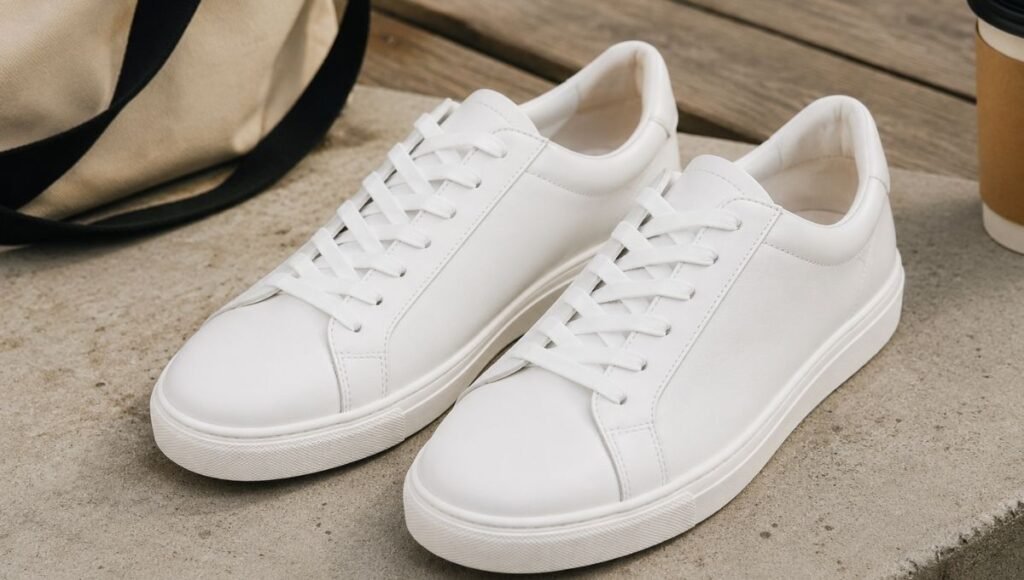
The brief sounds simple: find a sneaker that looks good with jeans, doesn’t embarrass you at a casual dinner, survives the commute, and doesn’t destroy your feet by 4pm. One shoe. Multiple contexts. Daily use.
You’d think this would be a solved problem by now. The sneaker market is enormous, the options are endless, and every fashion publication runs a “best everyday sneakers” piece at least twice a year. And yet people consistently end up with the same disappointments — the trendy pick that falls apart in four months, the comfortable one that looks too athletic for anything beyond the grocery store, the classic silhouette that looks perfect but weighs your feet down by the end of the day.
The issue is that most lifestyle sneaker guides are written by people optimizing for aesthetics. They’ll tell you a shoe looks great. They won’t tell you whether the foam collapses after 200 hours of standing, whether the mesh upper holds up to daily wear and bag friction, or whether it works for a wide foot that spreads under load.
This guide does both. Everyday sneakers that look good and hold up — with an honest take on which popular options fall short in ways the style press won’t mention.
Key Takeaways
- Lifestyle sneakers live at the intersection of aesthetics and function — and the best ones genuinely deliver both, while the worst ones sacrifice one for the other without telling you upfront.
- Midsole foam resilience matters more than thickness for all-day comfort. A thin, resilient foam maintains consistent underfoot feel throughout the day. Thick but soft foam collapses and leaves you standing on a compressed base by hour six.
- Leather uppers outlast mesh by a significant margin for daily use — not because mesh is bad, but because leather handles bag friction, concrete edges, and daily wear patterns without breaking down at the high-contact zones.
- The most commonly cited regret in sneaker communities: buying for how a shoe looks in photos rather than how it holds up at month three.
- Wide-footed buyers have genuine, stylish options that don’t require compromising on either width or aesthetics — but the selection is narrower than the mainstream sneaker press suggests.
- According to research in Applied Ergonomics, footwear worn for prolonged standing and walking should provide adequate arch support and shock absorption — features that vary significantly among lifestyle sneakers marketed primarily for appearance.
What “Lifestyle Sneaker” Actually Means (and Why It Matters)
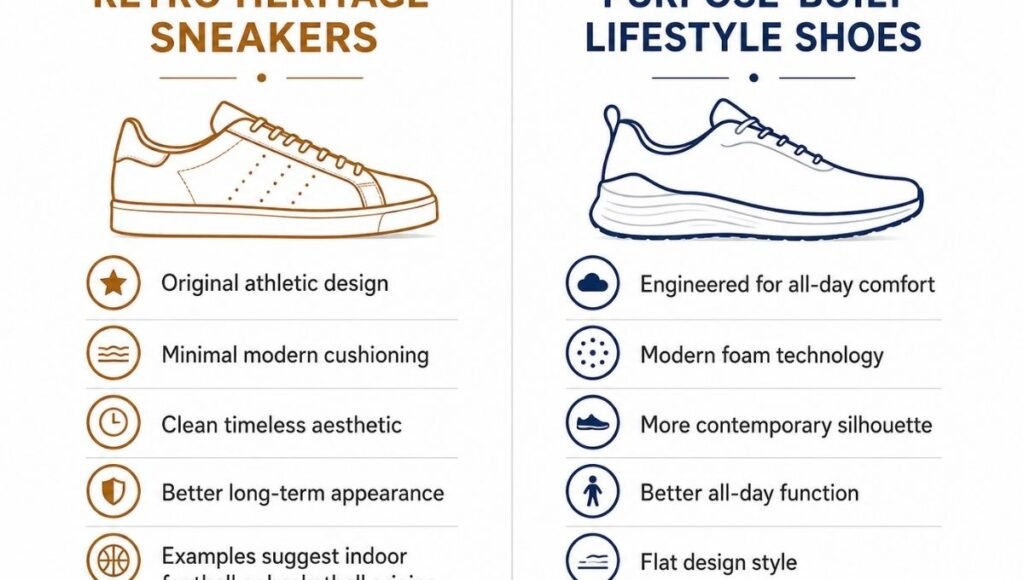
The term lifestyle sneaker gets used loosely in marketing — it can mean anything from a retro running shoe reissued as a fashion piece to a purpose-built everyday shoe with actual comfort engineering. The distinction matters because your expectations should differ significantly between these two things.
Retro runners (Adidas Samba, Nike Air Force 1, New Balance 574) are heritage athletic shoes that became fashion staples. They were originally designed for sport, reissued with updated colorways but largely original construction. The Samba was a 1950s indoor football shoe. The Air Force 1 was a 1982 basketball shoe. Their cushioning, heel drop, and midsole construction reflect those original purposes — not modern all-day walking comfort engineering.
Purpose-built lifestyle shoes (On Cloudtilt, Hoka Clifton in lifestyle colorways, New Balance Fresh Foam 1080 lifestyle versions) are designed around contemporary comfort expectations — responsive foam, wider toe boxes, meaningful cushioning. They sacrifice some of the clean, minimal silhouette of heritage shoes in exchange for functional performance.
Neither category is universally better. But knowing which type you’re buying helps you calibrate your expectations. A pair of Sambas will look exactly as good at month six as they did on day one — but they won’t feel as good underfoot as a purpose-built comfort sneaker. A pair of On Cloudtilts will feel better underfoot but may show wear faster and cost more.
The Durability Problem Nobody Talks About
Most lifestyle sneaker guides skip durability entirely, because most are written for content that gets clicked before people have lived with the shoes. Here’s the honest breakdown of what actually holds up.
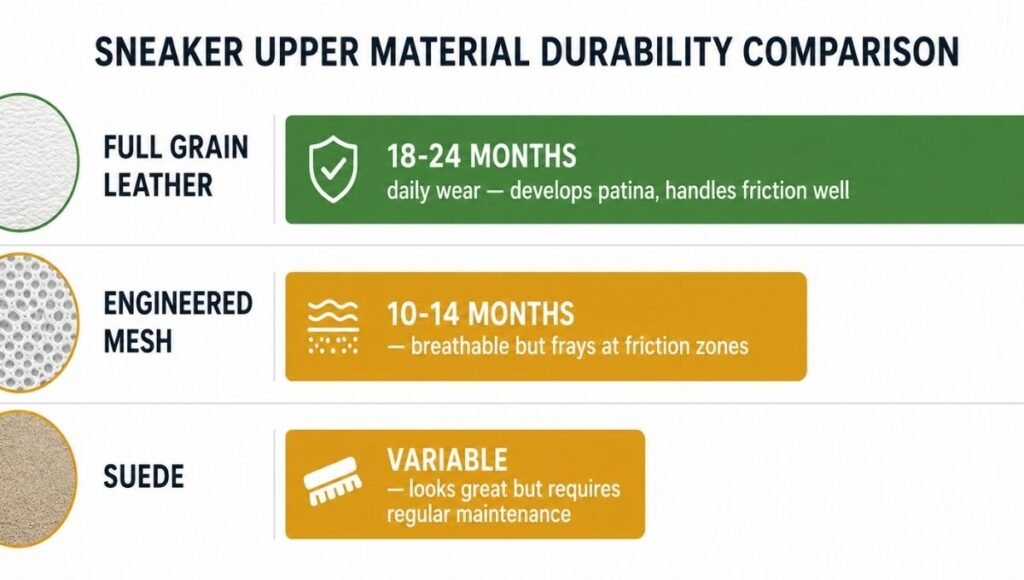
Leather uppers: Most durable for daily use. Full-grain leather develops patina rather than deteriorating — scuffs and scratches can often be buffed out, and the material doesn’t fray or pill the way mesh does. The tradeoff is weight and breathability. Leather shoes are heavier and warmer than mesh equivalents, which matters if you’re walking significant distances in warm weather.
Mesh uppers: More breathable, significantly lighter, less durable under the friction of daily commuting. The high-abrasion zones — where a bag strap contacts the upper, where the toe box contacts desk legs, where the collar wraps around the ankle — show wear faster in mesh than leather. Premium engineered mesh (like that used in New Balance Prism) holds up better than standard knit, but still doesn’t match leather longevity for daily use.
Suede uppers: Looks excellent, holds up moderately, requires the most maintenance. Water stains. Suede nap flattens with wear. If you’re not willing to suede-protect regularly and address marks immediately, suede is a poor daily-use choice regardless of how good it looks on day one.
Midsole longevity: This is where the most significant difference between retro heritage shoes and purpose-built comfort shoes appears. The Air Force 1’s Air unit cushioning, unchanged from the 1980s design, is relatively flat and firm by contemporary standards — it doesn’t collapse, but it also doesn’t provide meaningful cushioning after long days. Modern EVA and PEBA foams (used in New Balance, On, Hoka lifestyle shoes) provide better initial cushioning but compress over time. For daily all-day wear, check for foam resilience with the thumb press test when buying — fast rebound indicates longer lasting cushioning.
The Most Popular Lifestyle Sneakers: An Honest Assessment
Adidas Samba
Aesthetically: near-perfect. The Samba silhouette is clean, versatile, works with almost any casual outfit, and has crossed from streetwear into mainstream style in a way that makes it genuinely easy to wear across contexts.
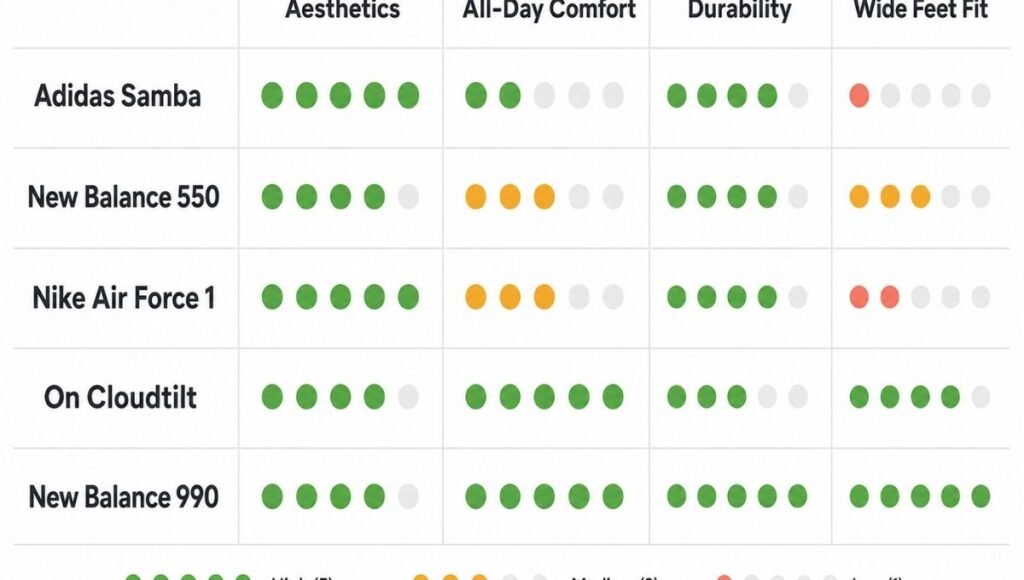
Practically: more limited than its popularity suggests. The Samba’s midsole is notably flat and firm — a relic of its indoor football origins. For standing or walking more than a few hours, many people find it uncomfortable. The heel counter is low and the ankle collar is thin. On wide feet, the Samba runs narrow and the toe box is restrictive. As a shoe you wear for 3–4 hours at a social event: excellent. As an everyday commuter you’ll wear for 8+ hours: probably not your best option.
New Balance 550
One of the more genuinely versatile lifestyle sneakers currently available. The 550 retro basketball silhouette is clean enough for casual-smart contexts, the leather upper holds up well for daily use, and the midsole provides better all-day cushioning than the Samba. Available in a range of colorways that work from casual to business-casual depending on your workplace.
For wide feet: the 550 runs standard to slightly wide, making it more accommodating than many competitors. New Balance’s consistent width engineering means the wide (2E) version is a genuine wide fit, not just a label.
Editor’s pick for versatility: the 550 in white or grey leather hits the balance between looking deliberate and providing functional all-day wear better than most alternatives in its price range.
Nike Air Force 1
A classic for reasons that are real — the clean silhouette, the high ankle option, the sheer breadth of colorway choices, the cultural weight. But the Air Force 1 is also genuinely heavy (it was a basketball shoe built for court support, not walking economy), and the full-length Air unit provides less cushioning than you might expect for a shoe of its bulk.
If you walk significant distances in your daily life, the Air Force 1’s weight becomes noticeable by the second half of the day. If you primarily wear sneakers for social situations and light movement, it’s one of the most consistently stylish options available.
On Cloudtilt
The most comfort-forward option in this comparison. The CloudTec pods provide a noticeably different underfoot experience than standard foam — bouncy, light, and comfortable for extended walking. The silhouette is more contemporary and tech-forward than heritage retro runners, which makes it work better with some outfits and worse with others.
Durability concern: On Cloud’s outsole pod system wears through faster than solid rubber outsoles under heavy daily use. Users who walk significant daily mileage in their Cloudtilts report meaningful pod degradation within 6–8 months. For lighter use — primarily office environments and casual social situations — this is less of an issue.
New Balance 990 Series
The most functional everyday sneaker on this list, at the cost of being the least fashionable by conventional standards. The 990 is made in the USA, has a genuinely cushioned and supportive midsole, lasts significantly longer than most alternatives, and runs available in multiple widths. The aesthetic reads as “serious runner from 2005” more than “contemporary lifestyle sneaker,” which may or may not suit your context.
For people whose priority is “comfortable and durable” with aesthetics as secondary: the 990 delivers better than anything else here. For people who need the shoe to read as stylish first: there are better options.
Lifestyle Sneakers for Wide Feet: The Honest Shortlist
Wide-footed buyers navigate the lifestyle sneaker market with significantly fewer genuine options than standard-footed buyers, and the style press is largely unhelpful because they rarely mention width fit.
New Balance is the most consistently reliable brand for wide feet in lifestyle sneakers. Their width designations (D for standard women’s wide, 2E for men’s wide, 4E for extra-wide) reflect genuine last engineering. The 550, 574, 990, and 1080 lifestyle versions all offer legitimate wide options.
Adidas Samba is a problematic choice for wide feet. The toe box is notably narrow, and sizing up creates heel slippage rather than solving the width issue. Worth trying in person — some people with medium-wide feet find it workable — but proceed with caution.
Nike Air Force 1 accommodates medium-wide feet reasonably well in standard width, because the toe box is relatively generous for a fashion sneaker. For genuinely wide feet (2E+), Nike’s options are limited.
On Cloudtilt runs standard width with a toe box that some wide-footed wearers find acceptable. Not designed for wide feet, but not as problematic as Samba. Try before buying.
Sneakers That Go With Everything: The Versatility Framework
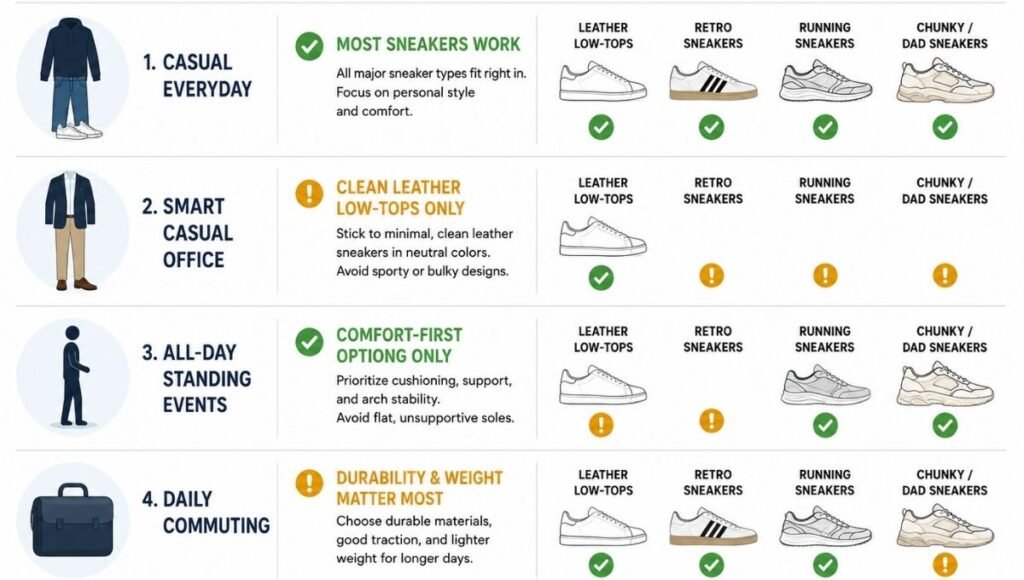
The “goes with everything” promise is only as useful as the outfit contexts you actually have. Here’s how to think about it:
For jeans and casual wear: Almost any clean lifestyle sneaker works. The question is whether it looks intentional rather than accidental. White leather sneakers (550, Air Force 1, Stan Smith) read as clean and deliberate. Bright colorways or obvious athletic features (thick outsoles, reflective panels) can read as incidental.
For smart-casual or business-casual: The shoe needs to either be clearly fashion-forward enough to read as intentional, or clean and minimal enough to be invisible. Good options: New Balance 550 in grey or navy, Common Projects (if budget allows), Veja V-10 leather. Bad options: chunky soles, mesh uppers, obviously athletic silhouettes.
For all-day standing (retail, events, museum visits): Prioritize cushioning over aesthetics here. The On Cloudtilt and New Balance 1080 lifestyle versions provide meaningfully better all-day comfort than heritage retro runners. Our shoes for standing all day guide covers the specific foam resilience requirements in detail.
For commuting: Durability and weight matter more than they do for social situations. Leather uppers survive bag friction. Lighter shoes reduce fatigue on longer commutes. The 550 and 990 handle commuting demands better than the Air Force 1 (too heavy) or Samba (too flat).
What to Actually Look for Before Buying
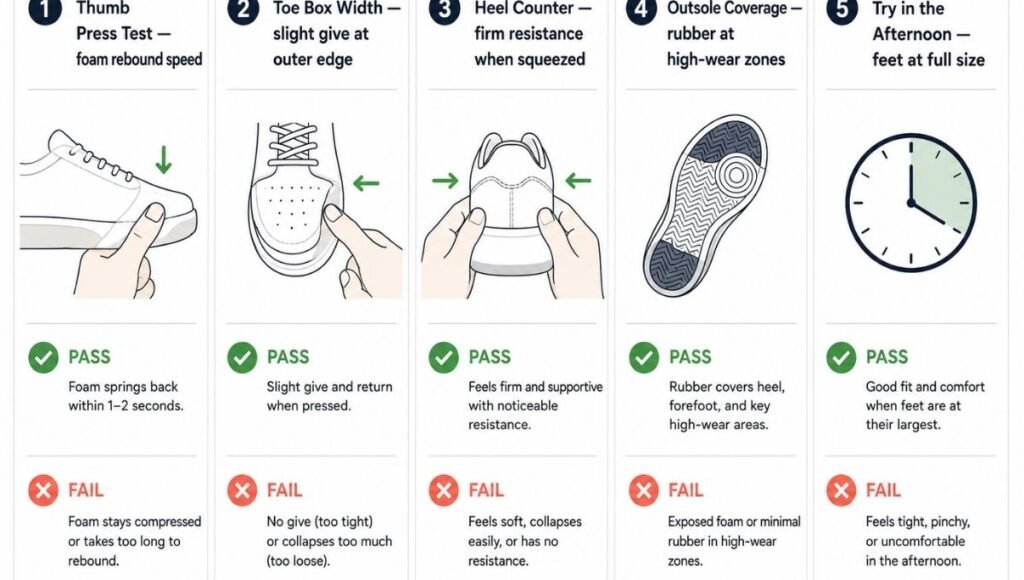
Five checks that the style press never mentions:
The thumb press test. Press your thumb into the forefoot midsole firmly and release. Lifestyle sneakers with good all-day comfort should have meaningful foam rebound. No rebound means the foam is already compressed or is too firm to provide meaningful cushioning under sustained load.
The toe box width check. Stand in the shoe and check whether your little toe is pressed against the side. Your feet spread under load — what feels fine standing still may feel tight after three hours of walking. There should be slight give when you press the outer edge at the widest toe.
The heel counter firmness. Press the back of the shoe. A firm heel counter means stable heel positioning throughout the day. A soft heel counter means the heel moves inside the shoe — which creates friction and blisters over long wear.
The outsole material check. Look at the outsole in the toe and heel zones. Thin rubber over these high-wear areas will deteriorate faster than full rubber coverage. Contrast stitching and thin suede overlays in high-contact zones are aesthetic choices that don’t hold up to daily use.
The try-in-the-afternoon rule. Feet swell during the day. Trying sneakers in the morning can lead to a fit that feels tight by 3pm. Try them in the afternoon when your feet are at their largest.
Frequently Asked Questions
What are the best everyday sneakers? For most people doing genuine all-day wear: New Balance 550 (leather, good width options, versatile colorways) or On Cloudtilt (maximum comfort, more contemporary aesthetic). For wide feet specifically: New Balance 550 or 990 in 2E width. For pure aesthetics with moderate function: Adidas Samba (accepts the comfort limitations). For durability above all else: New Balance 990 series.
What sneakers go with everything? White or grey leather low-top sneakers are the most genuinely versatile category — clean enough for smart-casual, appropriate for everyday, and neutral enough to not clash with most outfit choices. New Balance 550 in white, Veja V-10 leather, and Common Projects Achilles cover this from budget-accessible to premium. The Air Force 1 in white is the most recognized option, though heavier than the alternatives.
What’s the most comfortable everyday sneaker? Comfort depends on what you’re doing. For extended walking and standing: On Cloudtilt or New Balance Fresh Foam 1080 lifestyle versions prioritize cushioning in ways that heritage sneakers don’t. For moderate daily use with better aesthetics: New Balance 550 hits the middle ground. Pure comfort rankings consistently put purpose-built lifestyle shoes above retro runners — the heritage silhouettes weren’t designed for contemporary all-day comfort standards.
Are lifestyle sneakers good for the gym? Generally no — for reasons covered in our training shoes vs running shoes guide. Most lifestyle sneakers have midsoles that are either too flat (retro runners) or too soft (comfort-focused lifestyle shoes) for optimal gym performance. The exception is light cardio and bodyweight work, where lifestyle sneakers are adequate.
How long do lifestyle sneakers last? With daily wear: leather uppers typically 18–24 months before significant aesthetic deterioration. Mesh uppers: 10–14 months. Midsole cushioning: 200–400 hours of wear depending on foam technology and body weight. Retro runners with minimal foam (Samba, Air Force 1) maintain their shape longer but provide less cushioning throughout their life. Modern foam lifestyle sneakers (On, New Balance Fresh Foam) provide better initial cushioning but may show faster aesthetic wear at the foam edges.
The Bottom Line
Lifestyle sneakers that genuinely do everything well are rarer than the market suggests. Most popular options make significant compromises — either on comfort (the Samba, the Air Force 1 for heavy walkers), durability (mesh uppers under daily friction, On Cloud pods under heavy use), or versatility (overly athletic silhouettes that don’t cross into casual contexts cleanly).
The most consistently satisfying choice for most everyday sneaker buyers is the New Balance 550 — it’s not the most fashionable option at any given moment, it’s not the most comfortable, and it’s not the most durable. But it does all three things well enough that you won’t be disappointed at month three in the way that more extreme choices tend to disappoint.
For foot-type specific guidance — particularly if comfort is your primary concern and aesthetics are secondary — our flat feet vs high arches guide will tell you whether the arch support in any of these shoes is actually appropriate for your mechanics. And if you’re standing for extended periods and need your lifestyle sneaker to genuinely hold up for that demand, our shoes for standing all day guide covers what foam and outsole construction actually delivers on that promise.
References
- Menz, H.B., & Morris, M.E. “Footwear characteristics and foot problems in older people.” Gerontology, 2005.
- Wegener, C., et al. “Effect of shoe designs on patient-reported outcomes in people with musculoskeletal foot problems.” Journal of Foot and Ankle Research, 2011.
- Nigg, B.M., et al. “The role of footwear on foot and lower limb biomechanics.” Footwear Science, 2015.
- American Podiatric Medical Association (APMA). Proper Shoe Fit. apma.org
- Barton, C.J., et al. “Running shoe prescription in recreational runners.” Journal of Science and Medicine in Sport, 2011.