
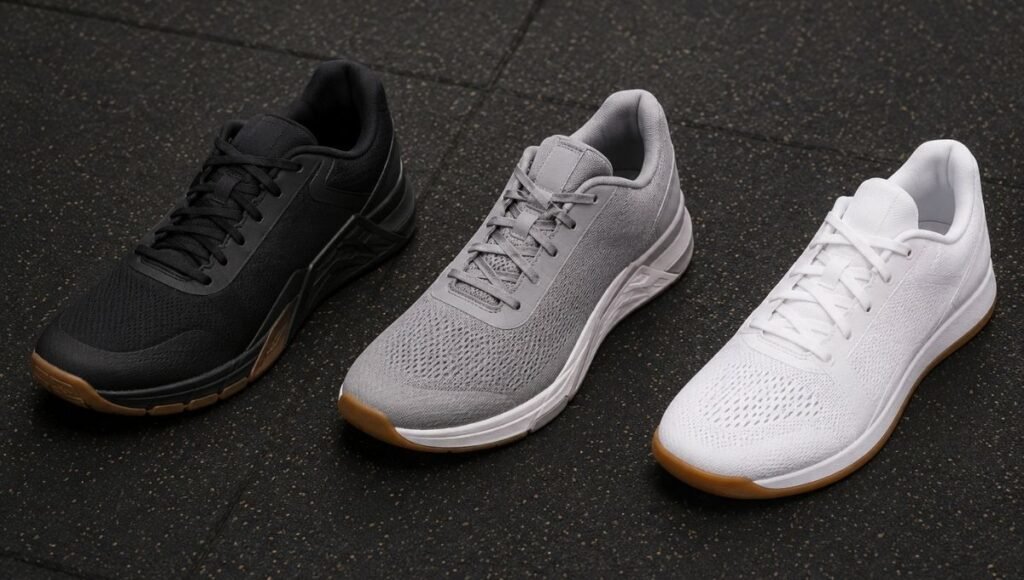
Walk into any CrossFit box or serious gym and you’ll see the same three shoes cycling through the rotation: Nike Metcon, Reebok Nano, NOBULL Trainer. Sometimes people wear them because they’re genuinely the best choice for their training. Sometimes they wear them because those are the three names they’ve heard and they picked one more or less at random.
The three shoes are genuinely different. Not different in the way that marketing departments want you to think — not “this one is for power, this one is for speed” — but different in the specific trade-offs they make between lifting stability and running comfort, between a narrow secure fit and a wider more accommodating one, and between durability and flexibility. Getting the wrong one doesn’t ruin your training, but getting the right one makes a noticeable difference, especially for the moments that matter: heavy squats, rope climbs, running sections in WODs.
This comparison is written primarily for women doing CrossFit, HIIT, and mixed gym training — because most cross-training shoe comparisons are written from a male-athlete perspective, and the fit, width, and training-mix considerations differ enough to warrant a dedicated guide. Men doing similar training will find the analysis equally useful.
Key Takeaways
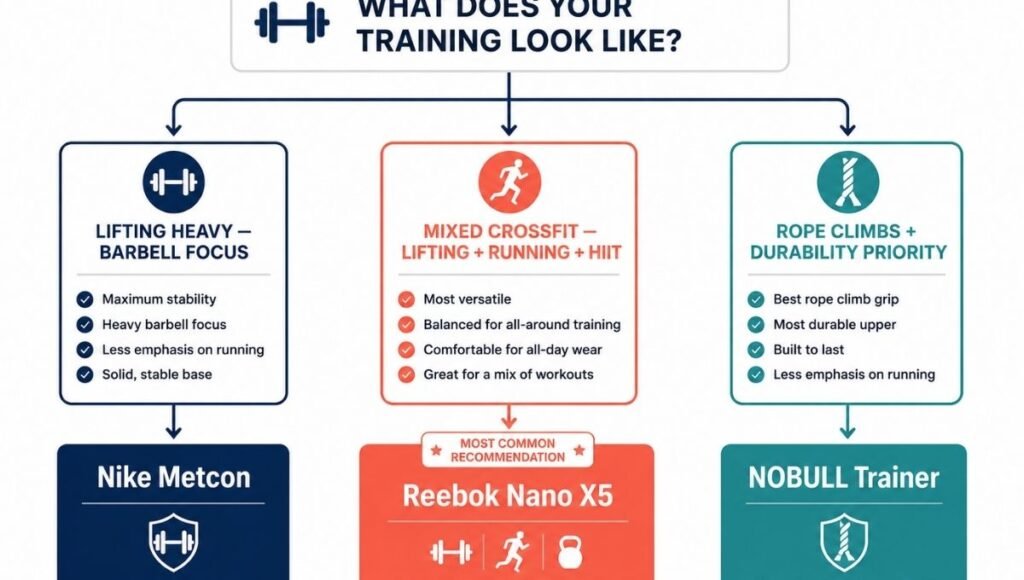
- Nike Metcon is the most stable lifting shoe of the three, with a dense heel and non-compressible Hyperlift insert that creates a firm platform for squats, cleans, and heavy pulls. Trade-off: it’s the least comfortable for running sections and all-day wear.
- Reebok Nano X5 is the most versatile — better for mixed CrossFit programming that includes running, better for all-day wear, and more accommodating for wider feet. Trade-off: slightly less stable than Metcon under maximal lifting loads.
- NOBULL Trainer has the most durable upper (SuperFabric resists abrasion better than woven mesh) and the most stable flat base for pure lifting. Trade-off: least comfortable for running, narrowest effective fit experience.
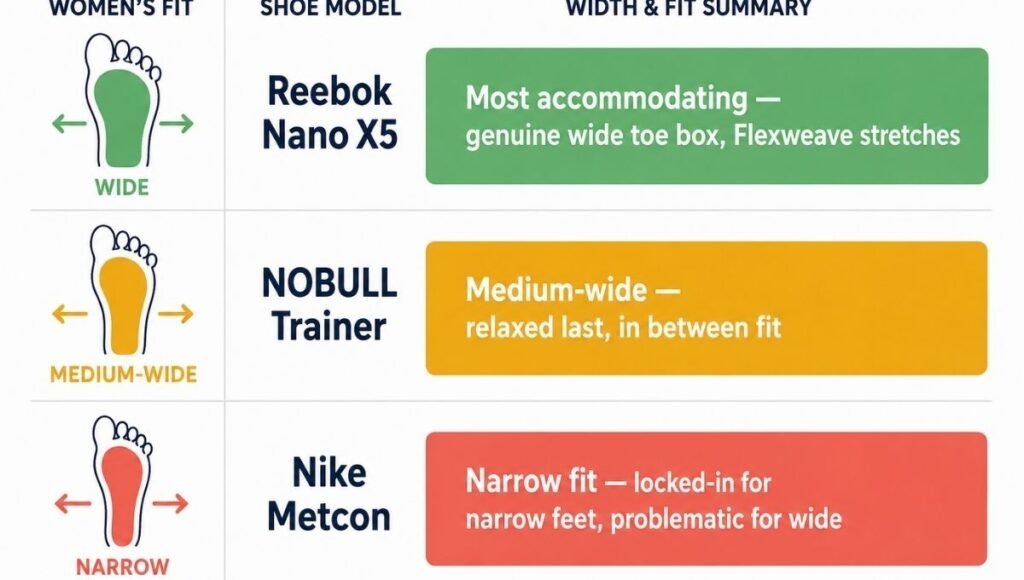
- In Nike’s line, shoes tend to run narrower; Reebok gives the most room; NOBULL feels in between. This is the single most important fit consideration for women choosing between these three.
- If your training revolves around heavy lifting and CrossFit, prioritizing stability above all else, the Nike Metcon is the safer bet. If your training skews more versatile — a mix of lifting, running, HIIT, and daily wear — the Reebok Nano X5 offers a softer, more comfortable ride without giving up too much stability.
- All three have 4–5mm heel drop, appropriate for mixed training without the extreme of zero drop or the elevation of dedicated lifting shoes.
The Training Mix Question: Before You Pick a Brand
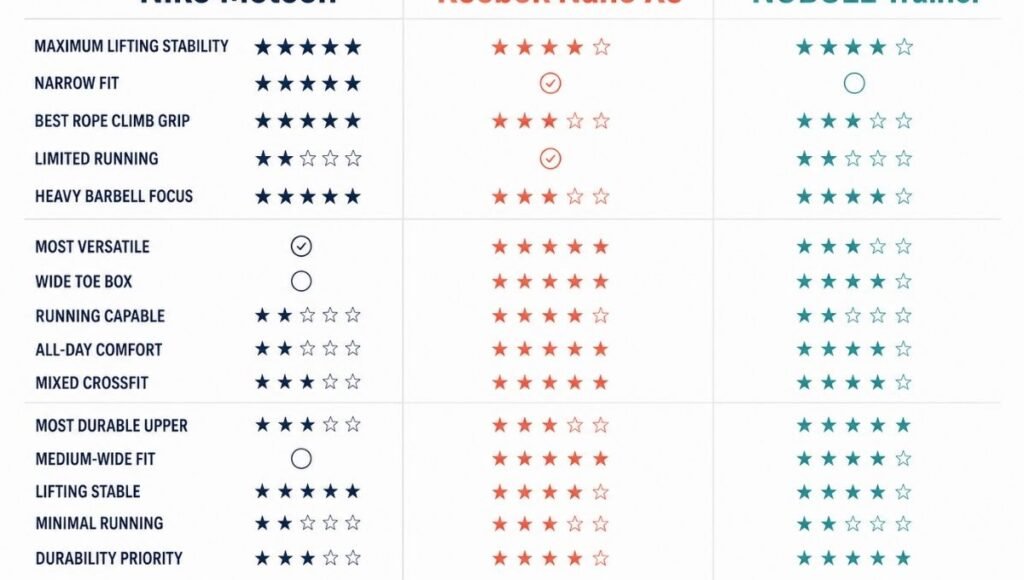
The right shoe depends on what your training actually looks like — not what CrossFit training looks like in theory, but what your specific sessions involve.
If you’re programming your own training or following a gym’s classes, you’re probably in one of three categories:
Lifting-heavy: Your sessions are primarily barbell work — squats, deadlifts, cleans, presses — with minimal running or cardio. You care most about ground feel, heel stability, and a base that doesn’t compress under load.
Mixed CrossFit / HIIT: Your sessions involve combinations of lifting, short runs, box jumps, rope climbs, and bodyweight work. You need a shoe that handles all of these without being miserable at any of them.
Cardio-dominant with some lifting: You’re doing HIIT classes, circuit training, or CrossFit programming that’s lighter on barbell work and heavier on movement volume. You’ll notice running comfort more than lifting stability.
The answer to which shoe is right changes significantly depending on which category you’re in. Metcon is optimal for the first. Nano X5 is optimal for the second and third. NOBULL sits between Metcon and Nano for the first, and is less appropriate for the third.
Nike Metcon Women: The Honest Review
The Metcon is Nike’s purpose-built CrossFit trainer, and it’s earned its reputation for stability. The Metcon 10 offers the best features for CrossFit — it’s a confidence booster with superior stability, holding down feet well when it’s time to lift.
The defining feature is the heel construction. The Hyperlift insert — a non-compressible TPU plate in the heel — creates a platform that doesn’t yield under heavy loads. The Metcon 9’s dual-density foam has denser foam that extends around the outside of the shoe with a softer foam on the internal, intended to give a little more forgiveness during jump rope and box jumps.
For women specifically: The Metcon runs narrow. This is the most common complaint from female athletes with standard-to-wide feet, and it’s worth taking seriously. The narrow fit provides a secure locked-in sensation that some athletes love — particularly for barbell cycling, where you want the foot firmly held in place. But for women with wide or medium-wide feet, the Metcon’s toe box can create pressure across the forefoot during longer sessions.
Where it wins: Heavy lifting. Rope climbs (the rope guard is purpose-designed and genuinely effective). WODs that are lifting-heavy with short, fast cardio intervals. If your training involves a lot of barbell work and you have standard-to-narrow feet, the Metcon is the strongest performer in this comparison.
Where it falls short: Running. The Metcon is suitable for very short runs of 400–1,200 meters if you’re a forefoot striker and don’t have a better option. It’s just too stiff and clunky for anything longer. The pronounced heel is made stiffer thanks to the Hyperlift TPU plate — which makes heel striking feel awkward and uncomfortable. All-day wear is also limited — the dense construction that makes it good for lifting makes it less comfortable for extended casual use.
Sizing note: Size up half if you have wide feet, or consider the Nano instead. Nike Metcon women’s models are available in standard widths only — no wide designation.
Reebok Nano X5: The Versatility Case
The Nano is the original CrossFit shoe — Reebok launched the first Nano in 2011 as an official CrossFit sponsor, and the line has evolved through more than ten generations. The X5 is the most refined version yet.
The Nano X5 uses Reebok’s Floatride Energy Foam in the forefoot for a softer, more pliable feel, paired with a denser heel for lifting stability. Its Lift and Run chassis helps keep transitions smooth between strength work and cardio.
For women doing mixed programming, the Nano X5’s key advantages are real and consistent:
Wider fit. Reebok gives the most room in the toe box compared to Nike and NOBULL. For women with medium-to-wide feet who’ve found the Metcon uncomfortably narrow, the Nano X5 is the more accommodating option without sacrificing training performance.
Running comfort. For short runs, the Nano X5 is the better option if you need a shoe for pre and post-workout runs and regular intervals. The Floatride Energy Foam in the forefoot gives a soft and pliable ride. For WODs that include 400m runs, the difference between Nano and Metcon is immediately noticeable — in the Metcon, those runs feel labored; in the Nano, they feel like running in a shoe that accommodates the movement.
All-day wearability. For daily wear, the Nano X5 is much more comfortable and has a wider platform, which gives more comfort compared to the Metcon and Dropset. If you wear your gym shoes to and from the gym or for daily errands, this matters.
Where it falls short: Under maximal lifting loads, the softer Floatride Energy Foam makes the Nano X5 slightly less stable than the Metcon under maximal loads. For most women doing CrossFit programming, this difference is imperceptible — the Nano handles heavy lifting well. For competitive powerlifters or anyone regularly lifting at true maximal loads, the Metcon’s denser platform is the stronger choice.
NOBULL Trainer: The Durability and Lifting Stability Case
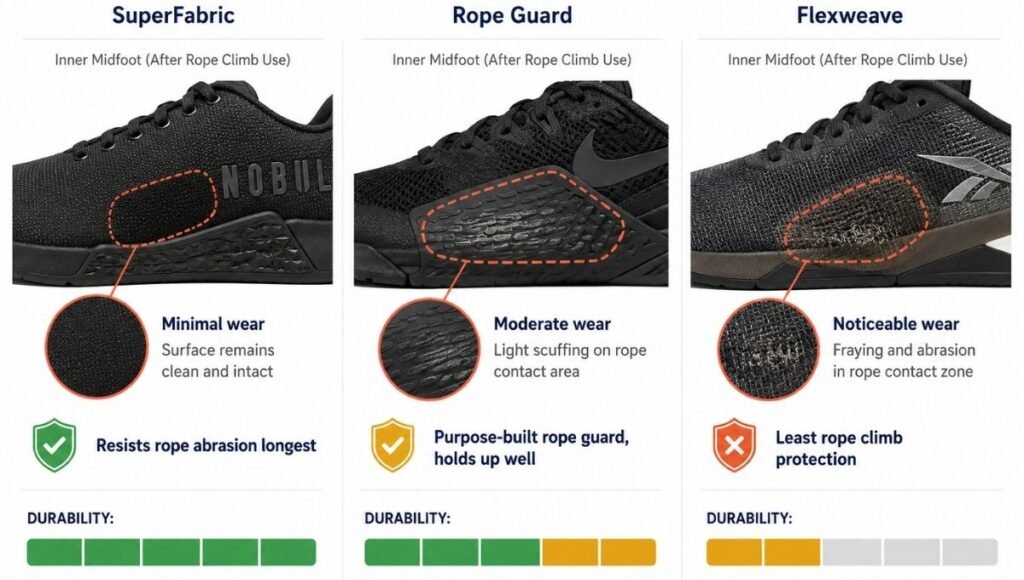
NOBULL built its brand on a simple proposition: no marketing, no endorsements, just a shoe that performs. The Trainer’s defining feature is its SuperFabric upper — a mesh-free construction that resists abrasion from rope climbs, box jump edges, and lateral movement in ways that standard woven or knit uppers don’t.
The NOBULL Trainer offers a 4mm heel-to-drop with a high-density midsole that supports loads well over 500 lbs and is consistent throughout the forefoot, midfoot, and heel. They feel great during all types of lifting, including powerlifting and bodybuilding workouts, and even Olympic lifts.
Where it genuinely wins: Durability. If you do rope climbs regularly, the SuperFabric upper survives significantly longer than the Metcon or Nano uppers at the rope contact zone. The minimal midsole provides excellent ground feel for lifting. The aesthetic is cleaner than Metcon or Nano, which matters if you wear gym shoes outside the gym.
Fit: NOBULL feels in between Nike (narrower) and Reebok (wider) for fit. Medium-width feet typically find NOBULL accommodating without the constriction of Metcon or the looseness that very wide feet might experience in Nano.
Where it falls short: Running. The NOBULL Trainer can get pretty uncomfortable pretty fast for longer runs. For runs, distances should be capped to about 800 meters or less. If your programming regularly includes running sections over 400m, NOBULL is not the right choice. It’s a lifting and rope-climb specialist with limited running capability.
Price: NOBULL Trainer runs $139–179 depending on colorway and version — comparable to Metcon and Nano. The premium is justified by upper durability if rope climbs are a significant part of your training.
Nike Metcon vs Reebok Nano: The Direct Comparison
This is the comparison most women doing CrossFit actually need to make, because these two are the most balanced options for mixed training.
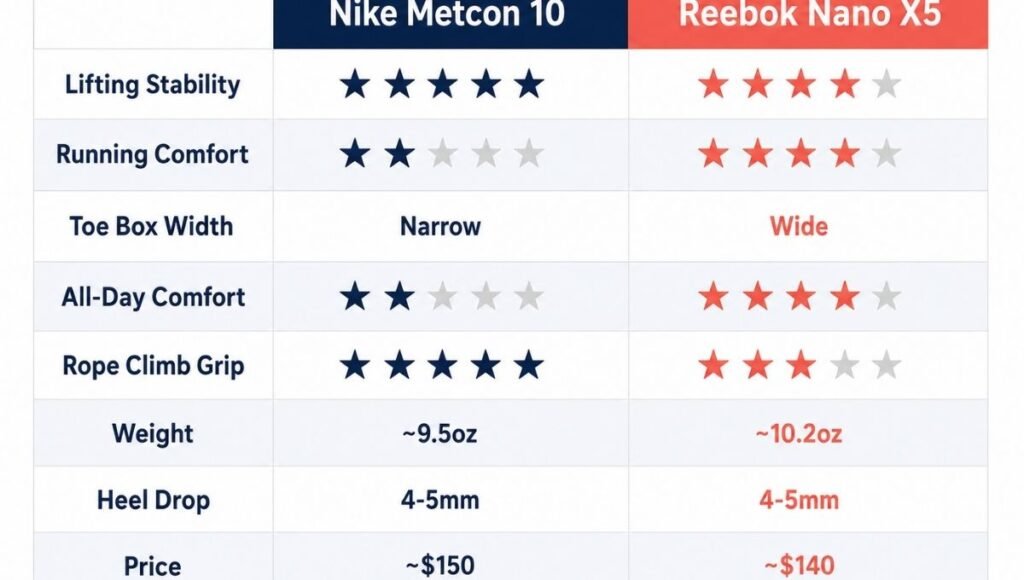
| Feature | Nike Metcon 10 | Reebok Nano X5 |
|---|---|---|
| Lifting stability | ★★★★★ | ★★★★☆ |
| Running comfort | ★★☆☆☆ | ★★★★☆ |
| Toe box width | Narrow | Wide |
| All-day comfort | ★★☆☆☆ | ★★★★☆ |
| Rope climb grip | ★★★★★ | ★★★☆☆ |
| Weight | ~9.5 oz (W8) | ~10.2 oz (W8) |
| Heel drop | 4–5mm | 4–5mm |
| Price | ~$150 | ~$140 |
When it comes to stability under heavy weight, the Metcon takes the crown. Go with the Metcon if you want maximum stability and a denser heel, but both can work fine.
The decision framework is simple: if you prioritize lifting stability and have standard-to-narrow feet, choose Metcon. If you prioritize versatility, wider fit, or running comfort, choose Nano X5.
For women doing typical CrossFit programming — a mix of barbell work, conditioning, and gymnastics movements — the Nano X5 is the more forgiving choice. The Metcon’s lifting edge is real but marginal for most training loads; its running limitation is real and immediately noticeable during WODs.
Which One for Wide Feet?
The Nano X5 edged out the Metcon solely because the Nanos might fit more feet than the slightly more narrow Metcons.
For women with wide feet, the ranking is clear:
Wide feet: Reebok Nano X5 — most accommodating standard-width toe box in this comparison. The Flexweave upper has some stretch that accommodates foot spread during training.
Medium-wide feet: NOBULL Trainer — more relaxed last than Metcon without the sometimes-loose feel of the Nano for medium widths.
Standard to narrow feet: Nike Metcon — the secure, locked-in fit that narrower feet appreciate becomes a problem for wider feet.
If you have genuinely wide feet and none of these options work, Inov-8 F-Lite G 300 is specifically recommended for wide feet in CrossFit contexts — it offers a wider toe box with firm midsole appropriate for lifting.
What to Look for Beyond the Big Three
If you’ve tried Metcon or Nano and neither worked for your foot shape or training demands, these alternatives are worth considering:
For heavy lifting with heel elevation preference: A dedicated Olympic weightlifting shoe (Adidas Adipower, Reebok Legacy Lifter) provides a rigid sole and elevated heel that outperforms any cross trainer for barbell cycling and heavy squats. Pair with Nano for conditioning work.
For budget-conscious buyers: Converse Chuck Taylor is a legitimate lifting shoe at $70 — completely flat, firm, zero heel cushioning. Excellent for deadlifts and squats, inappropriate for any jumping or running. A reasonable starting point before investing in a full cross trainer.
For maximum durability: The NOBULL Outwork features tremendous flexibility, which makes it a fabulous shoe for HIIT workouts and agility drills, and it is 9.9% more flexible than the average training shoe. It’s a lighter NOBULL option that handles varied training better than the original Trainer.
Frequently Asked Questions
Nike Metcon vs Reebok Nano — which is better for women? For most women doing mixed CrossFit or HIIT programming: Reebok Nano X5. It accommodates wider feet better, handles running sections more comfortably, and is more appropriate for all-day wear. For women with standard-to-narrow feet who primarily lift heavy and want maximum stability: Nike Metcon. The right answer depends on your training split and foot width more than any other factor.
Is NOBULL worth the money? For women who do significant rope climbs, NOBULL’s SuperFabric upper outlasts Metcon and Nano at the rope contact zone by a meaningful margin. If rope climbs are a minor part of your training or absent entirely, the durability advantage doesn’t justify choosing NOBULL over Nano for versatility. The price is comparable across all three brands.
Can you run in Nike Metcon women’s shoes? For very short distances — 400m intervals, short running warm-ups — yes, adequately. For running sections over 800m–1km regularly, the Metcon’s stiff heel construction creates noticeable discomfort, particularly for heel strikers. If your programming regularly includes runs over 400m, Nano X5 is the better choice.
What CrossFit shoes work for wide feet? Reebok Nano X5 is the most consistent recommendation for wide-footed women in CrossFit. The toe box is genuinely more accommodating than Metcon or NOBULL in standard sizing. For very wide feet, Inov-8 F-Lite G 300 offers explicit wide-foot accommodation with appropriate training shoe construction.
How long do CrossFit shoes last? With regular CrossFit use (4–5 sessions per week): 12–18 months for midsole integrity. Outsole and upper durability varies — NOBULL’s SuperFabric outlasts woven mesh uppers at rope climb contact zones. Midsole foam in all three compresses over time; the lifting stability of these shoes degrades before the upper shows obvious wear. Replace when the shoe feels less stable under load, not when it looks worn.
The Bottom Line
Nike Metcon vs Reebok Nano vs NOBULL is not a close call once you know what you need.
Choose Metcon if: you lift heavy as your primary training focus, you have standard-to-narrow feet, and running comfort is a secondary concern.
Choose Nano X5 if: you do mixed CrossFit programming with running sections, you have medium-to-wide feet, or you want one shoe that handles everything at a high level without excelling at any single thing.
Choose NOBULL if: rope climbs are a significant part of your training, you have medium-width feet, and durability is your primary concern.
For context on how these shoes compare to standard running shoes and why you shouldn’t use running shoes for gym training, our training shoes vs running shoes guide covers the mechanical differences in detail. And if you’re still figuring out whether cross-training shoes are right for your training mix or whether you should invest in dedicated lifting shoes alongside a cross trainer, our cross training shoes guide walks through the decision framework.
References
- Boly, J. “Reebok Nano X5 vs Nike Metcon 10.” That Fit Friend, 2025. thatfitfriend.com
- Brown, B. “Best CrossFit Shoes 2026.” Gear Junkie, 2026. gearjunkie.com
- RunRepeat Lab. “7 Best CrossFit Shoes in 2026.” RunRepeat, 2026. runrepeat.com
- Garage Gym Reviews. “Expert-Tested: 8 Best CrossFit Shoes of 2026.” garagegymreviews.com
- American Council on Exercise (ACE). Footwear for Fitness Training. acefitness.org
- Sinclair, J., et al. “Effects of footwear on the biomechanics of multi-directional movement.” Journal of Sports Sciences, 2015.