
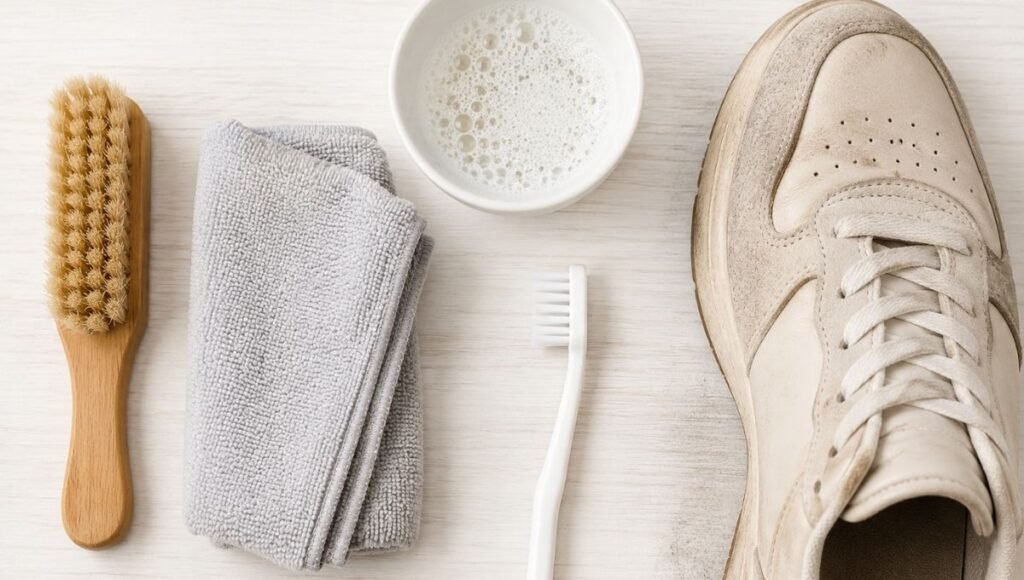
At some point, most people make the same mistake. The shoes are dirty, the washing machine is right there, and it seems like the obvious solution. In go the shoes. Out come the shoes — with a separated sole, a warped midsole, or a suede upper that now has permanent watermarks where the water soaked in unevenly. Sometimes they come out fine. Often they don’t. And the problem is you never know which outcome you’re getting until it’s too late.
The reason shoe cleaning feels unpredictable is that most guides treat all shoes the same way. But leather, suede, mesh, and white rubber soles have completely different properties — they absorb moisture differently, react differently to cleaning agents, and require different drying approaches. Using the wrong method on the wrong material doesn’t just fail to clean the shoe; it actively damages it in ways that are often irreversible.
This guide organizes everything by material. Before any cleaning step, the most important thing is identifying what your shoe is actually made of — and then using the method that matches. Takes five seconds to identify, saves the shoe.
Key Takeaways
- Material identification comes first. Cleaning method depends entirely on what the shoe is made of. The same approach that works on mesh destroys suede.
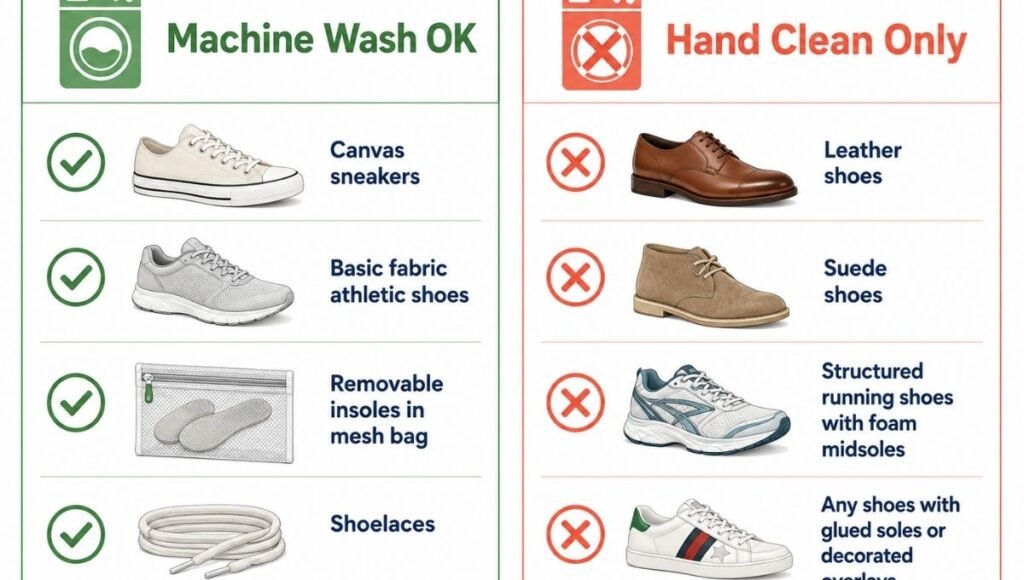
- The washing machine is appropriate for canvas and some mesh athletic shoes only — not leather, suede, structured running shoes, or anything with glued components. Even for appropriate shoes, cold water and a mesh laundry bag are non-negotiable.
- White shoes turn yellow after washing for a specific reason: bleach or soap residue left in the shoe oxidizes when exposed to UV light during drying. The solution is thorough rinsing and drying in shade, not more bleach.
- According to research published in Applied Microbiology and Biotechnology, the insole and interior of athletic shoes develop significant bacterial colonies within weeks of regular use — making interior cleaning as important as exterior cleaning for odor control.
- Most shoe cleaning mistakes are permanent — watermarks on suede, separated soles from machine washing, yellowed white leather from bleach. Prevention (knowing what not to do) is more valuable than any cleaning technique.
- Shoes should be fully dry before wearing again — residual moisture accelerates midsole foam breakdown and creates the conditions for odor-causing bacteria to multiply.
Step One: Identify Your Shoe Material
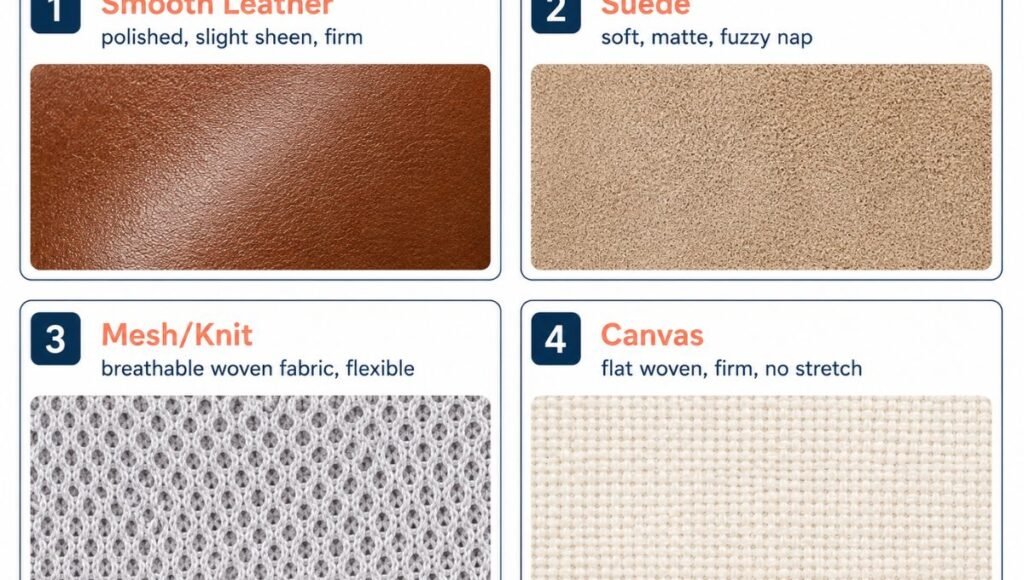
Before anything else, look at the upper — the part that covers your foot — and identify the primary material. This determines everything that follows.
Leather (smooth): Looks polished or semi-glossy, feels firm and slightly waxy to the touch. Common in dress shoes, leather sneakers, and leather boots. Water can be used carefully but should be minimized. Requires conditioning after cleaning.
Suede or nubuck: Soft, slightly fuzzy texture with a matte appearance. Common in casual sneakers, desert boots, and some running shoes. Water is the enemy — even clean water can leave permanent marks if applied unevenly. Requires completely dry cleaning methods.
Mesh or knit upper: Breathable woven fabric, usually on athletic and running shoes. Feels soft and flexible. Handles water well but needs gentle agitation — aggressive scrubbing damages the weave.
Canvas: Firm woven fabric, flat texture, no give. Common in Converse, Vans, and similar casual shoes. The most forgiving material for cleaning — handles water, soap, and even machine washing relatively well.
Rubber (outsole and toe cap): The bottom of almost every shoe and often the white bumper at the toe. Different cleaning approach from the upper — can handle more aggressive scrubbing and cleaning agents.
How to Clean Leather Shoes
Leather is more durable than most people think, but it requires a specific sequence: clean, condition, protect. Skip the conditioning step and the leather dries out and cracks over time.
What you need: Soft cloth or horsehair brush, saddle soap or mild leather cleaner, leather conditioner (Lexol, Leather Honey, or similar), shoe trees or crumpled newspaper.
The method:
Remove the laces and set aside. Use a dry brush or cloth to remove loose dirt and dust before introducing any moisture — wet dirt is harder to clean than dry dirt, and scrubbing dry debris around can scratch the leather.
Dampen a soft cloth with a small amount of water and saddle soap or leather cleaner. Work in small circular motions across the leather, applying light pressure. Don’t saturate the leather — you want the cleaner to lift surface dirt, not soak into the material. For deeper creases and seams, a soft toothbrush can reach where a cloth can’t.
Wipe the entire shoe with a clean damp cloth to remove soap residue. Let the shoe air dry for 15–20 minutes — not in direct sunlight, not near a heat source. Partial drying before conditioning is fine; the leather shouldn’t be soaking wet when you condition it.
Apply leather conditioner while the shoe is still slightly damp — the moisture helps the conditioner absorb more evenly. Use a small amount on a cloth, work it into the leather in circular motions, and let it absorb for 10–15 minutes. Buff with a clean dry cloth.
For white leather specifically: White leather attracts scuff marks and can yellow with time. A damp cloth with mild dish soap addresses most surface dirt. For yellowing on white leather, a small amount of non-gel white toothpaste on a soft cloth can lift oxidation — apply, let sit for two minutes, wipe clean. Avoid bleach entirely on white leather — it accelerates yellowing rather than preventing it.
How to Clean Suede Shoes
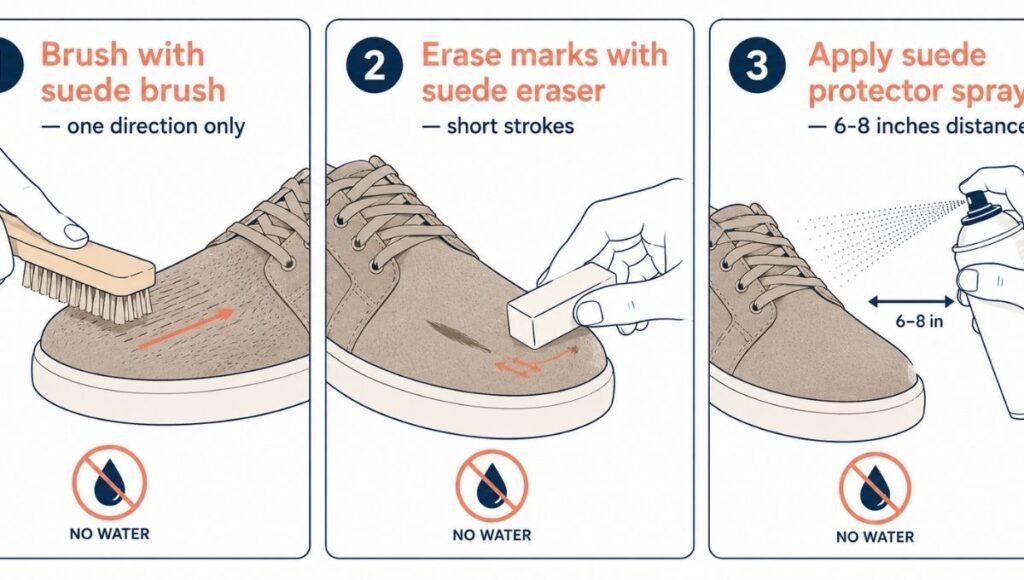
Suede is the material most people ruin by treating it like a regular shoe. The first instinct — wet cloth, soap and water — produces watermarks that are permanent or extremely difficult to remove. Suede cleaning is almost entirely a dry process.
What you need: Suede brush (stiff rubber or brass bristle), suede eraser or regular pencil eraser, white vinegar (for dry stains), suede protector spray.
The method:
Start completely dry. Use a suede brush to brush the surface in one direction — this lifts the nap (the fuzzy texture) and loosens dried surface dirt. If the suede is wet from rain or water exposure, let it dry completely before brushing — never brush wet suede.
For scuff marks and dry dirt: use the suede eraser or a clean pencil eraser directly on the mark. Rub in short strokes, then brush away the eraser debris. This removes surface marks without introducing moisture.
For dried stains that don’t respond to erasing: apply a very small amount of white vinegar to a clean cloth and dab (don’t rub) the stained area. The acetic acid in the vinegar can lift tannin and oil-based stains from suede without permanently wetting the material. Work from the outside of the stain inward to prevent spreading. Let dry completely, then brush.
After cleaning, apply suede protector spray from 6–8 inches distance for even coverage. This creates a water-resistant barrier that makes future cleaning significantly easier and prevents water penetration.
What not to do: No water unless absolutely necessary. No soap. No scrubbing with wet materials. No dryer. If a suede shoe gets completely soaked, stuff it with newspaper to maintain the shape, let it dry at room temperature for 24 hours minimum, then brush when fully dry.
How to Clean Mesh and Knit Running Shoes
Mesh and knit athletic shoes are the most commonly owned and the most commonly cleaned incorrectly. The material handles water well, but the weave is more delicate than it looks — aggressive scrubbing can pull threads and cause pilling that makes the shoe look permanently worn.
What you need: Soft-bristle brush or old toothbrush, mild dish soap or laundry detergent, two clean cloths, warm water.
The method:
Remove laces and insoles. Both should be cleaned separately — insoles in a sink with mild soap, laces in a small bowl of soapy water or inside a mesh laundry bag in the washing machine.
Mix a small amount of mild dish soap with warm water in a bowl. Dip the brush into the solution and work in gentle circular motions on the mesh upper. Use light pressure — the goal is to agitate dirt out of the weave, not to scrub the surface. Heavy scrubbing pulls fibers and creates visible pilling.
Wipe the soap away with a damp clean cloth. Rinse the cloth and wipe again until no soap residue remains. Soap left in the mesh will attract dirt faster after cleaning than a properly rinsed shoe.
For the rubber outsole: a stiffer brush and undiluted dish soap can be used more aggressively on the rubber without concern. An old toothbrush handles the grooves in the outsole pattern effectively.
Stuff the shoe with crumpled newspaper or a shoe tree to maintain shape during drying. Air dry at room temperature — not in direct sunlight, which degrades mesh fiber and fades color, and never in the dryer, which warps the midsole.
When can you machine wash mesh shoes? For canvas Converse and some basic fabric athletic shoes: use a mesh laundry bag, cold water only, gentle cycle, no heat drying. For performance running shoes with structured midsoles (Hoka, Brooks, ASICS): machine washing is not recommended. The agitation and heat stress the midsole foam and adhesive bonds in ways that accelerate breakdown — even if the shoe survives one wash, it will show wear faster.
White shoes require everything — cleaning the upper, cleaning the soles, preventing yellowing, and managing the specific challenge that every mark shows.
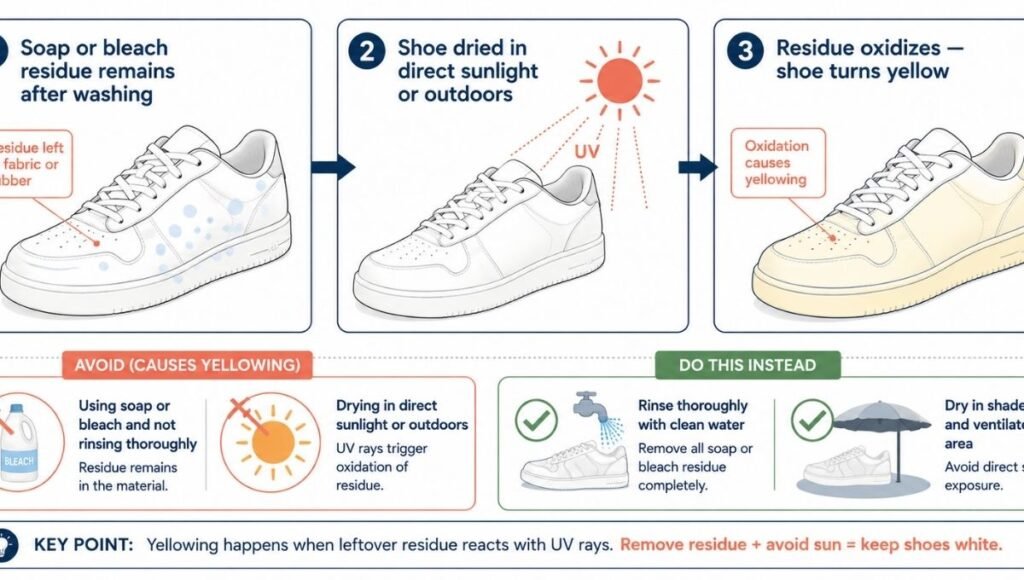
Why white shoes turn yellow: This is the most common white shoe complaint, and the cause is almost always the same: soap or cleaning product residue left in the shoe reacts with UV light during drying. Bleach is the primary culprit — it temporarily whitens but leaves a residue that oxidizes yellow in sunlight. The solution is thorough rinsing and drying in shade or indoors.
For white canvas (Converse, Vans canvas):
Mix one tablespoon of baking soda with one tablespoon of white vinegar and one tablespoon of warm water into a paste. Apply with a toothbrush in circular motions to the canvas upper. Let sit for 5 minutes, then wipe clean with a damp cloth. Rinse thoroughly. Dry stuffed with newspaper or paper towels, away from direct sunlight.
For white mesh athletic shoes:
The mesh cleaning method above applies, with one addition: after cleaning, a thin application of white toothpaste (non-gel) on stubborn yellowed areas can lift oxidation. Apply, let sit two minutes, scrub gently, rinse thoroughly.
For white leather:
See the leather cleaning section above. White toothpaste and a damp cloth handle most surface marks. Avoid bleach.
For white rubber soles:
A Magic Eraser (melamine foam sponge) dampened with water is the most effective tool for rubber soles and toe caps. It removes scuffs and oxidation from rubber surfaces that soap and brushes can’t reach. Apply with light pressure — too much pressure on colored parts of the shoe can lift color.
How to Get Smell Out of Shoes
Shoe odor is a bacterial problem, not a dirt problem. The bacteria that cause odor thrive in the warm, damp environment inside a shoe — which means cleaning the outside does nothing for the smell if the inside is still providing ideal conditions for bacterial growth.
The effective approaches:
Baking soda is the most accessible and genuinely effective deodorizer for shoes. Pour a small amount directly into each shoe, let sit overnight, then shake out in the morning. The alkaline environment disrupts bacterial metabolism and absorbs odor compounds simultaneously. Do this regularly rather than waiting until odor is severe.
Cedar shoe trees serve double duty: they absorb moisture from the shoe interior after wearing (which removes the bacterial growth environment) and impart a mild cedar scent. Placing cedar shoe trees in shoes immediately after wearing — before odor develops — is more effective than treating odor after it’s established.
For severe odor: remove the insoles and wash them separately. Most insoles can be hand-washed with mild soap and air dried. If the insoles have degraded to the point where they can’t be cleaned effectively, replace them — most athletic shoe insoles are removable and standard replacement insoles are widely available.
Freezing: placing shoes in a sealed plastic bag and leaving in the freezer overnight kills odor-causing bacteria without chemicals or water. Effective for shoes where moisture-based cleaning isn’t appropriate. Let them return to room temperature before wearing.
Preventing odor: Rotate shoes so each pair has at least 24 hours to dry completely between wears. Wear moisture-wicking socks. Remove insoles after each wear in humid conditions. Avoid wearing shoes without socks if odor is a concern — bare feet transfer more sweat and bacteria directly into the shoe lining.
How to Store Shoes to Make Them Last Longer
Storage affects shoe lifespan more than most people realize. The wrong storage environment degrades foam, oxidizes leather, and deforms structure — all without any use.
What damages stored shoes:
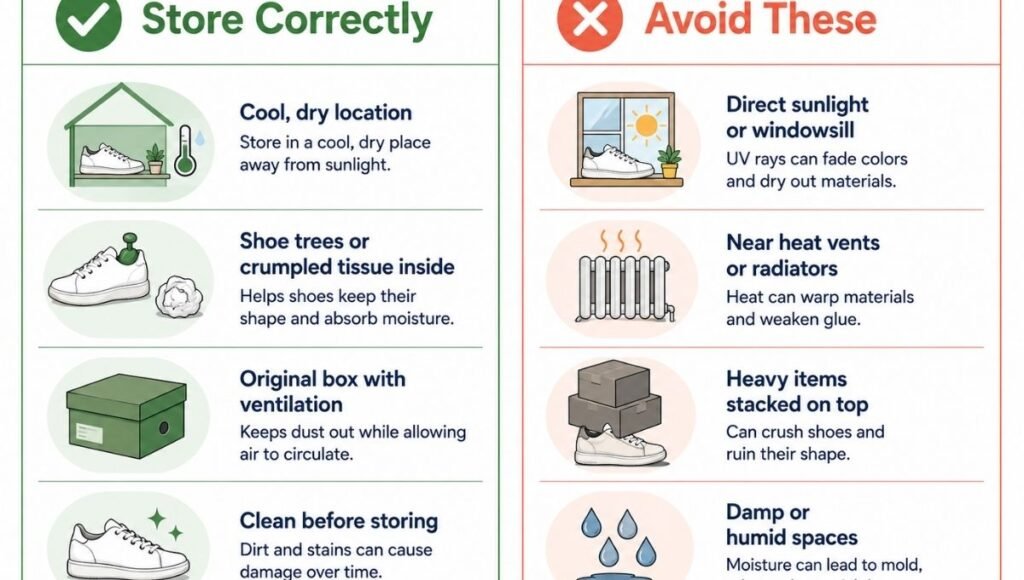
- Direct sunlight: UV light yellows white materials, fades colors, and degrades foam
- Heat: accelerates adhesive breakdown (the glue that holds soles to uppers) and dries out leather
- Humidity: creates ideal conditions for mold on leather and suede, and degrades foam
- Compression: storing shoes with weight on top deforms the structure permanently
The right approach:
Store shoes in a cool, dry location away from direct sunlight and heat sources. Shoe boxes work well — they block light and protect structure — but don’t seal leather shoes in airtight containers, which traps moisture. The original box with tissue paper is close to ideal.
Shoe trees or crumpled acid-free tissue paper inside shoes during storage maintains shape and absorbs residual moisture. For leather and suede specifically, shape maintenance during storage prevents the creasing and structure collapse that shortens usable life.
For long-term storage (seasonal shoes you won’t wear for months): clean thoroughly before storing, condition leather, apply suede protector to suede, and check periodically for any signs of mold or pest damage.
The 10-Minute Emergency Clean
When you have a meeting in an hour and your shoes need help immediately:
For leather: Damp cloth with a drop of dish soap, gentle wipe, immediate dry buff. Apply a small amount of leather conditioner if available. Takes 5 minutes and handles surface dirt and minor scuffs.
For mesh/canvas: Damp cloth across the upper, toothbrush on the rubber outsole with dish soap. The upper won’t be perfect but the most visible dirt on the sole will be gone. Takes 7 minutes.
For suede: Suede eraser on any visible marks. Brush in one direction. If there’s a wet stain, blot with a dry cloth to absorb as much moisture as possible, then leave alone — trying to clean wet suede quickly creates more damage than the original stain.
For white shoes: Magic Eraser on the rubber sole (most visible improvement), damp cloth on the upper. Avoid anything that takes more than a minute to dry.
Frequently Asked Questions
Can you put shoes in the washing machine? Canvas shoes (Converse, basic Vans) and some basic fabric athletic shoes can handle cold water, gentle cycle, mesh laundry bag, and air drying. Performance running shoes, leather shoes, suede shoes, and any shoes with structured midsoles or significant adhesive should not go in the washing machine. The agitation and heat stress the foam and adhesive bonds even on a gentle cycle.
How do you clean the inside of shoes? Remove insoles and wash them separately with mild soap and warm water, then air dry completely. For the shoe interior, a cloth dampened with a diluted white vinegar solution (one part vinegar to two parts water) cleans the lining and neutralizes odor-causing bacteria. Let the interior air out completely before replacing insoles — residual moisture is the primary driver of odor.
How do you dry shoes fast? Stuff with crumpled newspaper (changes it out every 30 minutes as it absorbs moisture), place near (not in front of) a fan for airflow, and leave at room temperature. Never use a dryer or direct heat source — heat warps midsoles, separates glued components, and degrades foam. The newspaper method reduces drying time significantly compared to air drying alone.
Why do white shoes turn yellow after washing? Yellowing after washing is almost always caused by soap or cleaning product residue that wasn’t fully rinsed out, which then oxidizes under UV light during drying. The solution is thorough rinsing (rinse more than you think you need to) and drying indoors or in shade. Bleach specifically causes yellowing — avoid it on white shoes.
How often should you clean shoes? Surface cleaning after each use (wiping down leather, brushing suede) takes under a minute and prevents buildup that requires more aggressive cleaning later. Deep cleaning depends on use frequency — running shoes worn daily benefit from cleaning every 2–4 weeks. Leather dress shoes worn occasionally need cleaning before each storage period and conditioning every 2–3 months.
The Bottom Line
Cleaning shoes correctly is mostly about knowing what not to do: don’t put suede near water, don’t machine wash structured running shoes, don’t bleach white shoes, don’t dry with heat. The actual cleaning steps are simple once the material is identified correctly.
Start with material identification. Use the method that matches the material. Rinse more thoroughly than seems necessary. Dry at room temperature in shade. Condition leather after any cleaning. Treat suede preventively with protector spray before it needs cleaning.
If you’re investing in shoes that need to last — whether that’s a pair of running shoes you depend on for training or leather shoes you need to hold up for years — understanding how long shoes can realistically last with proper care is worth reading. Our running shoe lifespan guide covers midsole degradation and when shoes need replacing regardless of how clean they look. And if you’re shopping for new shoes and want to make sure the material matches your lifestyle demands, our how to measure your foot size guide covers the full pre-purchase assessment process.
References
- Callewaert, C., et al. “Bacterial exchange in household washing machines.” Frontiers in Microbiology, 2015.
- Ryznar, E., et al. “Microbial contamination and odor in athletic footwear.” Applied Microbiology and Biotechnology, 2020.
- American Leather Chemists Association (ALCA). Leather Care Standards. leatherchemists.org
- Leather Research Laboratory, University of Cincinnati. Proper Leather Conditioning and Care.
- American Podiatric Medical Association (APMA). Footwear Maintenance and Hygiene. apma.org