
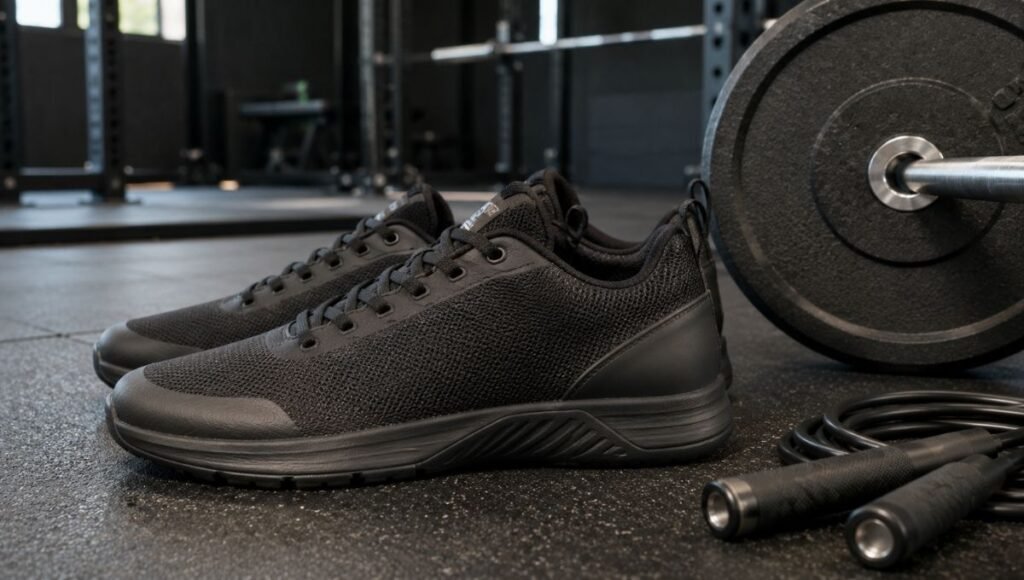
You’ve been wearing running shoes to the gym. Everything feels fine until the day you try to max out your squat and realize your feet are wobbling on a platform of compressed foam. Or you attempt rope climbs and watch the side of your shoe delaminate after three sessions. Or someone in your CrossFit class asks why you’re wearing “road shoes” to the box.
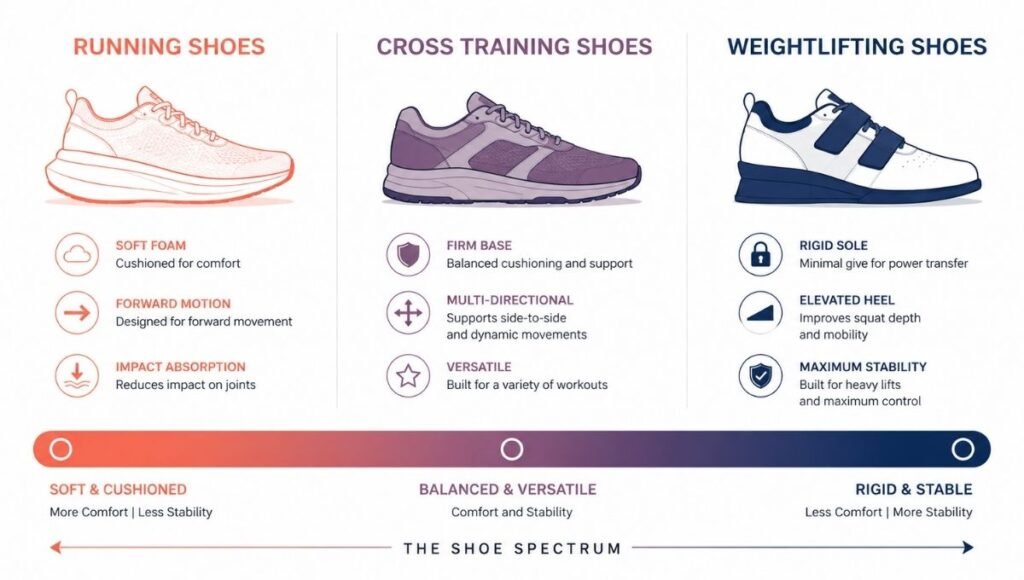
Cross training shoes exist because the gym involves more than one type of movement — and no single shoe category handles all of them well. Running shoes are too cushioned and unstable for lifting. Dedicated weightlifting shoes are too rigid and heavy for anything involving lateral movement or jumping. Cross trainers sit in the middle: firm enough for load-bearing stability, flexible enough for multi-directional movement, and durable enough for the rope climbs, box jumps, and lateral shuffles that eat running shoes alive.
But “cross training shoes” isn’t a precise category with a fixed definition. It covers everything from light gym shoes designed for cardio circuits to heavy-duty CrossFit-specific trainers built for Olympic lifts. Before spending $120–180 on a pair, it’s worth understanding exactly what you need from them — because the wrong cross trainer is almost as bad as the wrong running shoe.
Key Takeaways
- Cross training shoes are designed for multi-directional stability — firmer midsoles than running shoes for load-bearing, wider outsoles for lateral support, and more durable uppers for rope work and box jumps.
- They are not ideal for running longer than a mile or two. The firmer, lower-stack midsole that makes them good for lifting means they’re inadequate for the sustained impact absorption of road running.
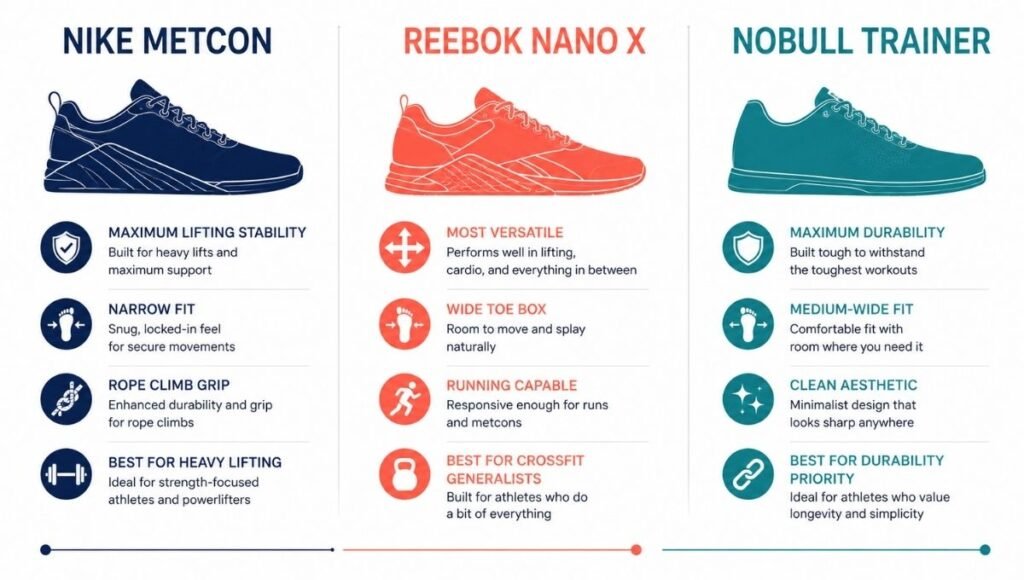
- The three dominant options — Nike Metcon, Reebok Nano, and NOBULL Trainer — have meaningfully different strengths. Metcon for heavy lifting stability, Nano for versatility including running sections, NOBULL for durability and wide-foot fit.
- A 2021 study in the Journal of Exercise and Health Science confirmed that shoe stability directly affects squat balance — participants performed significantly better balanced squats in firm-soled shoes versus cushioned sneakers.
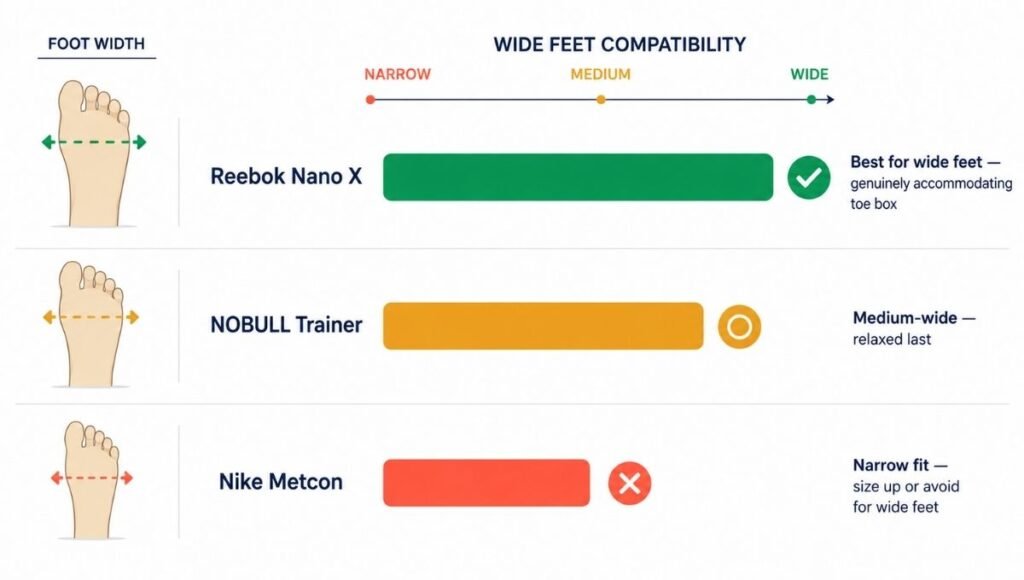
- Wide-footed gym-goers have limited but genuine options: Reebok Nano X series and NOBULL Trainer consistently accommodate wider feet better than Nike Metcon.
- Cross training shoes typically last 12–18 months of regular mixed-use training — longer than running shoes used for the same duration, because the midsole doesn’t compress as rapidly under multi-directional versus sustained forward impact.
Do You Actually Need Cross Training Shoes?
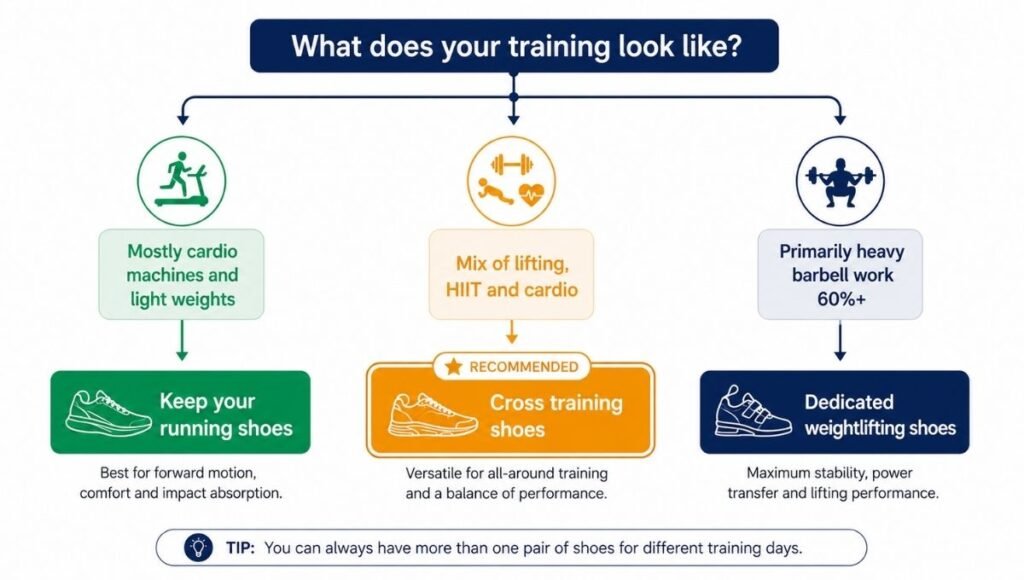
Before getting into which ones to buy, it’s worth asking whether you need them at all. The honest answer depends on what your training actually looks like.
You probably need cross training shoes if: You do any combination of lifting, HIIT, and cardio in the same session or across your weekly training. If your workouts involve squats, deadlifts, lunges, box jumps, lateral shuffles, burpees, or rope climbs — even occasionally — cross trainers handle this mix in ways running shoes don’t.
You can probably get away with running shoes if: Your gym sessions are primarily treadmill, elliptical, or cardio machine work with minimal lifting. Light dumbbells and machine-based exercises don’t impose the kind of lateral forces and compressive load that expose running shoes’ limitations.
You need dedicated lifting shoes instead of cross trainers if: You’re primarily a powerlifter or Olympic weightlifter. If 80% or more of your gym time is under a barbell, a dedicated weightlifting shoe with an elevated heel and rigid sole will serve you far better than any cross trainer. Cross trainers are a compromise by design — excellent for mixed training, suboptimal for specialist lifting.
What Makes a Cross Training Shoe Different from a Running Shoe
The structural differences are significant, and they explain why you can feel the difference immediately when you switch.
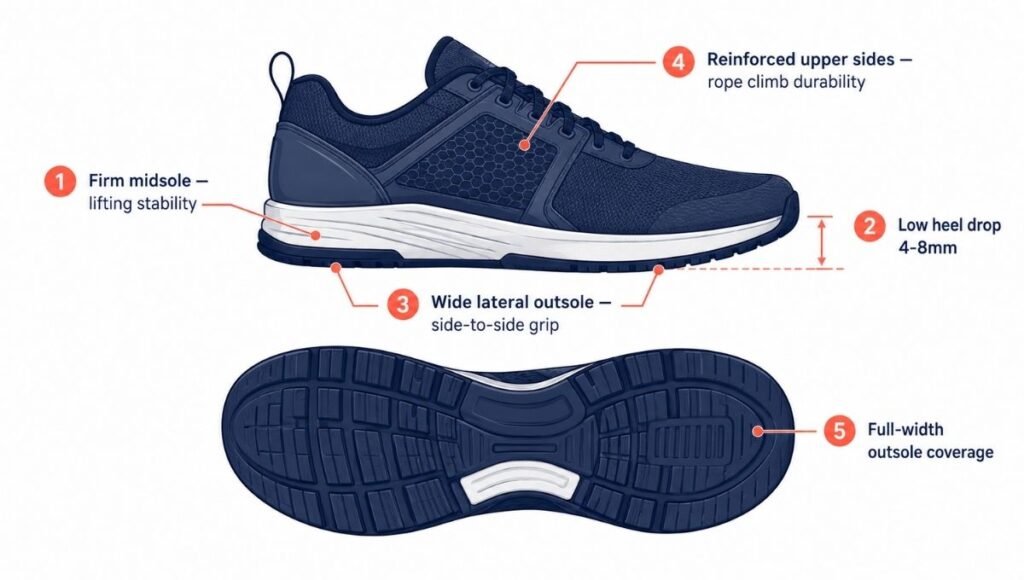
Midsole firmness. Cross training shoes have meaningfully firmer midsoles than running shoes. This isn’t a manufacturing oversight — it’s the defining feature. Under load during a squat or deadlift, a firm midsole provides a stable, non-compressing base. A running shoe’s soft foam compresses and wobbles, which reduces force transfer and creates instability under your feet. If you’ve ever felt like your feet were “sinking” during heavy lifts, you’ve experienced this.
Heel drop. Most cross trainers have a heel drop of 4–8mm — lower than the 10–12mm typical of road running shoes. Lower heel drop keeps your ankle in a more neutral position during squats and deadlifts, which affects both form and joint loading. Some cross trainers offer a zero-drop option specifically for people who prefer to squat in a flat position.
Outsole width and coverage. Cross training outsoles extend laterally to provide grip and support for side-to-side movements. Running shoe outsoles concentrate rubber at the heel and forefoot — adequate for forward motion, inadequate when you step sideways in a lateral lunge or cut during an agility drill.
Upper durability. The sides of running shoes are built for breathability and low weight, not for rope friction or lateral abrasion. Cross training shoes reinforce the upper — particularly at the toe box and lateral sides — to resist the friction of rope climbs, box jump edges, and lateral movement patterns that wear through running shoe uppers in months.
The Three Cross Training Shoes That Actually Matter
There are dozens of cross training shoes on the market. The realistic shortlist for most people comes down to three, and they have meaningfully different strengths.
Nike Metcon 9
The Nike Metcon is the benchmark for heavy lifting stability in a cross trainer. The heel is reinforced with a hard plastic plate (the “Hyperlift” insert in some versions) that creates a rigid lifting platform. The midsole is firm through the forefoot with slightly more cushioning at the heel. The rope grip pattern on the outsole is purpose-designed for rope climbs.
Where it excels: squats, deadlifts, Olympic lifts, rope climbs, box jumps. The stability under heavy barbell work is noticeably better than most cross trainers.
Where it falls short: the fit runs narrow, which is a meaningful problem for people with wider feet. The firm construction also makes any running section — 400m runs, running warm-ups — less comfortable than a Nano or other more cushioned options.
Who it’s for: Lifters first, everything else second. People who prioritize squat rack performance over cardio versatility. Narrow to standard-width feet.
Reebok Nano X5
The Reebok Nano series has been the most versatile cross trainer on the market for years. The current generation (X5) balances lifting stability with enough cushioning to handle running sections, HIIT cardio, and extended wear without the jarring that comes from extremely firm midsoles.
The toe box is notably wider than the Metcon — Nano X consistently gets recommended by wide-footed CrossFit athletes who find Metcon uncomfortable through the forefoot. The outsole has grip for rope climbs but isn’t as aggressively rubber-heavy as Metcon.
Where it excels: mixed workouts involving running, HIIT, and moderate lifting. Daily wear versatility. Wide to standard-width feet.
Where it falls short: under very heavy lifting loads, the slightly more cushioned midsole is less stable than Metcon. Not ideal if your primary concern is maximal squat and deadlift performance.
Who it’s for: CrossFit generalists who run, lift, and do everything in between. Wide-footed athletes. People who want one shoe for everything at the gym.
NOBULL Trainer
NOBULL built its reputation on durability and minimalism. The trainer has a SuperFabric upper that resists abrasion better than woven mesh — rope climbs and box jump edges that would damage a running shoe upper in weeks don’t faze NOBULL. The fit is slightly more relaxed than Metcon, accommodating medium-wide feet without the tightness that Metcon creates.
The midsole is firm and flat — good for lifting stability, less accommodating for running sections or extended cardio use. The aesthetic is cleaner and more lifestyle-appropriate than Metcon or Nano, which matters for people who wear their gym shoes outside the gym.
Where it excels: durability, rope climbs, lifting stability, appearance.
Where it falls short: less versatile for running and cardio-heavy workouts than Nano. No wide-width option as a designated designation — fit relies on the naturally more generous last.
Who it’s for: Athletes who prioritize durability and lifting performance. People who care about how their gym shoes look outside the gym. Medium-width feet.
Cross Training Shoes for Wide Feet: A Specific Problem
Wide-footed gym-goers consistently run into the same wall: most cross training shoes run narrow, and the ones that don’t often sacrifice performance for fit.
The Metcon’s narrow fit is its most common complaint from wide-footed users. Some people size up to compensate, but sizing up in a cross trainer changes the heel fit and the stability platform — it’s a workaround that creates its own problems.
Reebok Nano X series is the most reliable recommendation for wide feet in the cross training category. The toe box is genuinely more accommodating without requiring a size adjustment. Reebok also occasionally offers wide-width versions of the Nano in specific colorways.
NOBULL Trainer’s slightly more relaxed last is a better fit for medium-wide feet than Metcon, though not as accommodating as Nano for truly wide feet.
New Balance Minimus TR is worth considering for wide-footed athletes who prefer a more minimal shoe — New Balance’s width options extend to 2E in some sizes of this model, and the zero-drop construction suits lifters who prefer a flat base.
If you have genuinely wide feet and have struggled with cross training shoes feeling tight, the recommendation is clear: try Nano X before anything else. For very wide feet, look for New Balance options with explicit width designations.
Cross Training Shoes vs Weightlifting Shoes: When to Choose Which
This is a comparison that comes up less often but matters significantly for people who primarily lift.
Weightlifting shoes (Adidas Adipower, Nike Romaleos, Reebok Legacy Lifter) have a rigid sole, elevated heel (typically 0.6–0.75 inches), and zero cushioning. They’re purpose-built for Olympic lifts and heavy squats. The elevated heel increases quad recruitment during squats and allows deeper squat depth for people with limited ankle dorsiflexion.
Cross training shoes are a compromise — more stable than running shoes under load, but not as stable or heel-elevated as dedicated weightlifting shoes.
The practical decision: if more than 60% of your gym sessions involve heavy barbell work — squats, cleans, snatches, jerks — a dedicated weightlifting shoe is worth the investment for that work, paired with a cross trainer or running shoe for everything else. If your training is genuinely mixed (some lifting, some HIIT, some cardio), a cross trainer handles everything adequately without requiring a second pair.
What to Look for When Buying Cross Training Shoes
Beyond brand, these are the specific features that determine whether a cross trainer actually works for your training:
Midsole firmness. Press your thumb into the forefoot. It should compress slightly but rebound immediately — significantly firmer than a running shoe midsole. If it feels like pressing into a running shoe, it won’t provide adequate lifting stability.
Heel drop. For most mixed-training athletes, 4–8mm is the sweet spot. Under 4mm suits experienced lifters who prefer a flatter position. Over 8mm starts to compromise lifting mechanics for the stability advantages.
Toe box width. Press the outer edge of the shoe at the widest toe point. There should be slight give — not immediate resistance. If your little toe is pressed against the side of the shoe, the toe box is too narrow and will restrict natural foot splay during heavy lifts.
Upper reinforcement. Look for visible reinforcement at the toe cap, the lateral sides, and particularly the inner midfoot area. These are the zones that take abrasion damage from rope climbs, box jump edges, and lateral shuffles.
Outsole coverage. Look at the bottom of the shoe. A good cross trainer has rubber coverage across the full width of the forefoot and heel — not just the contact zones optimized for forward running.
If You Only Have 10 Minutes to Decide Right Now
If you need to make a quick decision without reading the full guide:
Lift more than anything else: Nike Metcon (narrow/standard feet) or NOBULL Trainer (medium-wide feet).
Mix of everything — lifting, HIIT, some running: Reebok Nano X5 (wide or standard feet).
Wide feet, everything: Reebok Nano X5, period. Nothing else comes close in this combination.
Budget under $100: Inov-8 F-Lite 235 V3 or Puma Fuse 2.0 — both deliver core cross training functionality without premium pricing.
Frequently Asked Questions
What are cross training shoes used for? Cross training shoes are designed for mixed gym training — any combination of weightlifting, HIIT, cardio, CrossFit, and lateral movement exercises. They’re firmer than running shoes for lifting stability, more flexible than dedicated weightlifting shoes for dynamic movements, and more durable than either for the abrasion of rope climbs and box jumps.
Can you use cross training shoes for running? For short distances — a mile or two as part of a workout, running warm-ups, or treadmill intervals — cross training shoes are adequate. For running as a primary activity or for distances beyond 3 miles, they don’t provide sufficient cushioning for the sustained impact of road or treadmill running. Keep running shoes for running if you run regularly.
What’s the difference between cross training shoes and regular gym shoes? “Gym shoes” is a broad term that often just means sneakers worn to the gym. Cross training shoes are specifically engineered for multi-directional stability, with firm midsoles for lifting, reinforced uppers for rope and box work, and lateral outsole coverage for side-to-side movement. Standard sneakers or running shoes lack these structural features.
Are cross training shoes good for squats? Better than running shoes, but not as good as dedicated weightlifting shoes for heavy squats. The firm midsole and lower heel drop provide adequate stability for most recreational lifters. For competitive powerlifters or anyone squatting at maximal loads, a dedicated weightlifting shoe with an elevated heel provides better performance.
How long do cross training shoes last? Typically 12–18 months of regular mixed-use training, or roughly 200–300 hours of gym use. They outlast running shoes in gym contexts because multi-directional movement doesn’t compress the midsole as consistently as forward running does. The upper is often the first thing to show wear — particularly at the rope climb zone on the inner midfoot.
The Bottom Line
Cross training shoes are a genuine solution to a genuine problem — the mechanical mismatch between running shoes and gym training. If you do any combination of lifting, HIIT, and cardio, a cross trainer handles the mix without the stability problems of running shoes or the rigidity of dedicated lifting shoes.
The choice between the big three comes down to your training split and your foot width. Heavy lifting emphasis with standard-width feet: Nike Metcon. Mixed training with wide feet: Reebok Nano X. Durability priority with medium-width feet: NOBULL Trainer.
If you’re still figuring out whether your current shoes are the reason your lifts feel unstable, our training shoes vs running shoes guide explains exactly what happens mechanically when you train in the wrong shoe. And if foot width is a recurring problem across all the shoe categories you try, our wide toe box guide covers how to measure your foot width and which brands actually engineer genuine wide options.
References
- Sato, K., et al. “The effect of footwear on squat performance.” Journal of Exercise and Health Science, 2021.
- Sinclair, J., et al. “Effects of footwear on the biomechanics of multi-directional movement.” Journal of Sports Sciences, 2015.
- American Council on Exercise (ACE). Footwear Selection for Fitness Training. acefitness.org
- Warne, J., & Gruber, A. “Transitioning to minimal footwear: a systematic review of methods and future clinical recommendations.” Sports Medicine Open, 2017.
- Malisoux, L., et al. “Shoe cushioning influences the running injury risk according to body mass.” American Journal of Sports Medicine, 2017.