
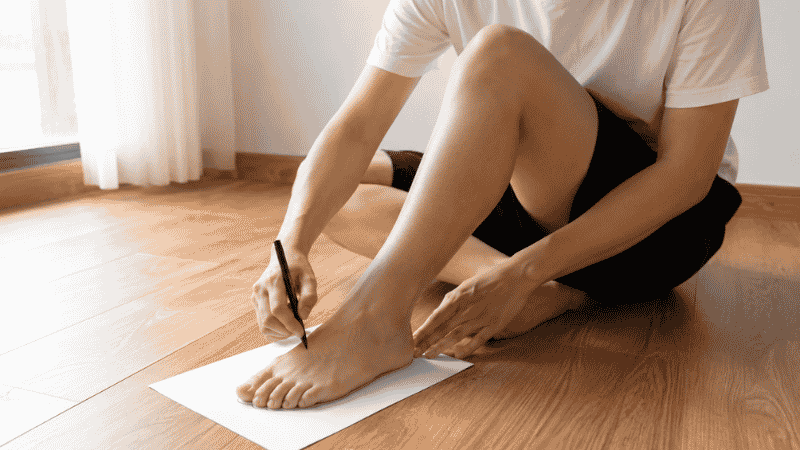
You bought the shoes in your “usual size.” You wore them home, wore them once, and by hour three your toes were screaming. Sound familiar? You’re not alone — and the problem almost certainly wasn’t the shoe. It was the measurement.
Most people haven’t had their feet properly measured since childhood. They pick a size, stick with it for decades, and wonder why half their shoe purchases end up shoved in the back of the closet. What nobody tells you is that your foot size genuinely changes over time — with age, weight, pregnancy, and even just standing for years. The size you wore at 22 is very likely not the size you should be wearing at 35.
This guide will show you how to measure your foot size at home accurately — no Brannock device, no guesswork — and more importantly, how to actually use that measurement when buying shoes online or in-store. We’ll also cover why the same number means something completely different depending on the brand you’re buying.
Key Takeaways
- Foot size changes throughout your life. Most adults’ feet spread and lengthen as they age — re-measure every 1–2 years, not once and never again.
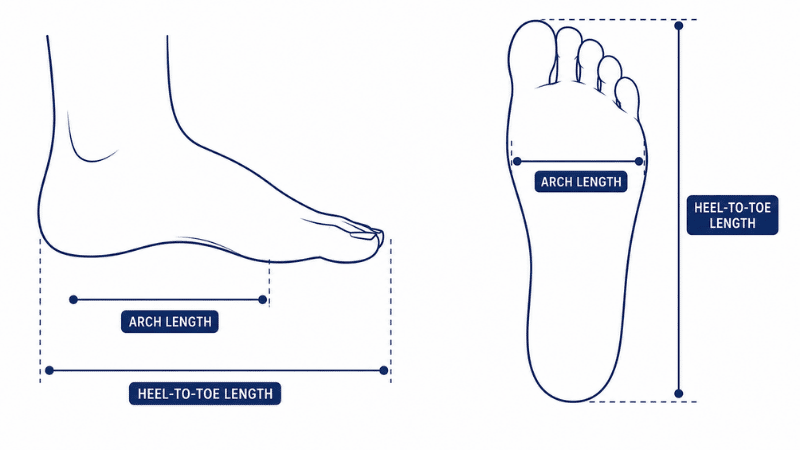
- Length alone isn’t enough. Arch length (heel to the ball of your foot) is just as important as heel-to-toe length — and most people never measure it.
- Your two feet are probably different sizes. Studies suggest roughly 60% of people have one foot larger than the other. Always fit the bigger foot.
- Brand sizing varies significantly. Nike tends to run small; New Balance tends to run true to size; Hoka runs wide. The same “US 9” is not the same shoe.
- Shoes do not break in to fit properly. If a shoe feels wrong in the store, it will feel wrong at mile 3. Measure right, buy right, return less.
What You Actually Need to Measure Your Foot (Hint: Just Paper and a Pen)
Here’s what you’ll need before you start:
- Two sheets of A4 or letter-sized paper (one per foot)
- A pen or pencil
- A ruler or measuring tape (centimeters works best)
- A wall or baseboard
- A pair of thin socks — the type you’d actually wear with the shoes you’re buying
That’s it. No special device, no trip to a store. The method below is the same principle used by professional shoe fitters, adapted for your living room floor.
One thing to get right before you start: measure your feet in the afternoon or evening, not the morning. Your feet swell throughout the day — sometimes by as much as half a size. If you measure first thing in the morning and buy shoes that fit perfectly on that measurement, you may find them uncomfortably tight by 3pm. This is especially important if you’re buying walking shoes, work boots, or anything you’ll wear for extended periods.
How to Measure Your Foot Length at Home: Step-by-Step
Step 1: Set Up on a Hard Floor
Place your paper flat against a wall or baseboard. You’ll use the wall as a reference point for your heel — this eliminates the single most common measurement error, which is rounding your heel or lifting it slightly while tracing.
Stand on the paper with your heel touching the wall. If you’re measuring alone, sit on a chair and press your heel back as far as it goes.
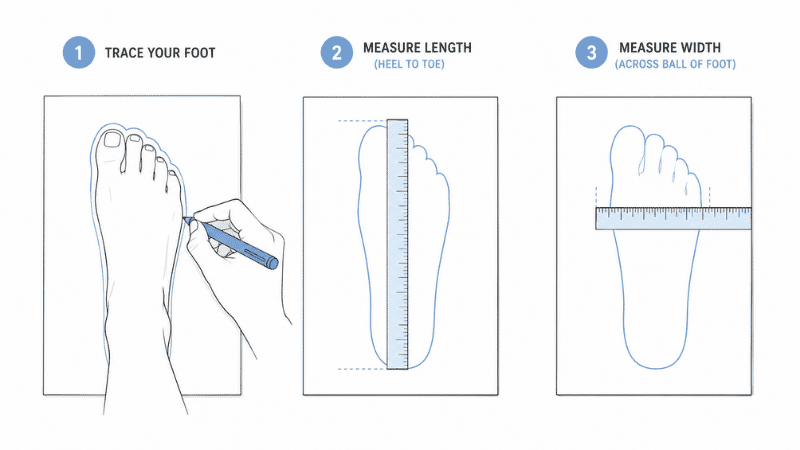
Step 2: Trace Your Foot
Hold the pen vertically (perpendicular to the floor — not angled inward) and trace around your entire foot. Keep the pen pressed firmly against your foot as you go. The most common mistake here is leaving a gap between pen and foot at the sides, which adds phantom millimeters to your width.
Don’t rush this. Go slowly around the toe area — individual toe shape varies a lot between people, and you want the outline to capture your actual widest point.
Step 3: Measure Heel-to-Toe Length
Use your ruler to draw a straight line from the very back of your heel mark to the tip of your longest toe. Measure this in centimeters, to one decimal place.
Note: your longest toe is not always your big toe. Many people have a second toe that extends further. Measure to whichever toe protrudes furthest.
Step 4: Measure Your Arch Length (The Step Most People Skip)
This is the measurement that separates a good fit from a great one — and almost nobody does it.
Your arch length is the distance from your heel to the ball of your foot (the widest, meatiest part where your foot bends when you walk). This point typically falls at the base of your big toe joint.
Mark that point on your tracing. Measure from the heel line to that mark. Write both numbers down: your heel-to-toe length and your arch length.
Why does this matter? Shoes are engineered to flex at the ball of the foot. If your arch length and your heel-to-toe length don’t align with how the shoe is built, the shoe bends at the wrong place — and your foot works against the shoe with every single step. This is why some shoes feel “off” even when the length seems right.
When your arch measurement is larger than your heel-to-toe measurement, size up to match the arch length. Your heel will have a little extra room, but your foot will bend in the right place.
Step 5: Measure Your Foot Width
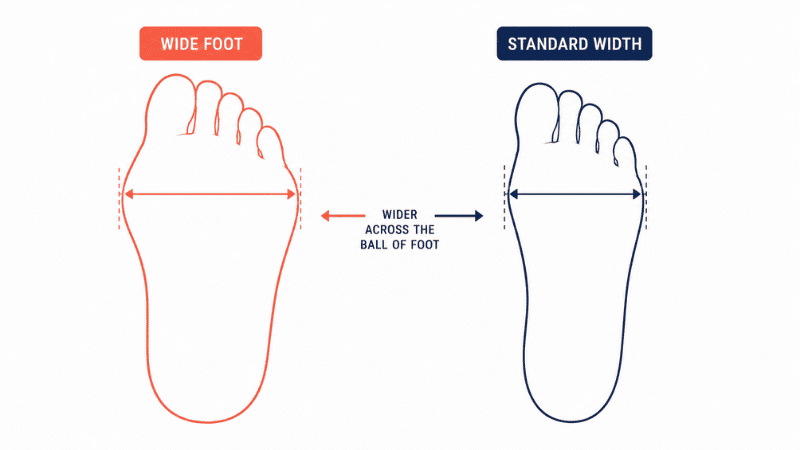
At the widest point of your tracing (usually across the ball of the foot), measure straight across from edge to edge. This is your foot width.
| Width Measurement | Men’s Width | Women’s Width |
|---|---|---|
| Under 85mm | Narrow (2A) | Narrow (2A) |
| 85–90mm | Standard (B/D) | Standard (B) |
| 90–97mm | Wide (2E) | Wide (D) |
| 97mm+ | Extra Wide (4E) | Extra Wide (2E) |
This table is a general guide. Width sizing is not standardized across brands — we’ll get to that.
Step 6: Measure Both Feet and Use the Larger One
Repeat the entire process for your other foot. Most people find a difference of at least a few millimeters — sometimes a full half-size or more. This is completely normal.
Always buy for the larger foot. A shoe that’s slightly loose on the smaller foot is manageable with an insole or thicker sock. A shoe that’s half a size too small on the larger foot will cause blisters, nail bruising, and the kind of foot pain that shows up years later.
How to Convert Your Measurement to a Shoe Size
Once you have your heel-to-toe measurement in centimeters, use this conversion table:
Women’s Shoe Size Chart
| Foot Length (cm) | US Size | UK Size | EU Size |
|---|---|---|---|
| 21.6 | 5 | 3 | 35–36 |
| 22.2 | 5.5 | 3.5 | 36 |
| 22.9 | 6 | 4 | 36–37 |
| 23.5 | 6.5 | 4.5 | 37 |
| 24.1 | 7 | 5 | 37–38 |
| 24.6 | 7.5 | 5.5 | 38 |
| 25.1 | 8 | 6 | 38–39 |
| 25.7 | 8.5 | 6.5 | 39 |
| 26.2 | 9 | 7 | 39–40 |
| 26.7 | 9.5 | 7.5 | 40 |
| 27.3 | 10 | 8 | 40–41 |
Men’s Shoe Size Chart
| Foot Length (cm) | US Size | UK Size | EU Size |
|---|---|---|---|
| 24.4 | 7 | 6 | 40 |
| 25.1 | 7.5 | 6.5 | 40–41 |
| 25.4 | 8 | 7 | 41 |
| 26.0 | 8.5 | 7.5 | 41–42 |
| 26.7 | 9 | 8 | 42 |
| 27.3 | 9.5 | 8.5 | 42–43 |
| 27.9 | 10 | 9 | 43–44 |
| 28.6 | 10.5 | 9.5 | 44 |
| 29.2 | 11 | 10 | 44–45 |
| 29.8 | 11.5 | 10.5 | 45 |
| 30.5 | 12 | 11 | 46 |
The Brand Sizing Problem Nobody Talks About Enough
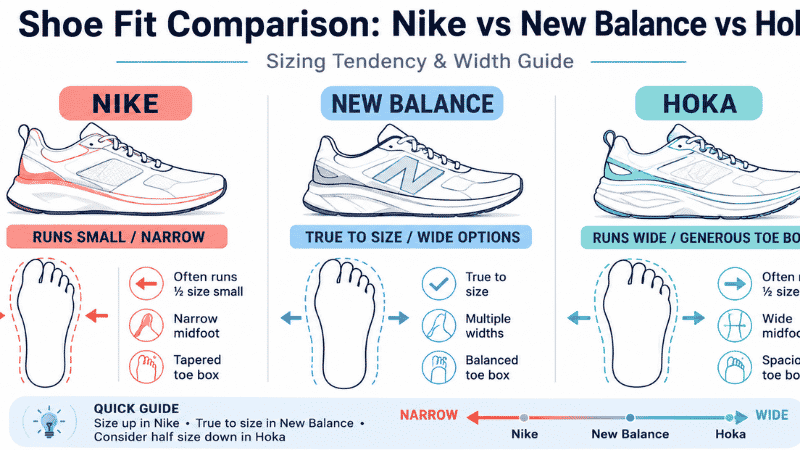
Here’s what makes shoe shopping genuinely frustrating: the same US size is not the same shoe across different brands. The number is standardized. The actual cut, last shape, and fit are not.
After testing dozens of pairs across brands, here’s what we’ve consistently found at KickVerdict:
Nike tends to run approximately half a size small, particularly in lifestyle and running silhouettes. If you measure a US 9, start with a 9.5 in Nike. Their toe box also runs narrow — if you have a wide or medium-wide foot, this matters a lot.
Adidas runs roughly true to size in length, but the toe box on many models (particularly the Ultraboost line) is narrow through the midfoot. Wide-footed wearers often need to go up half a size even if the length feels right.
New Balance is one of the most reliable brands for true-to-size fitting, and they actually offer genuine width options (from 2A narrow to 4E extra wide). If you have wide feet and have been struggling with other brands, New Balance is worth trying in your measured size first.
Hoka runs slightly long and wide, especially in their walking and running models. Many people find their measured size fits well, or even that they can go half a size down. Their toe box is also generally more accommodating for wider feet.
On Running tends to run narrow and slightly long. If you’re between sizes, the half-size up is usually safer, especially if you have a medium-wide or wide foot.
The practical takeaway: always check brand-specific size guides before buying online, and when buying in-store, wear the actual socks you plan to use.
If You Have Wide Feet, This Section Is For You
Standard shoe sizing only accounts for length. Width is treated as an afterthought by most brands — and most shoe finders. But foot width is often the real reason shoes hurt.
A common mistake wide-footed people make is sizing up in length to compensate for width. It feels like it helps initially, but a longer shoe changes where your foot bends relative to the shoe’s flex point — which creates a different set of problems. The right fix is finding a shoe offered in a genuine wide width (D or 2E for women, 2E or 4E for men), not just buying bigger.
If your foot width measurement puts you in wide territory but a brand doesn’t offer wide sizes, that brand is not for your feet. This is not a negotiation. Wearing shoes that are too narrow compresses the metatarsals, restricts circulation, and over time can contribute to bunions and Morton’s neuroma. According to research published in the Journal of Foot and Ankle Research, an estimated 63–72% of people wear shoes that don’t correctly match their foot width.
Brands with the most consistent genuine wide options: New Balance, Brooks, Altra, and New Balance again (worth mentioning twice).
How to Measure Your Foot for Specific Types of Shoes
Your measurement process changes slightly depending on what you’re buying.
For running shoes: Measure in the afternoon, wearing your running socks. Running shoes should have a thumb’s width of space between your longest toe and the end of the shoe — your foot slides forward with each stride, and if there’s no room, your toenails pay the price over time. The American Orthopaedic Foot & Ankle Society (AOFAS) recommends fitting athletic shoes with at least 9–12mm of space at the toe.
For walking and work shoes: Same afternoon measurement applies. If you’re on your feet for long shifts, lean toward the larger measurement if you’re between sizes. Feet that carry your weight all day will swell more than feet doing short errands.
For dress shoes and boots: These often fit differently than athletic shoes — the last shape is narrower, and there’s typically less volume in the toe box. Measure carefully and expect that a brand you wear in 9.5 for running might fit better at 10 in leather dress shoes.
For online purchases specifically: Add 5–7mm to your measured foot length before comparing to the brand’s size chart. This accounts for socks and the natural movement of your foot inside the shoe. It’s a small buffer that saves a lot of return shipping.
Common Foot Measurement Mistakes (And How They Quietly Ruin Your Shoes)
Measuring in the morning. Already covered, but worth repeating: morning foot measurements are consistently smaller. You’ll buy shoes that fit before noon and strangle your feet by dinner.
Only measuring one foot. Your feet are not identical twins. Measure both, every time.
Measuring in bare feet when you wear thick socks. The socks take up real space inside the shoe. Always measure wearing the socks you’ll actually use.
Trusting the size you bought last time. Foot size can change half a size or more over five years — especially after pregnancy, significant weight change, or just the natural spread that comes with age. The American Podiatric Medical Association (APMA) recommends having your feet measured every time you buy shoes, not once and never again.
Assuming “stretching them in” is a valid strategy. Modern shoes — particularly athletic shoes — do not meaningfully stretch. If a shoe is tight at purchase, it will be tight forever. The rare exception is genuine leather shoes, which can stretch slightly with use. For anything with a synthetic or mesh upper, what you try on is what you get.
What to Do If Nothing Seems to Fit Correctly
If you’ve measured accurately and still can’t find shoes that feel right, the problem may not be your size — it may be your foot shape.
People with very high arches often find that volume, not just length and width, is the issue — the foot is taller, and a low-volume shoe presses down on the top of the foot uncomfortably. Look for shoes marketed as “high-volume” or with removable insoles (which create more internal space).
People with flat feet often need motion control or stability shoes rather than neutral cushioning — the arch collapses under load, and a neutral shoe without structure doesn’t support the foot through the gait cycle.
If you’re experiencing persistent pain, numbness, or pressure points despite correctly sized footwear, it’s worth seeing a podiatrist. They can identify structural issues — like bunions, hammertoes, or plantar fasciitis — that no amount of measurement will fix on its own, and recommend orthotics if needed.
Frequently Asked Questions
How do I measure my foot size at home without any tools? You can measure accurately with just a sheet of paper, a pen, and a ruler. Trace your foot with your heel against a wall, then measure the longest distance from heel to toe and the widest distance across the ball of the foot. This gives you both the length and width you need.
Should I measure my feet in the morning or evening? Evening is more accurate for shoe fitting. Feet swell throughout the day, sometimes up to half a size. If you measure in the morning, you risk buying shoes that are marginally too small by afternoon.
My two feet are different sizes — which one should I use to buy shoes? Always buy for the larger foot. Wearing shoes half a size too small on one foot causes more cumulative damage than wearing shoes that fit slightly loosely on the other. A thin insole or thicker sock can compensate for a small difference.
Why do I wear different sizes in different brands? Because shoe sizing is not globally standardized beyond basic length guidelines. Each brand uses its own last (the mold the shoe is built around), which determines the internal volume, width, and fit shape. The number on the box is a starting point, not a guarantee.
I measured my foot but the shoe still doesn’t fit right. What am I doing wrong? Length is only one dimension. Check your arch length (heel to ball of foot), your width, and whether the shoe’s internal volume matches your foot shape. Also consider: are you measuring in the right socks? At the right time of day? Is this a brand that runs small or narrow?
How often should I re-measure my feet? At minimum, once a year — more often if you’ve experienced significant weight change, pregnancy, or are over 50. Foot size changes more than most people expect across a lifetime.
What does it mean if my arch length is bigger than my heel-to-toe length? It means the widest part of your foot sits further forward than average — what’s called a “long-toed” foot. You should size to your arch length, not your heel-to-toe length, to ensure the shoe bends at the right place. Otherwise the shoe will crease across your toes rather than across the ball of your foot.
The Bottom Line
Measuring your foot size correctly takes about five minutes and costs nothing. Getting it wrong costs you returns, blisters, and eventually foot problems that take much longer to fix than the time you’d have spent measuring properly.
Take both measurements — length and arch length. Do it in the afternoon. Wear your actual socks. Measure both feet. Then use your measurement as a starting point with each brand, not a final answer — because brands do not agree on what a “size 9” means.
If you’re shopping for walking shoes and need help figuring out which models actually accommodate your foot shape — especially if you have wide feet, flat arches, or plantar fasciitis — read our guide on what to look for in a walking shoe. Or if you’re buying running shoes and want to know how much toe room you actually need, our running shoe selection guide breaks it down by gait type.
References
- American Orthopaedic Foot & Ankle Society (AOFAS). Footwear Fitting Recommendations for Athletic Footwear. aofas.org
- American Podiatric Medical Association (APMA). Proper Shoe Fit. apma.org
- Chaiwanichsiri, D., et al. “Shoe size and foot size measurement: A comparative study.” Journal of the Medical Association of Thailand. 2008.
- Mauch, M., et al. “Foot morphology of normal, underweight and overweight children.” International Journal of Obesity, 2008.
- Menz, H.B., & Morris, M.E. “Footwear characteristics and foot problems in older people.” Gerontology, 2005.
- Riskowski, J., et al. “Measures of foot function, foot health, and foot pain are associated with shoe wear in older adults.” Journal of Gerontology, 2011.