
Look, we’ve all been there. You see a pair of sneakers online that look absolutely fire. You order them, wait three days, and the moment you slide them on, it feels like your foot is being put through a hydraulic press. If you’re constantly dealing with “pinky toe burn” or that numbing pressure across the top of your foot, the problem isn’t your anatomy—it’s your strategy. Using a proper buying guide for wide feet is the only way to break the cycle of painful returns. Today, we’re stripping back the marketing fluff to show you exactly how to find sneakers with high arch support that actually accommodate wide foot volume without looking like orthopedic boxes.
The 3 “Silent Killers” of Wide Feet Comfort
Before you drop another $150 on kicks, you need to recognize the design flaws that turn sneakers into torture devices for wide-footed folks.
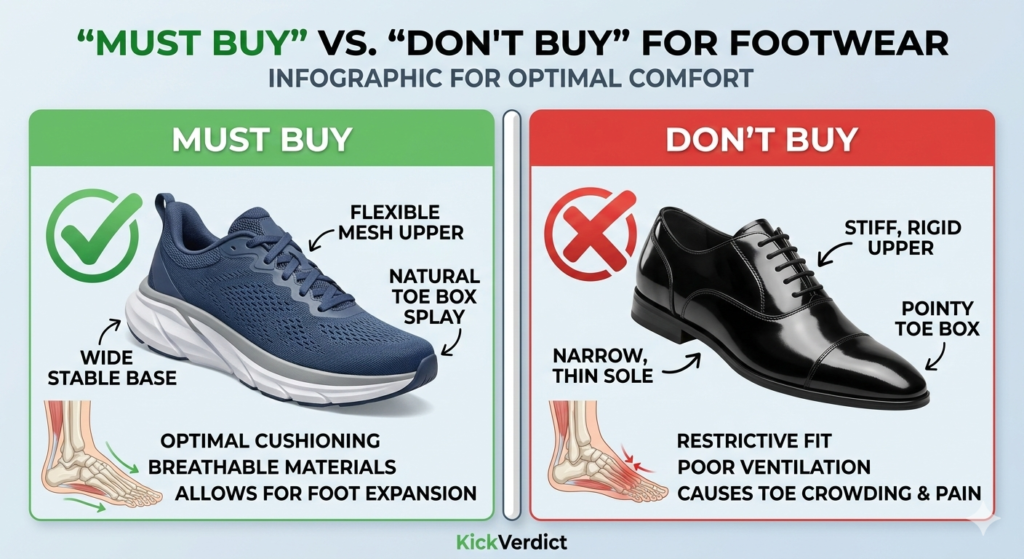
1. The Aggressive Tapered Toe Box
Many lifestyle sneakers (looking at you, retro runners) feature a sharp, triangular taper at the front. For a wide foot, this forces the metatarsals to overlap, leading to bunions and long-term nerve damage. You need a “natural” or “anatomical” toe box shape.
2. Inflexible Upper Materials
Avoid stiff patent leathers or heavy TPU overlays. If the material doesn’t have a bit of “micro-stretch,” it won’t adapt to your foot as it swells throughout the day. Engineered knits and soft suedes are your best friends here.
3. The Narrow “Last”
The “last” is the physical mold a shoe is built around. Many brands make “wide” versions by just adding more fabric on top, but the sole remains narrow. This causes your foot to hang over the edge of the foam, leading to zero stability.
How to Identify a “Real” Wide Shoe in 30 Seconds
You don’t need a lab to spot a winner. Use these two pro-hacks the next time you’re in a store:
- The Insole Test: Pull the insole out of the shoe and stand on it on the floor. If your foot overflows the edges of the insole, the shoe will never be truly comfortable. Period.
- The Midsole Flare Check: Look at the shoe from behind. Does the foam get wider as it hits the ground? That’s “Midsole Flare,” and it’s a lifesaver for wide-foot stability.
Specialized Tips for High Arches
If you have high arches (Pes Cavus), you aren’t just looking for width; you’re looking for contact. Because your foot is rigid, you need the shoe to fill the “bridge” under your arch to prevent all your weight from slamming into your heel.
High Arch Shoe Tips:
- Volume over Width: Sometimes you don’t need a wider sole; you need a “taller” shoe. Look for deep-seated heel cups that allow your high instep to sit comfortably without pressing against the eyelets.
- Avoid “Bootie” Constructions: Shoes with integrated tongues (no separate tongue) are a nightmare for high arches. They offer zero adjustability for the top of your foot.
The 2026 Brand Fit Map: Who to Trust?
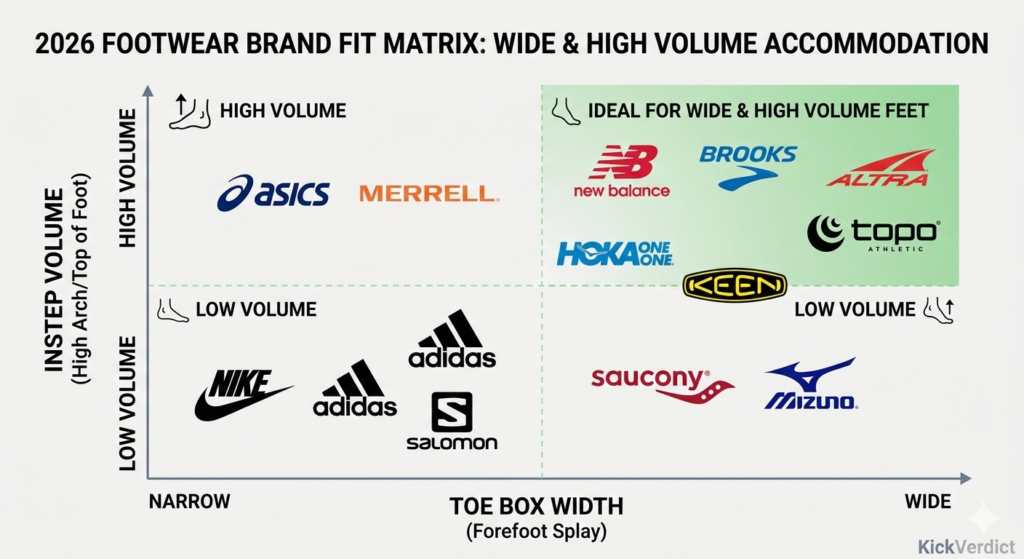
Not all brands are created equal. Based on our 2026 data, here is the “Honesty Report” on how brands actually fit.
| Brand | Real-World Width | High Arch Support | KickVerdict Note |
| New Balance | Exceptional | High | The king of 2E and 4E options. |
| Hoka | Very Wide | Medium-High | Great for volume, but check the midfoot. |
| Nike | Narrow | Variable | Always go up a half size or look for ‘Extra Wide’. |
| Altra | Natural Wide | Low | Best “FootShape” toe box, but flat soles. |
FAQ: Don’t Buy Until You Read This
Q: Can I just lace my shoes loosely to fix the pinch? A: Only if you use “Window Lacing.” This is a technique where you skip a set of eyelets over the highest part of your arch. It relieves pressure without sacrificing a secure fit. For more on the medical side of high-arch pressures, check out this guide on foot biomechanics by Healthline.
Q: Will “breaking them in” actually work? A: Modern sneakers are made of plastics and foams, not just leather. If they hurt in the store, they will hurt in three months. “Breaking in” is largely a myth for modern performance footwear.
The Final Verdict
Finding the perfect fit is about logic, not luck. Stop trying to force your feet into narrow silhouettes because they’re “trending.” Focus on anatomical toe boxes, midsole flare, and adjustable lacing systems. Your feet carry you everywhere—give them the space they deserve.