
It’s the age-old sneakerhead dilemma: do you go with the sleek, high-tech allure of the Swoosh, or the dependable, “dad-approved” comfort of the Boston giant? If you’re browsing for Nike vs New Balance for wide feet, you’ve likely realized that a “cool” design feels like a torture device if the last is too narrow. At KickVerdict, we don’t just look at spec sheets. We took the two heavy hitters—the Nike Pegasus and the New Balance 1080—and put them through a brutal 50-mile stress test. We wanted to see which brand actually accommodates wide foot volume and which one just slaps an “Extra Wide” label on a narrow frame.
The “Wide” Strategy: How Both Brands Approach Fit
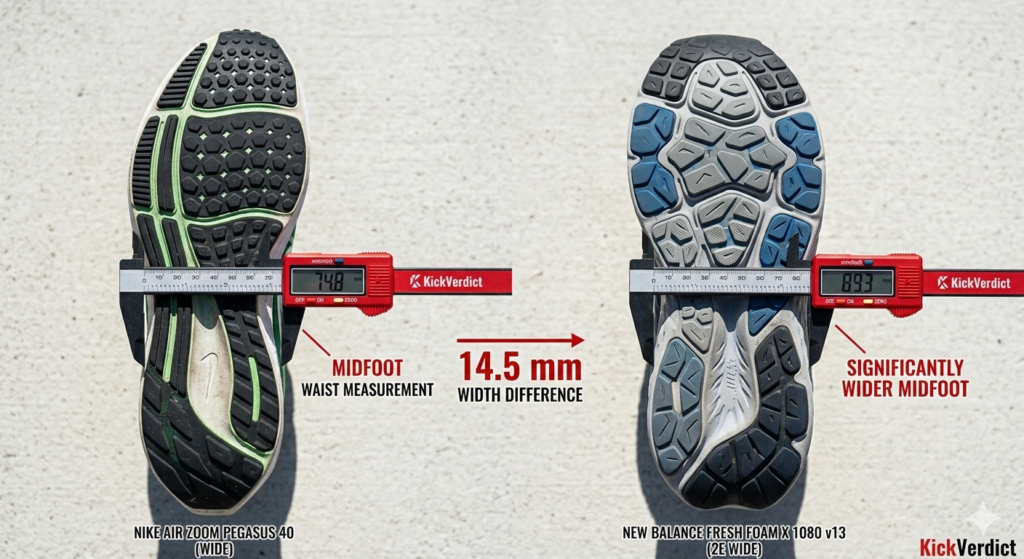
Understanding how these giants build their shoes is the first step in avoiding a $160 mistake. They have fundamentally different philosophies when it comes to wide width Nike shoes versus New Balance’s legendary multi-width system.
Nike’s “Volume Increase” Approach
Nike traditionally builds on a more aggressive, curved last. When you buy a “Wide” Nike, they often don’t widen the actual rubber outsole. Instead, they increase the volume of the upper fabric. This works for people with “tall” feet, but if your actual bone structure is wide, you might still feel your foot “spilling” over the edge of the foam.
New Balance’s “True Platform” Legacy
New Balance is one of the few brands that maintains different physical molds for D, 2E, and 4E widths. When you step into a New Balance 2E vs 4E model, you are standing on a physically wider base. This provides the lateral stability that wide-footed runners crave.
The 50-Mile Stress Test: Real-World Data
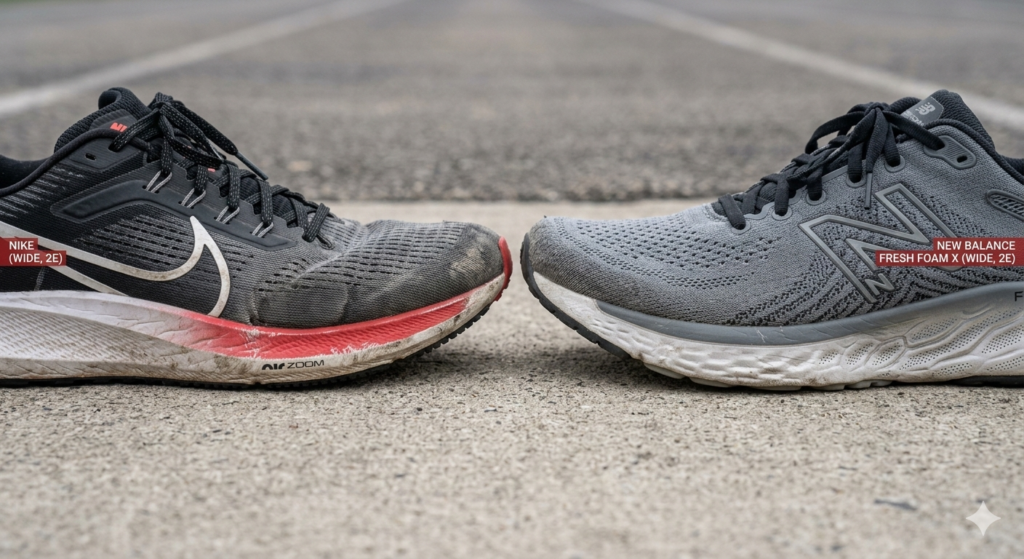
We tracked the performance of both brands over two weeks of heavy usage. Here is the KickVerdict data on how they held up.
| Metric (After 50 Miles) | Nike Air Zoom Pegasus (Wide) | New Balance 1080 v14 (2E) |
| Toe-Box Splay | 2mm expansion (felt tight) | 5mm expansion (natural) |
| Midsole Compression | 12% (firming up) | 8% (still bouncy) |
| Fabric Fatigue | Visible stretching at pinky toe | No structural change |
| Comfort Score | 6.5/10 | 9/10 |
Nike’s Top Picks for Wide Feet (The Survivors)
Despite their narrow reputation, there are specific Nike wide fit reviews that prove the brand can accommodate bigger feet if you pick the right silhouette.
The Stability King: Nike Air Zoom Structure 25
The Structure 25 is built on a flatter, more stable base than the Pegasus. It offers a much more generous midfoot. If you need a wide toe box but want that classic Nike responsiveness, this is your best bet.
The Plush Alternative: Nike Vomero 17
The Vomero uses a softer mesh that has more “mechanical stretch” than the rigid materials found on their racing flats. It’s a solid choice for those who need a bit of extra room without moving to a full 4E.
New Balance’s Champions: The Gold Standard
If we’re being honest, New Balance owns this category. Their best wide-width sneakers aren’t just an afterthought; they are the core of their business.
The Versatile Titan: New Balance Fresh Foam X 1080 v14
This is the shoe that won our 50-mile test. The “V14” has a wider midfoot than previous versions, making it a dream for high-volume feet. It fills the arch gap perfectly, making it a top contender for sneakers with high arch support.
FAQ: Nike vs. New Balance for Wide Feet
Q: Is Nike’s “Extra Wide” actually a 4E? A: On paper, yes. In reality, Nike’s 4E often feels closer to a New Balance 2E because of the aggressive taper in the toe box. If you are a true 4E, New Balance is the safer bet. For a deeper look at professional fit standards, check out the Shoe Fitting Guide by the APMA.
Q: Which brand is better for high arches? A: New Balance’s Fresh Foam series is generally better contoured for high arches. Nike’s React foam is excellent but can feel a bit “flat” through the midfoot for some users.
The Final Verdict
If you want the “cool” factor and have a slightly wide foot, Nike’s “Extra Wide” offerings will get the job done for short distances. However, if you are hitting the pavement for 20+ miles a week and need a true anatomical fit, New Balance wins every time. Don’t sacrifice your foot health for a logo—your 50-mile self will thank you.